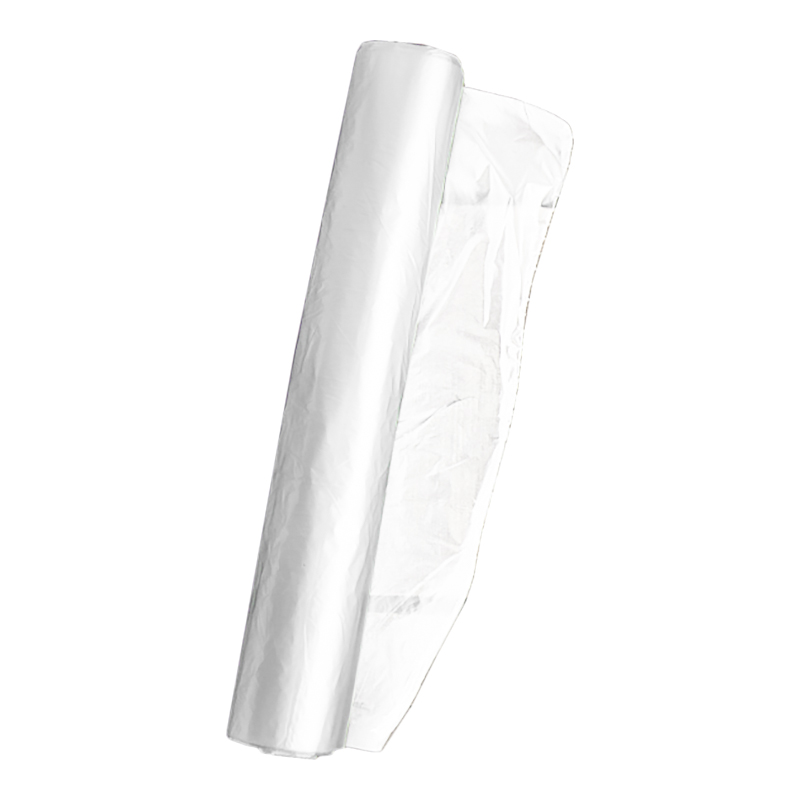

A converter in Valencia quotes a retail chain for a 35 µm carrier bag in "100% compostable polyester". The film runs well, the print registers cleanly, and the order ships. Three months later the retailer's packaging compliance team asks one question — which certificate covers this gauge? — and the conversation stalls, because the certificate the supplier forwarded was issued for a 20 µm film in a different colour, under a different grade name.
That gap is the most common problem in this material category. "100% compostable polyester" is not the name of a polymer. It is a claim about a specific finished article, at a specific thickness, tested against a specific standard, in a specific composting environment. PBAT, PBS, PBSA, PLA and PHA can all carry that claim, and every one of them can lose it the moment the formulation, the gauge or the additive package changes. Buyers who read the phrase as a material description rather than a certification statement end up paying a two- to three-fold premium over polyethylene for a product that cannot legally print the seedling logo.
The sections below set out what the claim actually covers, how the main standards test it, which polyesters pass and which cannot, how the grades behave on conventional film and injection lines, and what to verify before a purchase order is signed.
Compostability is a property of a finished article under defined conditions, not a property of the word "polyester" on a datasheet. The ester bond in the polymer backbone is what makes biodegradation possible at all: water and enzymes attack the linkage, the chain breaks into shorter fragments, and microorganisms consume those fragments as a carbon source. How quickly that happens depends on crystallinity, aromatic content, molecular weight, and the temperature and microbial activity of the surrounding environment.
PET is a polyester and is not compostable in any commercial sense — its aromatic backbone and high crystallinity keep it intact for decades. PBAT is also a polyester and does break down within the 180-day window the standards allow. The family name alone tells a buyer almost nothing. Three distinctions do the real work:
The practical consequence is simple: when a supplier says "100% compostable polyester", ask for the certificate number, the certified product description, the maximum calibrated thickness and the standard it was tested against. If any of those four items is missing, the claim is a marketing statement rather than a verifiable specification.
Four criteria decide the outcome, and every major scheme tests the same four. A material passes or fails as a package — a 95% biodegradation result paired with a failed plant-growth test is still a failure.
The pillars, in the order a laboratory usually runs them:
| Standard | Primary market | Biodegradation requirement | Test window | Disintegration | Ecotoxicity |
|---|---|---|---|---|---|
| EN 13432 | European Union | ≥90% conversion to CO2, water and biomass | ≤180 days at thermophilic temperature | ≥90% through a 2 mm sieve after 12 weeks | Plant growth plus organism test |
| ASTM D6400 | United States | ≥90% conversion to CO2 | ≤180 days | ≥90% through a 2 mm sieve after 12 weeks | Plant growth test required |
| ISO 17088 | International | ≥90% conversion | ≤180 days | ≥90% through a 2 mm sieve | Required |
| AS 4736 | Australia, industrial | ≥90% conversion | ≤180 days | ≥90% through a 2 mm sieve | Required |
| AS 5810 / NF T51-800 | Home composting | ≥90% conversion at ambient temperature | ≤365 days | ≥90% through a 2 mm sieve | Required |
Two points about that table deserve emphasis. First, the 180-day figure is a laboratory window at thermophilic temperature — it is not a promise about how a bag behaves in a garden heap at 15°C. Second, home-composting schemes run at ambient temperature and typically allow up to 365 days, which is exactly why a material certified for industrial composting can fail a home-compost claim outright. Buyers who intend to sell into a kerbside organics collection scheme need the industrial certificate; buyers selling to households with a back-garden composter need the home certificate, and the two are not interchangeable.
Five polyester families carry most of the commercial volume, and they are not substitutes for one another. Selection normally comes down to the process (blown film, injection, thermoforming), the stiffness required, and whether the end-of-life route is industrial or home composting.
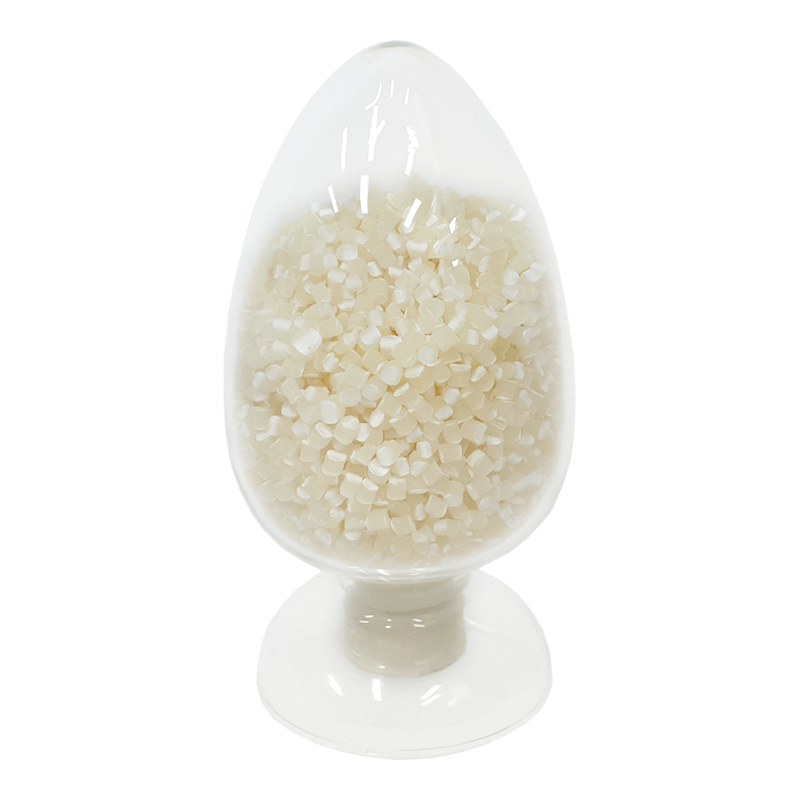
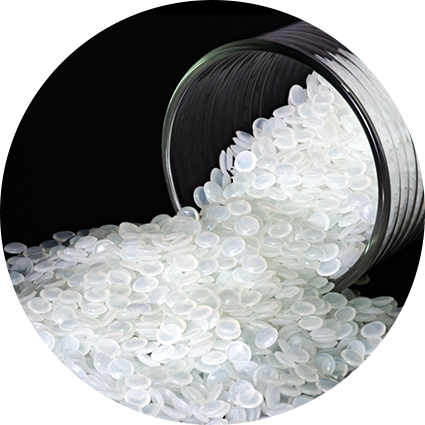
Polybutylene adipate terephthalate is the workhorse of the category. It is a random aromatic-aliphatic copolyester, flexible at room temperature, tough, and it processes on LDPE-style blown film lines with modest screw changes. Most certified carrier bags, garbage bags and mulch films are PBAT-based, usually blended with starch, PLA or calcium carbonate to hit a cost and stiffness target. Its weak points are tackiness on the roll and a tendency to block if the antiblock package is not matched to the film gauge.
 Custom PBAT for Biodegradable Film and Bag ApplicationsFlexible fully biodegradable polyester for shopping, food and garbage bags; suitable for converters exploring PBAT-based blown film and certified end-of-life options.View Product →
Because PBAT is fossil-derived, buyers sometimes assume it cannot be certified. That assumption is wrong: certification tests the end-of-life behaviour, not the feedstock origin, and several PBAT grades hold EN 13432 certificates at defined thicknesses.
Polylactic acid is rigid, transparent and dimensionally stable — the natural choice for thermoformed cups, lunch boxes, cutlery and straws, where stiffness matters more than flexibility. Its constraint is thermal: industrial composting at 58°C hydrolyses PLA readily, but a home heap rarely reaches the temperature needed, so home-compostable PLA grades remain a small niche. PLA also has a narrow processing window and will revert and degrade if it is run above roughly 230°C or with residual moisture in the melt.
Polybutylene succinate and its adipate copolymer sit between PBAT and PLA in behaviour: softer than PLA, with a lower melting point and good drawdown for film. They are useful in mulch film and thin packaging where a softer hand feel is wanted, and they blend well with starch and calcium carbonate.
Polyhydroxyalkanoates are produced by bacterial fermentation and are the most interesting family for home composting and soil-contact applications, with several grades certified for ambient-temperature breakdown. The trade-off is a narrow processing window, strong shear sensitivity and a price that is still well above PBAT in most regions.
PET, PBT, PETG and PCT are polyesters and none of them belongs in a compostable claim. Oxo-degradable additives — pro-oxidant masterbatches that fragment PE into microplastics — have been expressly banned for single-use plastics in the European Union since 2019 and should be rejected on sight. A less obvious failure mode is contamination: a few percent of conventional PE or PP in a regrind stream is often enough to push a batch out of the disintegration criterion, which is why collection and regrind hygiene matter as much as the resin specification.
The single most expensive misunderstanding in this category is the assumption that "compostable" means "disappears wherever it is thrown". It does not. A certified compostable bag placed in a landfill behaves like any other waste: it is buried, deprived of oxygen, and may generate methane over a long period rather than composting. The certificate describes behaviour in an aerobic system held at 58°C with controlled moisture and aeration — conditions that exist in a municipal windrow or in-vessel facility and essentially nowhere else.
This matters commercially because the end-of-life route has to exist before the premium can be justified. A retailer in a city with kerbside organics collection can put a certified compostable carrier bag into the food-waste stream and the claim holds. A retailer in a region where compostable waste goes to incineration or landfill is paying for a property no one will use. Buyers should confirm three things before committing: whether industrial composting capacity exists in the target market, whether the local scheme accepts compostable packaging at all (several do not, for contamination reasons), and whether the intended product carries the specific certificate that the scheme recognises.
For agricultural film there is a second layer. Mulch film is certified for soil biodegradation under a different test regime from packaging, and the relevant question is not "does it compost" but "does it break down on the schedule the crop needs". A film that loses integrity at day 45 is a failure in a 120-day tomato crop and a success in a short-cycle lettuce crop. Suppliers who quote a single degradation figure without asking about the crop cycle are not giving you a usable specification.
Grade selection is a mechanical problem before it is an environmental one. The same certified compostable polyester can be right for a 20 µm shopping bag and wrong for a 90 µm heavy-duty liner, because stiffness, tear propagation and seal strength all shift with gauge and blend ratio.
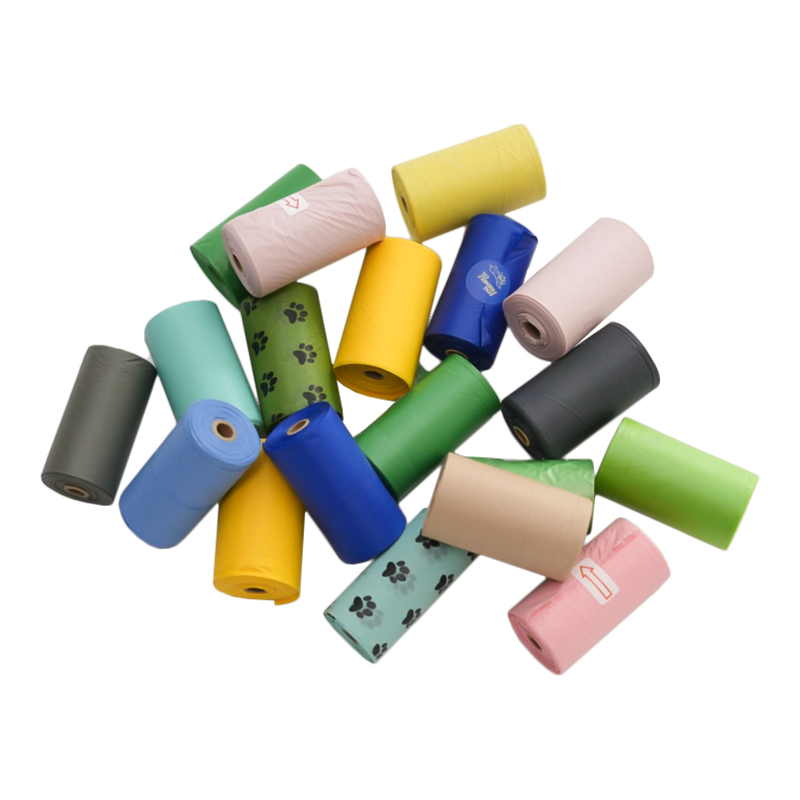
Film and bag applications divide roughly as follows. Retail carrier bags need high tensile strength, good print surface and a soft hand feel, typically PBAT blended with starch and a small PLA fraction. Garbage bags need puncture resistance and a sealed base that holds under load; thick liners often use higher PBAT content with calcium carbonate for stiffness and cost control. Pet-waste bags are the opposite problem — thin, lightweight and frequently embossed — and benefit from grades formulated for down-gauging without losing tear strength. Mulch film needs controlled induction: enough integrity to survive planting and mechanical weeding, then rapid breakdown once the canopy closes.
Food contact adds a regulatory layer on top of the technical one. A compostable material is not automatically food-safe; the finished article must satisfy the relevant migration framework — EU 10/2011 in Europe, FDA requirements in the United States — including overall and specific migration limits, heavy-metal content and a declaration of compliance covering every layer, ink and adhesive in the construction.
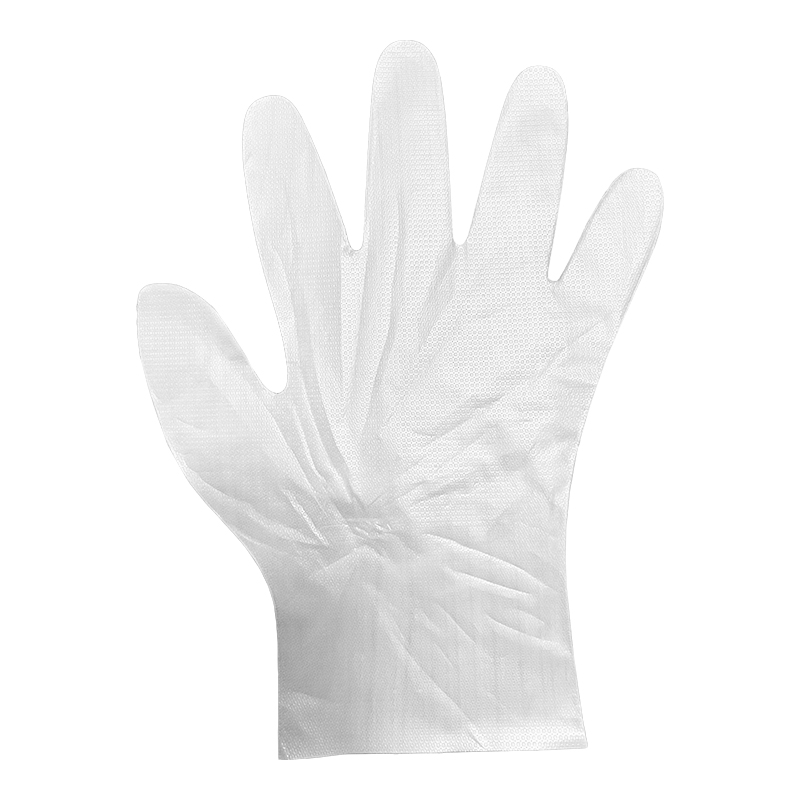 BIO/M-2206 Food-Contact Biodegradable Material for PackagingWaterproof and oil-proof food-contact-grade material for lunch boxes, tableware and food bags; check migration reports alongside compostability when specifying takeaway packaging.View Product →
Grades formulated for oil and water resistance are the ones that matter for takeaway containers, sauce sachets and lined board, where a standard film would wick grease through the wall within minutes. Ask for the migration test report, not just the compostability certificate: the two documents come from different laboratories and neither substitutes for the other.
Most compostable polyesters run on equipment designed for polyethylene, but they run on it differently, and the differences are predictable. The three variables that cause the most trouble are moisture, melt temperature and additive compatibility.
Moisture first. PLA in particular must be dried before processing — typically to below 250 ppm at 80°C for four hours, with a desiccant dryer rather than a hot-air oven — because residual water hydrolyses the melt and drops molecular weight within a single pass. The symptom is not dramatic: the film simply gets weaker, seals get brittle, and the problem is blamed on the resin rather than the dryer. PBAT and PBS are more forgiving but still require drying in humid climates.
Melt temperature second. Each family has a window narrow enough that a 20°C overshoot is visible in the output. The comparison below is a starting point for trials, not a substitute for the grade datasheet.
| Material | Typical melt window | Pre-drying | Density | Notes |
|---|---|---|---|---|
| PLA | 190–220°C | 80°C for 4 h, below 250 ppm | ≈1.24 g/cm³ | Degrades above roughly 230°C; narrow window |
| PBAT | 130–170°C | 70–80°C for 2–4 h | ≈1.25–1.27 g/cm³ | Tacky on the roll; requires matched antiblock |
| PBS / PBSA | 140–180°C | Recommended | ≈1.26 g/cm³ | Lower melting point, good drawdown |
| PHA | 160–180°C | Essential | ≈1.20–1.25 g/cm³ | Shear and thermal sensitivity; short residence time |
| LDPE (reference) | 160–200°C | Not required | ≈0.92 g/cm³ | Baseline for yield and seal comparison |
Additives third. Slip, antiblock and processing aids must themselves be compostable-compatible, and this is a routine certification failure: a film that passes every mechanical test can still fail the ecotoxicity criterion because the masterbatch carried a legacy additive. Ask the masterbatch supplier for the same heavy-metal declaration you ask of the resin supplier.
Downstream, three adjustments pay for themselves quickly. Use a screw with a lower compression ratio and gradual transitions to avoid shear hotspots. Corona-treat the surface before printing, because the surface energy of these films drifts with the blend ratio. And re-tune the sealing jaw: compostable films generally seal at lower initiation temperatures than LDPE but have narrower hot-tack windows, so a line that ran polyethylene at 140°C may need 110–120°C with higher dwell.
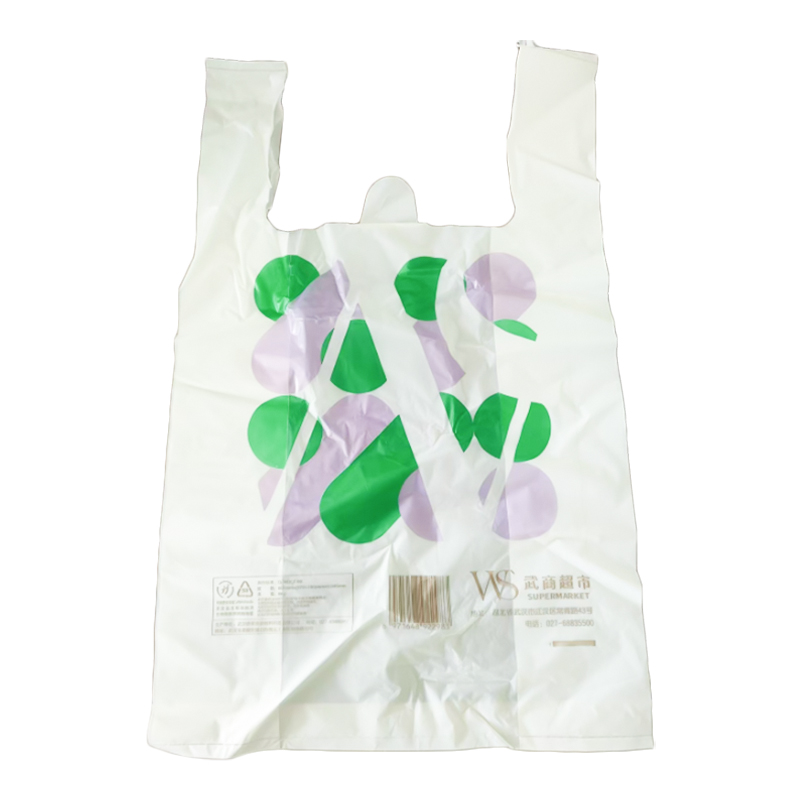 BIO/S301 High-Strength Biodegradable Film Material for BagsHigh-strength, tough biodegradable film compound for shopping and food bags; antistatic behavior and home-compostable claim suit converters reviewing bag-film trials.View Product →
For converters weighing the switch, the mechanical trade-offs between fully biodegradable films and traditional plastic films are worth reviewing before the first trial run, because they determine which SKUs can be converted at all and which should stay on polyethylene for now.
Compostable polyester is a hydrolytically unstable material by design, and that design intent does not pause when the pallet leaves the factory. Heat and humidity continue the same chain-scission reaction that composting accelerates, just far more slowly. Stored badly, a certified film can lose enough molecular weight in six months to fail on the line it was specified for.
The practical rules are unglamorous but effective. Keep pallets below 30°C and below 60% relative humidity, away from skylights and radiator walls, and on the original moisture-barrier liner until the roll goes on the machine. Operate strict first-in-first-out rotation, because the material does not improve with age. Where a converter holds twelve months of stock to secure a price, the saving is frequently consumed by line stoppages and rejected rolls.
Two application-specific timing issues deserve separate attention. For mulch film, the degradation curve must be matched to the crop: a 60-day induction suits short-cycle vegetables, while a 120-day crop needs a formulation that holds integrity through the whole season. For cold-chain packaging, compostable films stiffen noticeably below 5°C, so a bag that performs well in a warehouse can crack in a refrigerated distribution centre. Both problems are solvable through grade selection, but only if they are raised at the specification stage rather than discovered in the field.
Most sourcing failures in this category are documentary rather than physical. The resin performs; the paperwork does not. Work through the following before approving a supplier, and keep the answers on file for the compliance team.
A supplier who can answer all ten in a single exchange is a supplier worth keeping. One who can answer six is a supplier whose claims should be narrowed to what the documents actually support.
The price comparison that matters is not the resin price per kilogram — it is the cost per thousand bags or per square metre of film, and the two diverge sharply. Compostable polyesters sit around 1.20–1.27 g/cm³ against 0.92 g/cm³ for LDPE, so a kilogram of compostable resin yields roughly 25–30% less film area at the same gauge. Add the typical two- to three-fold resin premium and the real cost gap per finished unit is larger than the headline number suggests, though down-gauging partly offsets it: several PBAT-rich grades run thinner than the polyethylene they replace while keeping the required load rating.
The honest positioning follows from that arithmetic. Compostable polyester earns its premium where the packaging is likely to be contaminated with food and therefore cannot be recycled — takeaway containers, sauce sachets, food-soiled liners — or where the waste stream is already organic, as in kerbside food-waste collection, closed-loop events, and agricultural mulch that would otherwise be lifted and sent to landfill. It is a poor fit for clean, mono-material streams that already have a working mechanical recycling route, where a recyclate or a monomaterial PE design usually delivers a better total footprint at a lower cost.
Availability is the second commercial variable. Capacity for PBAT and PLA has grown quickly and lead times have shortened, but certified food-contact grades and specialty mulch formulations still carry longer lead times than commodity film grades. Buyers planning a retail launch should secure the grade — and the certificate covering the exact gauge — before the artwork is finalised, not after.
The claim "100% compostable polyester" is defensible, sellable and increasingly demanded by retail compliance teams. It is also narrower than it sounds: it holds only for a defined article, at a defined thickness, tested to a defined standard, in a defined end-of-life system. Get those four aligned and the material performs exactly as specified. Leave any one of them loose and the premium buys a logo rather than a property.
If you are specifying a compostable film, bag, food-contact article or mulch grade, send us the application, gauge, target market and certification route, and we will match it against our BIO-series modified materials and PBAT, PLA, PBS and PHA base resins — including the certificate scope for each grade. You can reach the technical team through our contact page.




+86 18101032584
No. 60-1, Jichuan East Road, HailingIndustrial Park, Hailing District, Taizhou City.


Copyright© Taizhou Huangyan Zeyu New Material Technology Co., Ltd. All Rights Reserved.
 Custom Fully Degradable Raw Material Manufacturers


 English
 Français
 Español
 Deutsch
 italiano