
A buyer writes a specification for a retail chain: "biodegradable" carrier bags, 30 micron, minimum 12 kg load, four-colour print. Three suppliers quote. All three ship samples that pass the drop test and the seal test. Twenty months later, one of the three deliveries is turned away at the gate of an industrial composting plant, and the retailer has to recall a print run of packaging that no longer carries a valid environmental claim.
Nothing in that story is exotic. It happens because "biodegradable" is a word, while "compostable" is a specification with numbers attached. The gap between the two is where most of the money is lost in this category, and it is a gap that a well-written purchase specification can close in a single paragraph.
Every compostable material is biodegradable, but the reverse is not true, and the difference is not academic. Compostable means the material has been tested against a standard that fixes four things at once: the environment it breaks down in, the time it takes, how completely it physically disintegrates, and what residue it leaves behind for plants and soil organisms. Biodegradable means only that microorganisms can eventually metabolize the material under some set of conditions. No time limit, no environment, no residue limit.
The practical consequence sits on the receiving dock, not in the marketing brochure. A certified compostable article can be accepted by an industrial composting facility that already collects food waste. A merely "biodegradable" article may be accepted nowhere, because no facility operator can predict when it will disappear or what it will leave in the finished compost they are trying to sell to farmers and landscapers.
So the first decision in any procurement is not which polymer to buy. It is which end-of-life route exists for the product after the customer is finished with it. If there is an organics collection stream, specify certified compostable and name the standard. If there is not, and the goal is simply to reduce fossil feedstock, specify bio-based content and treat it as a separate, unrelated claim. Mixing the two into one purchase order is the most common way buyers end up with packaging they cannot defend.
Biodegradation is measured as mineralization: the conversion of the material's carbon into carbon dioxide, tracked by respirometry. A test vessel holds the sample in a defined medium with a defined microbial inoculum, and the carbon dioxide released is captured and measured over time. The result is expressed as a percentage of the theoretical maximum, usually against a reference material such as microcrystalline cellulose that must itself reach a threshold within the same run.
Three variables decide whether a material passes, and none of them are properties of the material alone:
The relevant test methods are well established. For industrial composting, ISO 14855 and ASTM D5338 are the workhorses, with EN 14046 as the European equivalent. For soil, ISO 17556. For marine environments, ASTM D6691 and ISO 22404. In each case the pass threshold is usually a relative one, most often 90% of the mineralization achieved by the reference material within the test period, or an absolute figure such as 60% in the simpler aqueous screening tests used for chemicals.
This is why "biodegradable" claims can be technically true and commercially useless at the same time. A polyethylene bag with a starch additive will show some carbon dioxide evolution in the first weeks, because the starch fraction is being eaten. The polyethylene backbone remains, and it remains as fragments. Several jurisdictions have already acted on this: oxo-degradable and fragmenting additives have been restricted in the European Union since 2021 under the Single-Use Plastics Directive, and similar restrictions exist or are under discussion in other markets. When a supplier's evidence is a weight-loss curve rather than a mineralization curve, treat it as a red flag.
Industrial compostability standards such as EN 13432, ASTM D6400, ISO 17088 and AS 4736 are built as a package. Passing one test is not enough; the material has to clear all of them, and the tests are run on the finished article, not on the resin pellet.
The material must be characterized for heavy metals and other regulated elements, and it must meet a minimum organic content threshold, typically at least 50% organic matter by dry weight. Non-organic "other" constituents are capped, commonly at around 1% of the dry weight of the product, with tighter limits on any single constituent. Illustrative heavy metal limits in EN 13432 include 150 mg/kg zinc, 50 mg/kg lead and copper, 25 mg/kg nickel, and 0.5 mg/kg cadmium and mercury. These limits are why inks, adhesives, pigments and processing aids all matter: a perfectly compostable film printed with a heavy-metal pigment is not a compostable product.
After a defined period in a controlled composting environment, usually 12 weeks, at least 90% of the material's original dry mass must pass through a 2 mm sieve. This is a physical test, and it is the one most often failed by thick, rigid or heavily laminated items. A 15 micron film disintegrates easily; a 900 micron injection-moulded tray with a dense wall section and a stiffening rib may not, even if the polymer itself biodegrades well.
The mineralization test described above, usually to a 90% relative threshold within 180 days at thermophilic temperatures. This step is where blends are won or lost. A blend that is 50% polylactic acid and 50% polybutylene adipate terephthalate can pass as a whole because both fractions mineralize in an industrial window; the same blend with 20% of a non-biodegradable compatibilizer may not.
Finished compost from the test must support plant growth. Standard practice involves a plant germination and biomass test, an earthworm test, and often an aquatic toxicity check with daphnia. In practice, germination rate and plant biomass in the test compost must be at least 90% of the blank control. This is the test that catches additives with good biodegradation profiles but problematic residues, and it is the test that protects the compost producer's product, which is precisely why facility operators care about it.
Home compost certification schemes, such as the seed-logo programmes in Europe and Australia, test at ambient temperatures, typically 20–30 °C, over a much longer window, often 12 months, and require the material to be handled and turned by an untrained householder. Standards such as AS 5810 and NF T51-800 describe this environment. A material can be industrially compostable and fail home composting, and the reverse is less common but possible. If your customer will put the packaging in a garden compost bin, the industrial certificate does not cover that claim.
The table below summarizes how the common claims behave when they meet a real waste stream. It is deliberately blunt, because the differences are what cause the disputes.
| Claim | What it actually asserts | Is the time frame fixed? | Is the environment fixed? | Typical test basis | Where it realistically ends up |
|---|---|---|---|---|---|
| Biodegradable | Microorganisms can metabolize the material under some conditions | No | No | Screening tests such as ISO 14851/14852 or supplier data | Unpredictable; often landfill or litter, where degradation may be very slow |
| Compostable (industrial) | Full package: chemistry, disintegration, mineralization, ecotoxicity | Yes, typically 12 weeks disintegration and 180 days mineralization | Yes, thermophilic composting conditions | EN 13432, ASTM D6400, ISO 17088, AS 4736 | Industrial composting or anaerobic digestion with food waste |
| Home compostable | Same package, but verified at ambient garden conditions | Yes, often up to 12 months | Yes, ambient temperature and household management | AS 5810, NF T51-800 and equivalent certification schemes | Backyard compost heap, community compost scheme |
| Soil biodegradable | Biodegradation verified in soil, aimed at agricultural use | Yes, typically defined per standard, often long | Yes, soil at defined temperature and moisture | ISO 17556, EN 17033 for mulch films | Ploughed into the field, no collection required |
| Bio-based | A stated share of the carbon comes from recently living plants | Not applicable | Not applicable | EN 16640, EN 16785, ASTM D6866 radiocarbon methods | Whatever the base polymer's route is: recycling, incineration or landfill |
| Oxo-degradable | Additives accelerate fragmentation, not mineralization | Not applicable | Not applicable | No recognized compostability standard; restricted in several markets | Fragments and microplastics; increasingly banned |
The most persistent confusion in this market is treating "bio-based" and "biodegradable" as the same property. They are independent. Bio-based describes the origin of the carbon in the molecule; biodegradable describes what microorganisms do to it after disposal. Plot them on two axes and you get four quadrants, all of which are commercially real.
Two measurement families exist. Radiocarbon methods such as ASTM D6866 and EN 16640 determine the share of carbon that is biologically recent by measuring carbon-14 content. EN 16785 offers an alternative approach based on elemental composition and mass balance. When a supplier claims a bio-based content figure, ask which method was used, whether the figure refers to the polymer or to the finished article, and whether it is an average over a production period or a specific batch.
For buyers who need bio-based content without changing converting equipment, drop-in bio-based resins are the usual answer. Grades that compound starch into polyethylene or polypropylene carriers keep the melting behaviour, the processing window and the recycling compatibility of the base polymer, while raising the renewable carbon share and often reducing density. These are bio-based materials in the literal, measurable sense. They are not compostable, and no supplier should present them as such. The reason this matters commercially is that a bio-based resin can be used on existing blown-film or injection lines with no requalification, which is often the difference between a project that starts this quarter and one that starts next year.
Compostable materials cost more per kilogram than conventional polyolefins, and they usually have narrower processing windows. Paying for them only makes sense where the end-of-life route is real. In practice, the credible applications cluster in a few situations.
What does not work is a compostable product deployed where no organics collection exists. In a landfill, the absence of oxygen means even a certified compostable bag degrades extremely slowly and can generate methane in the process. In a mechanical recycling stream, compostable polyester contaminates polyethylene recyclate and degrades its mechanical properties. Both outcomes are worse than a conventional product that is properly recycled. The role of fully biodegradable films in the broader green economy depends on collection infrastructure being in place, and this is worth verifying with your customer's waste contractor before the first order is placed.
Very few compostable products are made from a single polymer. Most are engineered blends, and understanding which component does what makes specification conversations far more productive, particularly when a supplier offers "special materials" for specific applications rather than a generic grade.
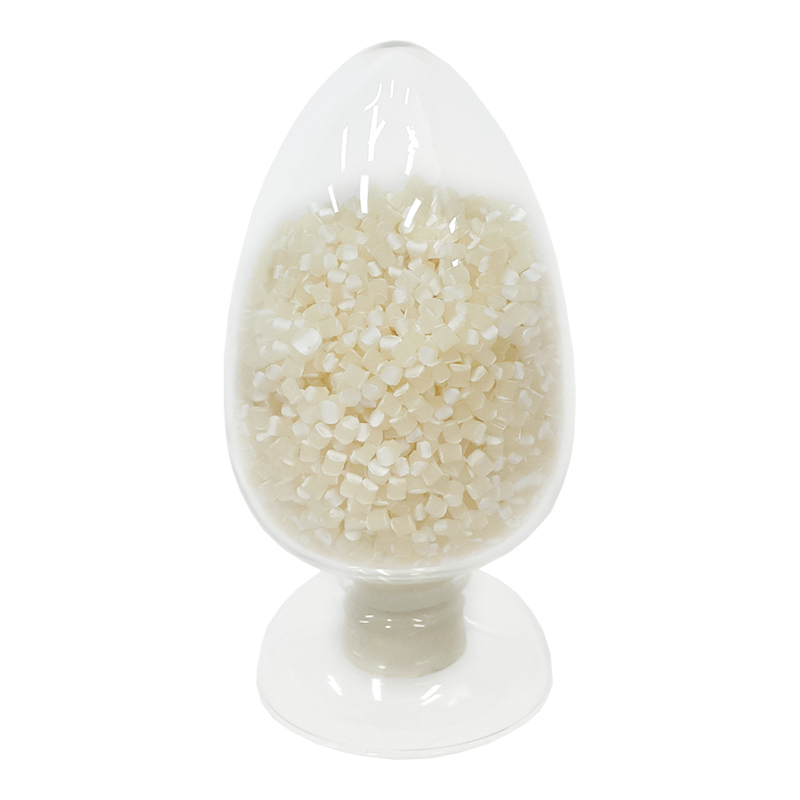
 PBAT Custom Fully Biodegradable Polyester for Flexible PackagingA customizable PBAT grade with flexibility, heat resistance, strength and transparency, useful for biodegradable bags, films and food-contact packaging.View Product →
Made by fermenting starch to lactic acid and polymerizing it. It is stiff, transparent and printable, with a glass transition temperature around 55–60 °C, which is also its main weakness: PLA softens in hot applications and needs nucleation or crystallization technology to hold its shape in a hot drink lid. It biodegrades readily under industrial composting conditions but very slowly at ambient temperatures, which is why PLA alone does not usually meet home compost criteria. PLA absorbs moisture and must be dried before extrusion, typically to below a few hundred parts per million, or it will hydrolyse in the barrel.
A random copolyester that behaves like a soft, tough plastic rather than a stiff one. Tensile strength is moderate, often in the low tens of megapascals, but elongation at break is frequently above 500%, which is what makes thin blown film possible at all. It seals at low temperatures, is compatible with starch and PLA in blends, and biodegrades in industrial composting. It is the typical backbone of compostable shopping bags, caddy liners and mulch film. Its density, around 1.25 g/cm³, is a point buyers routinely underestimate when comparing costs, and it is discussed below.
Polybutylene succinate and its terephthalate copolymers sit between PBAT and PLA in behaviour. They bring higher modulus and better heat resistance than PBAT, with melting points in a useful processing range, and they are chosen where a film needs more stiffness, better dimensional stability or a higher service temperature than a pure PBAT blend can deliver. Biodegradation tends to be slower than PBAT under the same conditions, so the blend ratio matters when a certificate is at stake.
Polyhydroxyalkanoates are produced by microbial fermentation rather than chemical polymerization, which makes them fully bio-based and gives some grades the rare ability to biodegrade in ambient and marine environments. They are also the most expensive and the most delicate to process, with narrow temperature windows and a tendency to stick to equipment. In practice they are used at modest percentages to accelerate degradation or to support home compostability claims, rather than as the majority phase of a commodity film.
Starch is cheap, renewable and biodegrades quickly. It also absorbs moisture and loses mechanical strength, so it is usually compounded into a thermoplastic form and blended at levels that balance cost against performance. Compatibilizers, chain extenders, nucleating agents and plasticizers make the blend work, and every one of them becomes part of the ecotoxicity test. A formulation change that saves two percent on resin cost can invalidate a certificate, so any change to the additive package should trigger a re-test, not a note in a file.
Most poor outcomes in this category trace back to an ambiguous brief. The specification below is long, but each line exists because it has caused a failure somewhere. Buyers who send it out usually receive comparable quotations, which is the whole point.
Notice that only the first two lines are about environmental claims. The rest are ordinary packaging engineering. That is the correct proportion, because a compostable product that fails in the field is not an environmental product, it is a returned order. If you want a second opinion on a draft specification before you send it out, the fastest route is usually to send your draft specification to our technical team and let them mark it up against the grades that actually exist in production.
Some of these are dishonest, but most are simply sloppy, and the sloppy ones are more common and harder to spot.
Different products fail in different ways. These notes reflect the parameters that most often cause a return, a complaint or a lost certificate.
Load-bearing performance is the first requirement, typically ten to fifteen kilograms for a carrier bag, with a thickness between twenty and forty microns depending on the blend. Watch seal strength and block resistance on the roll, because compostable films can be tackier than polyethylene. Printing must be checked for ecotoxicity if the bag carries a compostability logo.
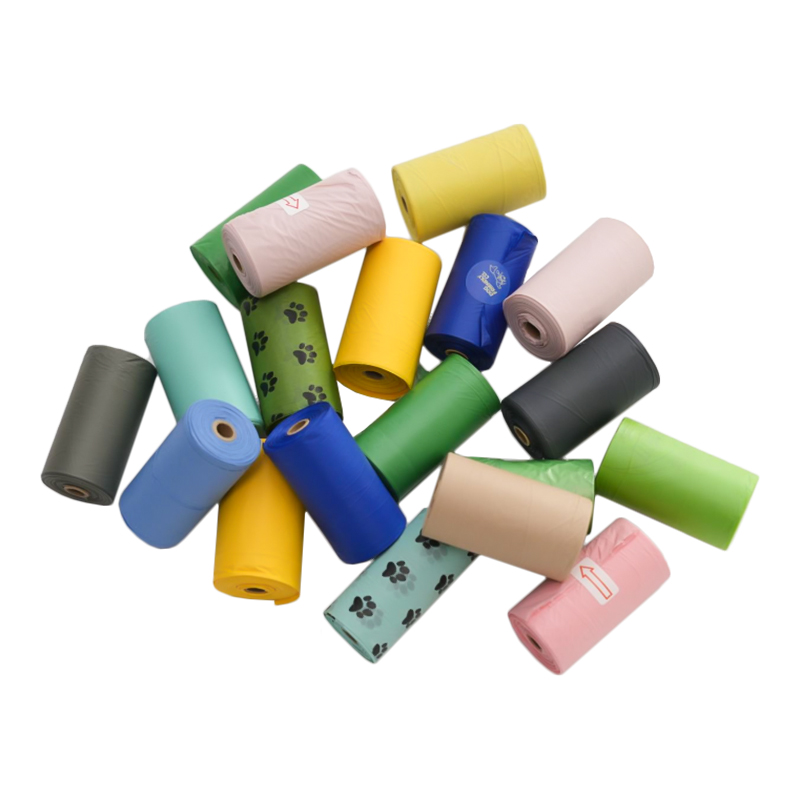
Custom Fully Biodegradable Supermarket Shopping Bags for Retail and Food PackagingCustom PBAT, PLA and starch shopping bags with load-bearing strength and flat-mouth or zipper options for retail and food packaging.View Product →
These need puncture resistance and a reliable seal under wet, heavy loads, plus a fit that does not slip off the bin rim. Flat-mouth and drawstring constructions behave differently on filling lines, and high-seal-strength grades exist specifically to prevent leakage. A liner that fails in the kitchen bin will not be used twice, however good its certificate.
Very thin gauges, often ten to fifteen microns, with enough tensile strength to survive tear-off from a roll and enough puncture resistance for the task. Home compostability certification is a meaningful differentiator here, because a proportion of buyers will genuinely put the bag in a garden composter. Lightweight grades are common, and the thickness tolerance matters more than in any other film application because the whole value proposition is that there is less material.
These are injection-moulded or thermoformed, and heat resistance is the recurring failure. A fork must survive hot food and the dishwasher-adjacent temperatures of a takeaway counter; a straw must survive a hot drink, which is exactly where standard PLA struggles. Nucleated or crystallized grades, or blends with higher-melting polyesters, extend the service window. Breakage testing, stiffness and the feel in the hand are purchase criteria that a data sheet will not capture, so sample evaluation under real food conditions is essential.
Water vapour transmission and grease resistance drive the grade selection. Waterproof and oilproof grades exist for oily and moist foods, where a standard film would lose strength or allow grease to wick through. Overall migration limits, hot-fill conditions and microwave use all need to be declared, and the declaration of compliance should name the food types and contact conditions it covers.
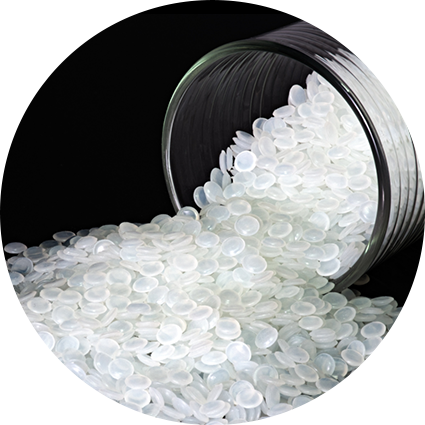
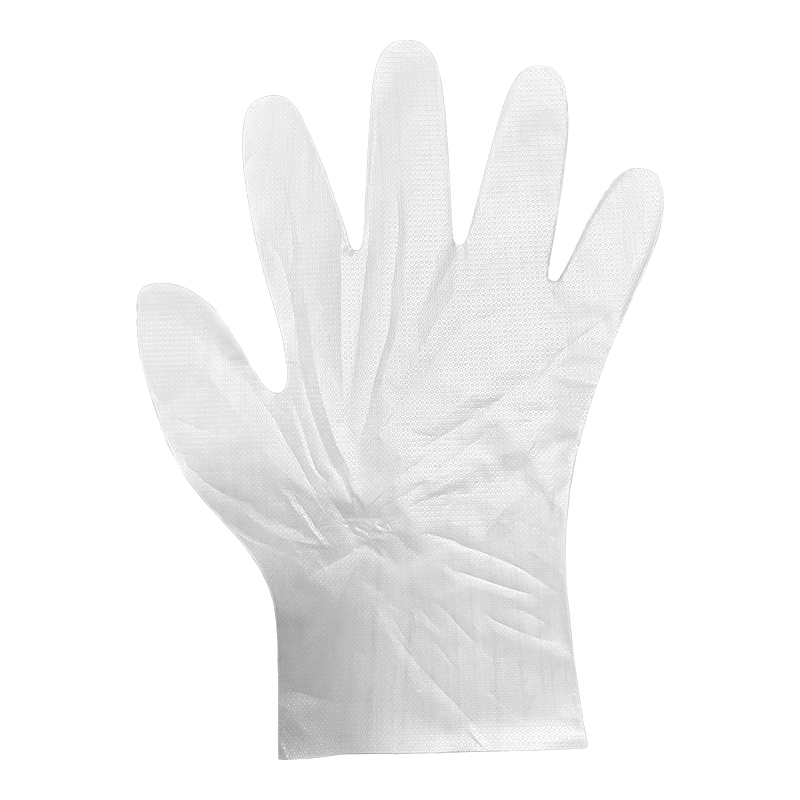 BIO/M-2206 Waterproof and Oil-Proof Biodegradable Food-Contact MaterialA food-contact-grade biodegradable material with waterproof and oil-proof performance for lunch boxes, tableware and food packaging bags.View Product →
Agricultural film is judged on a different standard, typically soil biodegradation rather than industrial composting, and on agronomic function: it must survive machine laying, hold heat and moisture through the early season, then break down on a schedule that matches the crop cycle so it does not interfere with harvest or the next planting. Degradation rate is tuned through formulation, and the specification should state the intended crop duration in days rather than only the film thickness.
Strength, printability and stacking performance dominate. Thicker gauges slow disintegration, so a thicker film may need a different certification scope. Where the packaging protects heavy goods, the honest answer may be that compostability is not the right claim, and a recyclable mono-material or a bio-based drop-in resin is the better purchase.
Below roughly fifteen microns, the constraints shift to toughness, transparency and dimensional stability. High-toughness transparent grades are used where the film must stay clear, and non-deforming grades where the film is converted into small liners and must not curl or shrink after sealing. At these gauges, small differences in gauge uniformity show up immediately as sealing defects, so thickness tolerance belongs in the contract, not in a conversation.
Comparing compostable and conventional packaging on price per kilogram is misleading, and buyers who do it tend to reject good projects for the wrong reasons or approve bad ones.
Compostable polyesters have densities around 1.23 to 1.27 g/cm³, against roughly 0.91 to 0.96 g/cm³ for polyethylene. For the same film area and the same thickness, the compostable film is roughly thirty to thirty-five percent heavier. If the resin costs two and a half times as much per kilogram, the cost per bag is closer to three and a half times, not two and a half.
The corrections that matter are yield and downgauging. Yield, expressed as square metres per kilogram, is the honest unit for film purchasing. Downgauging is where compostable blends can recover some of the difference: a stiffer blend may hold the same load at a lower gauge than a softer one, and a higher tensile strength can allow a thinner bag with the same performance. Run the comparison as cost per thousand finished units at equal performance, including sealing, printing, scrap rate and changeover time, and the picture is usually clearer than the resin price list suggests.
Then add the costs that do not appear on the resin invoice: extended producer responsibility fees that are increasingly modulated by recyclability and compostability, taxes on non-recycled plastic packaging waste in some markets, and the commercial value of a claim your customer can actually substantiate.
Regulatory direction is consistent across major markets, even where the details differ. Three trends affect purchasing decisions directly.
The practical implication for buyers is that a claim should be tied to a standard and a certification scope, because that is what regulators, waste operators and customers will ask for. Marketing language will not survive an audit; a certificate number and a test report will.
Verification is procedural, not adversarial, and it takes surprisingly little time when it is built into the sourcing process.
A supplier who resists any of these steps is telling you something useful about how the next two years of that relationship will go.
If you take one thing from this guide, take the sequence rather than the terminology. Decide the end-of-life route first, because everything else follows from it.
That path avoids both of the expensive mistakes in this market: paying a premium for a claim that no waste stream will honour, and buying a conventional product while telling customers it is something else. The materials exist, the standards exist and the test methods exist. What usually fails is the specification that never named any of them.




+86 18101032584
No. 60-1, Jichuan East Road, HailingIndustrial Park, Hailing District, Taizhou City.


Copyright© Taizhou Huangyan Zeyu New Material Technology Co., Ltd. All Rights Reserved.
 Custom Fully Degradable Raw Material Manufacturers


 English
 Français
 Español
 Deutsch
 italiano