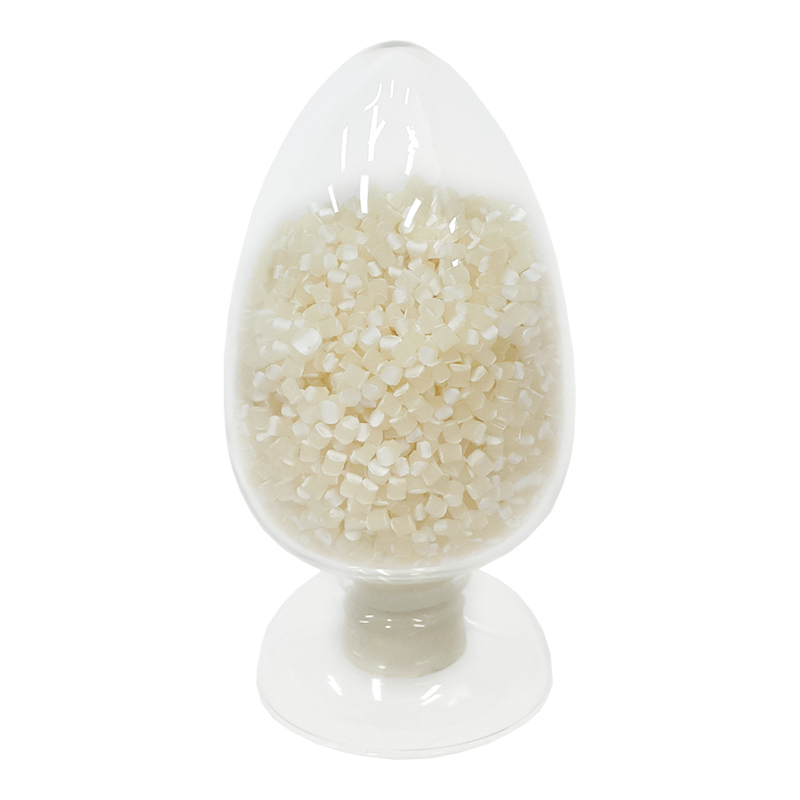

A blown-film line runs a starch-based compound for the first time and the bubble collapses within twenty minutes. The starch was not the problem. The resin had sat in a humid warehouse, was fed without drying, and was processed at barrel temperatures high enough to degrade the starch molecules before they ever reached the die.
Starch-based biodegradable materials are a family of formulations rather than a single polymer, and the differences between those formulations decide whether a production run succeeds. The short answer first: thermoplastic starch on its own is inexpensive and biodegrades quickly, but it is too moisture-sensitive and too weak for most packaging duties. Starch blended with biodegradable polyesters such as PBAT, PBST, or PLA at roughly 10 to 40 percent starch content is what actually ships in commercial volumes. The blend ratio is the single largest lever on cost, tensile strength, and degradation speed, and it is the first number a serious buyer asks about.
Everything below explains why that is the case, which grades exist, what to put in a specification, and where the real risks sit between a lab sample and a container load.
Native starch arrives as semi-crystalline granules built from two glucose polymers: amylose, which is largely linear, and amylopectin, which is highly branched. The ratio between them varies by source. Corn starch typically carries around 25 to 28 percent amylose, potato starch closer to 20 percent, and waxy maize near zero. That single figure changes film stiffness, sealing behaviour, and how fast the material retrogrades on the shelf.
To become processable, the granules have to be disrupted. Under heat, shear, and a plasticizer, hydrogen bonds inside the granule break and the material turns into a melt that can be extruded. This is thermoplastic starch, usually shortened to TPS. Glycerol is the most common plasticizer, often paired with sorbitol or water. Glycerol content is the practical dial: more plasticizer gives a softer, more flexible film, but it also increases migration, tackiness, and moisture pickup.
The processing window is narrower than most polyolefin converters expect, and it is worth stating in numbers because it is where most failed trials originate:
Retrogradation is the slow failure mode rather than the fast one. Over weeks or months, amylose chains re-associate, plasticizer migrates, and a film that felt supple at month one turns brittle at month six. If a product carries a twelve-month shelf life claim, that claim should be backed by aged-sample testing, not by a fresh-film data sheet.
Single-component TPS films absorb moisture, lose dimensional stability in humid conditions, and tear easily. The industry response is blending, and the logic of each blend partner is fairly consistent.
PBAT is ductile and tough, with high elongation at break, and it processes on conventional equipment. Adding starch to a PBAT matrix lowers raw material cost and speeds up biodegradation, because starch acts as a readily available carbon source for microorganisms and helps break the continuous polymer matrix apart. The trade-off is that too much starch reduces tensile strength and puncture resistance, so most commercial film grades keep starch in the 10 to 40 percent window and use a compatibilizer to keep the phases from separating.
PLA brings stiffness and higher tensile strength, plus better clarity, but it is brittle and its industrial composting requirements are more demanding. Starch-PLA blends are common in rigid applications such as cutlery and lunch boxes, where rigidity matters more than tear resistance. PBST and PHA sit between these poles and offer their own balance of toughness and compostability.
Compatibility is where formulations live or die. Starch is hydrophilic and polyester is hydrophobic, so without a coupling agent the two phases debond and the film fails at the interface. Reactive extrusion with maleic anhydride grafted polymers, or the use of block copolymers, is standard practice. A supplier that cannot state its compatibilizer approach, its starch source, and its starch loading is not giving you enough information to qualify a material.
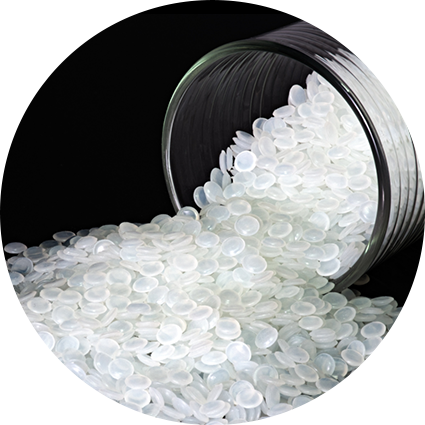
 PBAT Suppliersinformation to be updatedView Product →
For converters building a starch-based film, the polyester backbone is the anchor. A fully biodegradable polyester grade such as PBAT supplies that backbone and defines the mechanical envelope the starch phase will operate inside.
The table below summarises how the common systems differ in practice. Treat the figures as indicative bands rather than guarantees, because starch source, plasticizer level, compatibilizer chemistry, and film thickness all shift the numbers considerably.
| Material system | Typical starch content | Mechanical character | Moisture sensitivity | Typical end of life |
|---|---|---|---|---|
| Thermoplastic starch, plasticized | 70 to 100 percent | Low tensile strength, brittle when dry | Very high | Industrial composting, soil burial |
| Starch blended with PBAT or PBST | 10 to 40 percent | Flexible, good tear and puncture resistance | Moderate | Industrial composting, soil burial |
| Starch blended with PLA | 10 to 30 percent | Stiff, high tensile strength, low elongation | Moderate | Industrial composting with sustained heat |
| Starch blended with PHA | 10 to 40 percent | Tough with good barrier balance | Low to moderate | Home and industrial composting |
| Starch-filled bio-based polyolefin | 10 to 30 percent | Close to conventional polyolefin behaviour | Low | Mechanical recycling |
The last row is often confused with the first four. A starch-filled polyethylene or polypropylene resin can be bio-based and can reduce fossil carbon content, but the polyolefin matrix does not biodegrade on a composting timescale. If a buyer's requirement is certified compostability, that system does not meet it, no matter how the marketing reads.
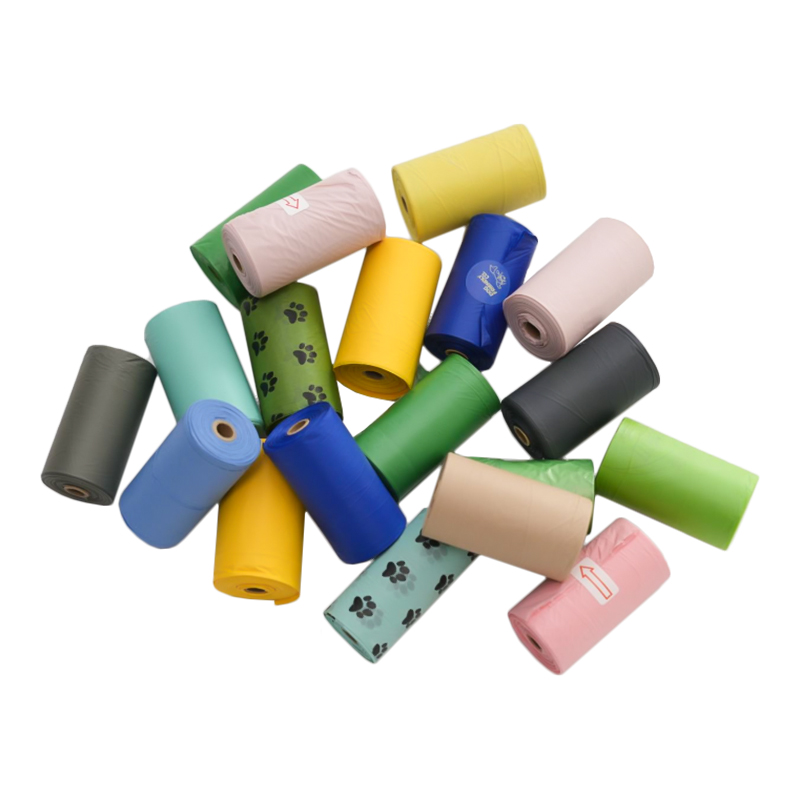
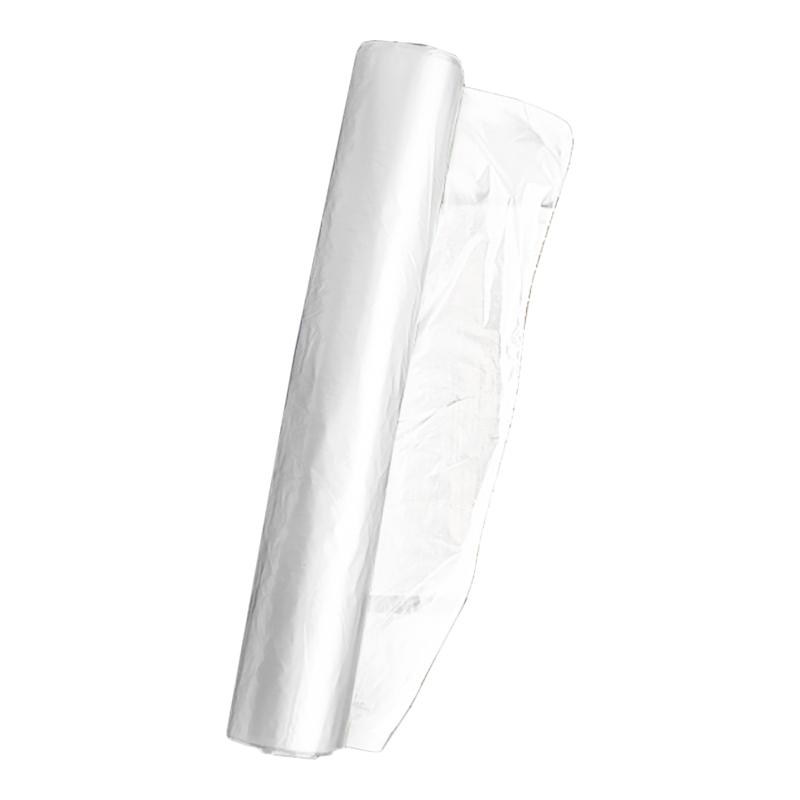
Retail bags, produce films, and beverage carrier bags are the largest volume application, largely because compliance deadlines in several markets have made certified compostable bags a procurement requirement rather than a preference. Starch-PBAT film runs on LDPE-style blown film lines with modest adjustments to temperature profile and die gap, though slip and anti-block additives usually need re-tuning because starch changes surface energy.
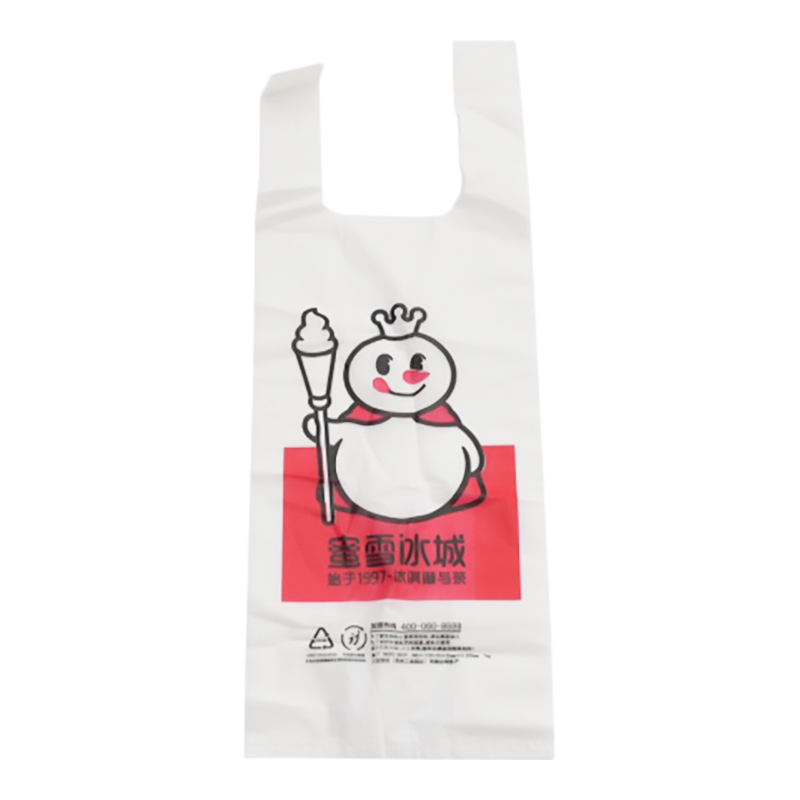 Fully biodegradable shopping/milk tea bag special material BIO/M-2501AThe fully biodegradable material BIO/M-2501A is an environmentally friendly material designed for film bag applications. The material has the characteristics of comple...View Product →
A shopping and beverage carrier grade shows what a dedicated starch-polyester formulation looks like in practice: the balance of load-bearing strength, seal strength, and printability is set for the bag's specific duty rather than for a generic film test.
Mulch film is one of the strongest technical cases for starch-based materials. The film has to survive one growing season, hold soil temperature and moisture, then break down in the field without being collected. Starch contributes to the early-stage breakdown that lets the film fragment and be consumed by soil microorganisms after harvest, while the polyester fraction controls the service life. Getting the induction period right is the hard part: degrade too early and the crop is exposed, too late and residue persists into the next planting.
Self-degrading mulch formulations are engineered around that induction period, and the specification conversation should always include the intended crop cycle length and local soil conditions.
Cutlery, lunch boxes, cups, and straws use starch-PLA and starch-PBAT blends where rigidity, heat tolerance, and food contact compliance are the governing requirements. Heat deflection is the frequent sticking point. A starch-based fork that performs at 40 degrees Celsius may soften noticeably in a 70 degree Celsius dishwasher cycle, so the intended use case has to be specified up front. The wider commercial picture in packaging is covered in more depth in this piece on fully biodegradable bags in the packaging industry.
Most sourcing problems with starch-based materials trace back to an incomplete specification. The following parameters belong in any serious enquiry, and a supplier should be able to provide measured values rather than typical values:
The certification line deserves particular attention. Industrial composting standards, home composting schemes, and soil biodegradation claims are different frameworks with different temperature and time requirements. A resin certified for industrial composting at 58 degrees Celsius does not automatically satisfy a home compost claim, and a claim of biodegradability without a named standard and a certificate number is not a specification, it is a slogan.
Starch-based materials have known weaknesses, and pretending otherwise wastes development time. Moisture vapour barrier performance is typically weaker than polyolefin, which limits use in long-shelf-life dry goods packaging unless a multilayer structure or coating is used. Starch-rich films can be tacky on the roll and prone to blocking. Thermal stability during processing is narrower than most converters are used to. Ageing behaviour needs to be proven for the intended shelf life rather than assumed.
End-of-life performance is conditional, not universal. These materials degrade reliably in managed conditions with the right microbial population, temperature, and moisture. In a dry, cold, oxygen-poor landfill, degradation is slow regardless of what the material is, which is why the credible value proposition is compostability and organic recycling rather than a promise that litter will disappear. Sorting also matters: a compostable bag entering a mechanical recycling stream can contaminate the recyclate, so clear labelling and disposal instructions are part of the product, not an afterthought.
Starch is one of the cheapest biopolymer feedstocks available, which is precisely why it appears in so many formulations. Increasing starch loading lowers compound cost, but it also lowers mechanical performance and can increase processing scrap, so the apparent saving can evaporate at the line. The honest calculation is cost per finished unit, including drying energy, scrap rate, downtime for screw cleaning, and the yield of conforming product, not cost per kilogram of resin.
On supply, starch is traded globally as a commodity tied to corn, cassava, and potato harvests, so prices move seasonally and regional availability varies. Polyester blend partners are a more concentrated supply chain with their own price cycles. A dual-sourced formulation, where the starch and polyester components are qualified separately, is a practical hedge against single-source disruption.
For a first trial, run a controlled sequence: dry the resin to the stated moisture target and record the actual value, establish a temperature profile with the melt below the supplier's stated ceiling, extrude a small quantity and measure film gauge uniformity, then hold samples for tensile, seal strength, and heat resistance testing. Keep an aged sample set from the same run so that month three and month six data come from identical material. If a formulation does not pass the trial, the moisture, temperature, and compatibilizer variables should be changed one at a time, because changing all three at once produces a result nobody can reproduce.
Starch-based biodegradable materials reward buyers who treat them as an engineered system rather than a commodity substitution. If you are specifying a grade, blending a formulation, or moving a product from sample to container load, the fastest path is a technical conversation about your process conditions and target performance before a purchase order is raised. You can start that conversation through our contact page.




+86 18101032584
No. 60-1, Jichuan East Road, HailingIndustrial Park, Hailing District, Taizhou City.


Copyright© Taizhou Huangyan Zeyu New Material Technology Co., Ltd. All Rights Reserved.
 Custom Fully Degradable Raw Material Manufacturers


 English
 Français
 Español
 Deutsch
 italiano