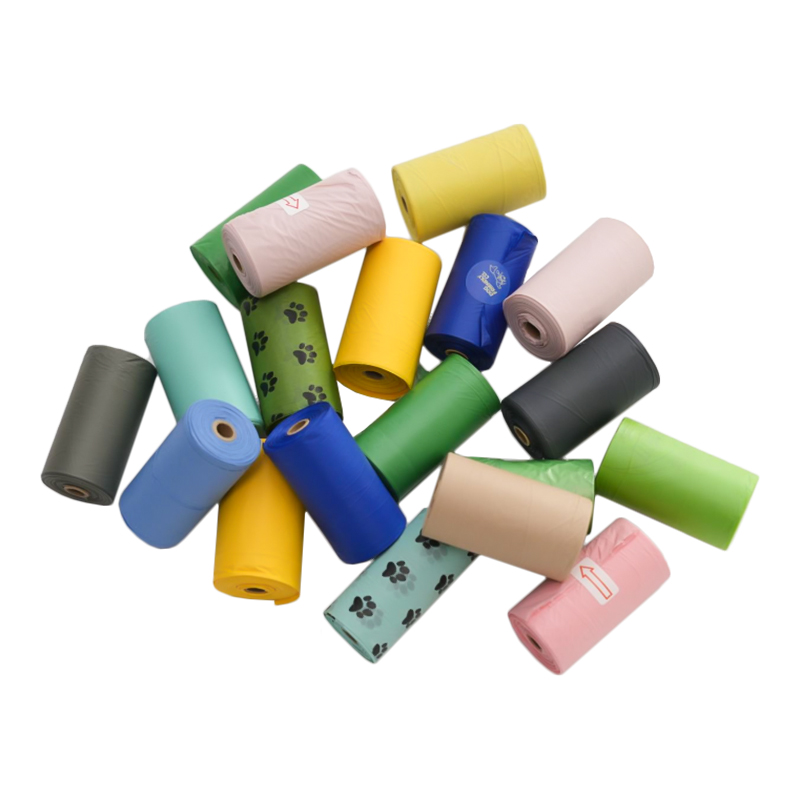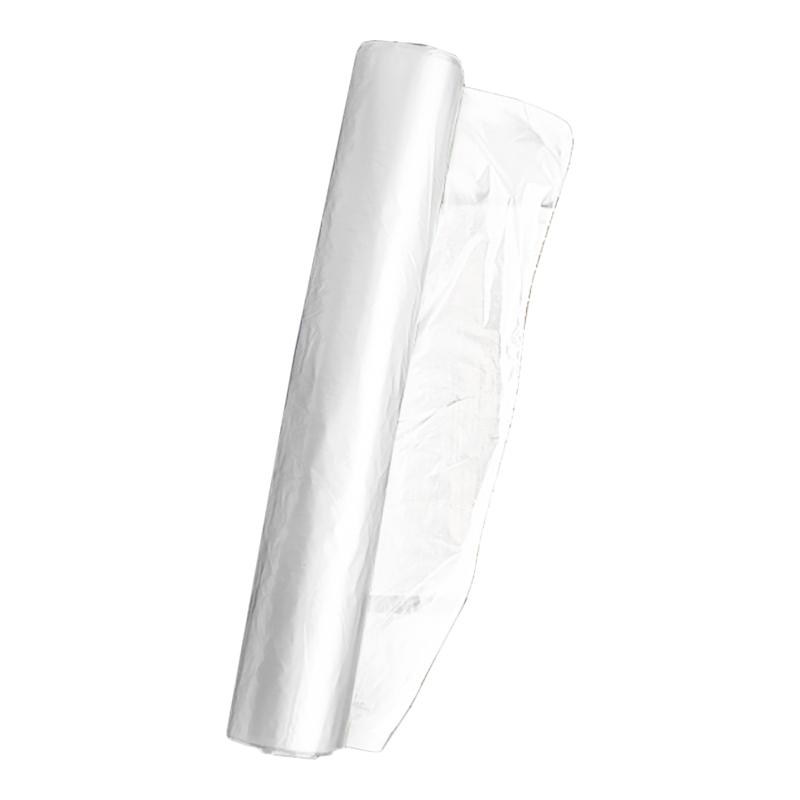

Two sample bags arrive on the same bench in the same week. Both carry a green leaf, both are printed with the word "eco", and both arrived with a one-line spec sheet. One is 18 microns thick and feels slightly stiff and papery. The other is 22 microns, stretches like a supermarket carrier bag, and has a faint sweet smell when you cut it. Your buyer has already promised a retail chain that the packaging is "compostable", your printer has already quoted the artwork, and the question in the room is simple: is there actually a difference between these two bags, or is this just vocabulary?
There is a difference, and it is not vocabulary. It is the difference between a material property and a verified outcome. "Biodegradable" describes what a material can eventually do under some conditions, with no deadline, no defined environment and usually no independent verification. "Compostable" describes a finished product that has passed a specific, timed, third-party test protocol in a specific environment, including a residue and toxicity check on what is left behind.
That single distinction decides which bin the bag is allowed in, which label you are legally allowed to print, what you can promise a customer, and how much the bag costs. Everything else in this article follows from it.
Every compostable bag is biodegradable, but almost no biodegradable bag is compostable. Compostability is a narrow, certified subset of biodegradability, defined by a time limit, a temperature range, a required percentage of conversion, and a limit on what is left over. Biodegradability on its own is a scientific description of a mechanism, not a guarantee of a result.
This matters because the two words lead to completely different supply chains. A certified compostable bag is designed to be collected with food waste and processed at an industrial composting facility that runs at 52-60 °C, turns material in 8-12 weeks, and screens the output. A merely biodegradable bag has no such destination. It may break into fragments in a hedge, a landfill or a ditch over an unknown number of years, and no waste operator is obliged to accept it.
The practical test is this: if you removed the word "compostable" from your packaging brief and kept only "biodegradable", could your supplier tell you what standard the finished bag passes, in what environment, and in what timeframe, with a certificate number you can look up? If the answer is no, you are not buying a disposal route. You are buying a word.
| Question | "Biodegradable" on a bag | "Compostable" on a bag |
|---|---|---|
| What the word describes | A material property: microorganisms can eventually break the polymer down | A verified outcome in a defined environment, confirmed by a third party |
| Timeframe | Not specified, or buried in fine print. Could be months or decades | Fixed by the standard: typically 90% biodegradation within 180 days and 90% disintegration within 84 days |
| Environment | Unspecified, or named only in a footnote | Industrial composting by default. "Home compostable" is a separate, stricter certification |
| Temperature window | Whatever conditions the chosen test used | 52-60 °C for industrial composting; 20-30 °C for home composting |
| Residue and toxicity | Usually not tested at all | Heavy-metal limits plus a plant-growth ecotoxicity test on the resulting compost |
| What gets tested | Often just the resin pellet, sometimes the film only | The finished article, including thickness, ink, adhesive and any liner |
| Verification | Self-declared, or a single lab report on one production batch | A certificate with an issue number, an issuing body and a defined scope |
| Legal standing | Restricted or banned in several markets; must be qualified in advertising | Accepted as a disposal claim wherever composting infrastructure exists |
| Typical materials | Starch-filled polyolefins, oxo-degradable additive blends, some polyesters | PLA/PBAT blends, PBAT, PBS, PHA and starch-based compostable films |
Biodegradation is an old idea in polymer science. Microorganisms secrete enzymes, the enzymes attack chemical bonds in the polymer chain, and the chain fragments into smaller oligomers and monomers that are absorbed and metabolised, ending as carbon dioxide, water, microbial biomass and mineral salts. In a laboratory this is measured as the percentage of the material's carbon that has been converted to carbon dioxide over a stated period, in a stated medium, at a stated temperature.
Composting is the same biology, industrialised. Instead of leaving the process to chance, a composting facility controls temperature, moisture, oxygen, carbon-to-nitrogen ratio and particle size, and turns the material regularly. Because the environment is aggressive and consistent, the timeframe can be guaranteed. Compostability standards were written around that controlled environment, which is why they can specify "180 days" and mean it.
Marketing collapsed the two because "biodegradable" is easy to print and hard to disprove. Proving that something does not fully biodegrade in a reasonable time requires a two-year soil burial trial, which almost nobody runs on a competitor's product. Regulators have spent the last decade closing that gap. The EU's Single-Use Plastics Directive prohibits oxo-degradable plastics outright, on the basis that they fragment rather than biodegrade and contaminate recycling streams. US federal guidance requires that biodegradability claims be supported by competent and reliable scientific evidence and qualified for the specific environment and timeframe. California's AB 1201 restricts the word "compostable" to products that meet ASTM D6400 or D6868 and are third-party certified, and applies a similar restriction to "biodegradable" claims on plastic products, with labeling rules phasing in during the mid-2020s.
The direction of travel is consistent. Regulators increasingly treat an unqualified "biodegradable" claim on a plastic item as a claim that must mean something specific or be removed. In practice, that means the safe, future-proof word for a bag that genuinely composts is "compostable", followed by the standard it meets.
If you want to know whether a supplier's claim is worth anything, do not read the marketing sentence. Read the standard the certificate cites. The numbers in that standard are the actual definition of the word.
A recognised industrial compostability certification, such as one aligned with EN 13432 in Europe or ASTM D6400 in the United States, is not a single test. It is a package, and all parts must pass on the same finished article.
Home composting certification, covered by schemes such as TÜV Austria OK compost HOME, AS 5810 and NF T51-800, repeats the same tests at ambient temperatures. A garden compost heap rarely reaches 60 °C, is turned irregularly, and dries out in summer. The material therefore has to biodegrade and disintegrate at 20-30 °C, over a period that can extend to twelve months, and still pass the ecotoxicity requirement. Many films that pass EN 13432 convincingly will fail a home composting protocol, because the polymer chemistry that performs at 58 °C is often too slow at 25 °C.
A biodegradation test is not a yes-or-no answer. It is a percentage, in a medium, over a period. That structure is exactly why the word alone is uninformative.
| Standard or scheme | Environment tested | What it requires | What it lets you claim |
|---|---|---|---|
| EN 13432 / ASTM D6400 | Industrial composting, 52-60 °C | 90% biodegradation in 180 days, 90% disintegration in 84 days, heavy-metal limits, ecotoxicity test | Compostable in industrial composting facilities, on the finished article |
| ISO 14855 / ASTM D5338 | Controlled composting, respirometric | 90% conversion of carbon to carbon dioxide within 180 days | Supports the biodegradation leg of a compostability certificate only |
| ISO 16929 | Pilot-scale composting | 90% of mass passes a 2 mm sieve after 12 weeks | Disintegration evidence, usually quoted alongside ISO 14855 |
| OK compost HOME / AS 5810 / NF T51-800 | Home composting, 20-30 °C | Same thresholds achieved at ambient temperature, over up to 12 months | Home compostable, which is a narrower and more valuable claim |
| ISO 17556 / ASTM D5988 | Soil burial, ambient | A measured percentage of carbon conversion over a stated period | Soil-contact behaviour, relevant to mulch film, not to a bin liner |
| ASTM D6691 | Seawater inoculum | A measured percentage over a defined marine test period | Marine degradability, a claim few products should make casually |
| ASTM D5511 / D5526 | High-solids anaerobic landfill | A percentage conversion over 30-90 days | Research data only. Not a disposal route and not compostable |
The reason some bags compost and others merely fragment comes down to one feature of the polymer chain: whether it contains hydrolysable bonds a microorganism can attack.
Compostable polyesters such as PLA, PBAT, PBS, PBST and PHA all contain ester linkages in the backbone. Water and microbial enzymes cleave those linkages, the chain length drops, and the resulting fragments are small enough to be taken into microbial cells and metabolised. The process is two-stage: abiotic hydrolysis first, then microbial assimilation. It is temperature dependent, which is why the same film behaves completely differently in a 58 °C windrow and a 20 °C garden heap.
Polyolefins such as polyethylene and polypropylene have a carbon-carbon backbone with bond energies around 400 kJ/mol and no hydrolysable groups. Ultraviolet light and heat can break the chains and cause embrittlement and fragmentation, but fragmentation is not biodegradation. The fragments persist, and the additive packages used to accelerate fragmentation are exactly what the EU prohibited under the oxo-degradable ban.
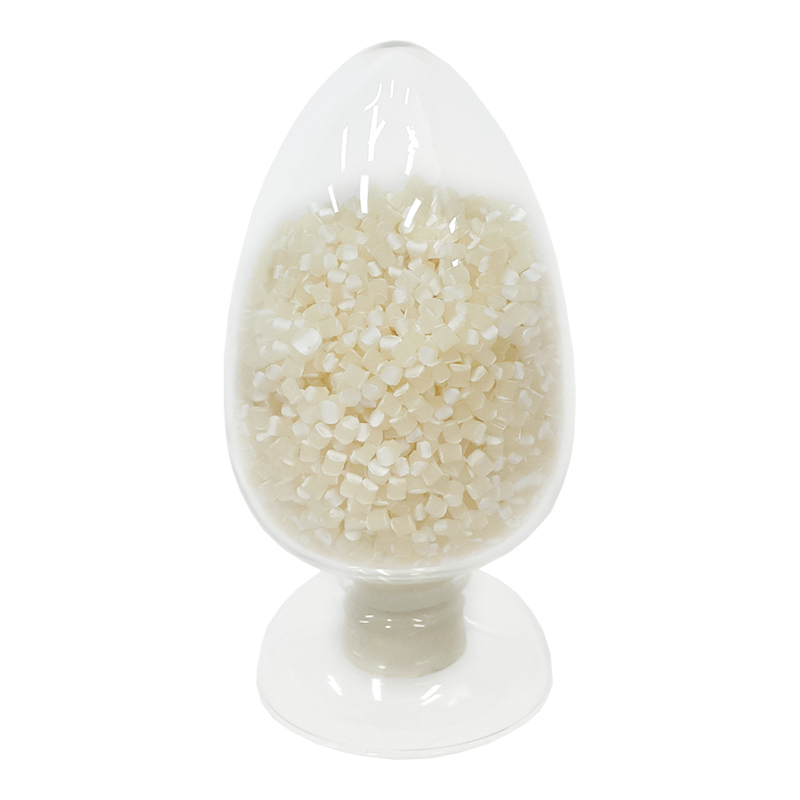
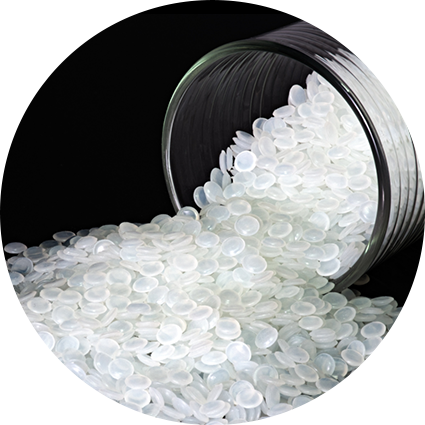
Grade selection inside the compostable family matters as much as the family itself. PLA is stiff and strong but brittle, has a glass transition temperature near 55-60 °C and biodegrades reliably only in industrial conditions. PBAT is flexible, tough and tolerant of ambient composting, but too soft on its own for many bag structures. PHA composts in soil and in home systems and is the most versatile of the group, at the highest cost. Commercial compostable films are therefore blends, usually PBAT with PLA, starch or mineral fillers, tuned by a masterbatch to hit a target thickness, tear strength and seal behaviour.
 PBAT Fully Biodegradable Polyester for Compostable Packaging FilmsA flexible biodegradable polyester for bags and food packaging films, relevant when comparing blend components alongside PLA, starch or mineral fillers.View Product →
Bio-based is a separate question from biodegradable, and confusing the two is the most common mistake in packaging specifications. Bio-based means the carbon came from plants rather than petroleum. A bio-based polyethylene made from sugarcane ethanol has exactly the same carbon-carbon backbone as petrochemical polyethylene and will not compost in any timeframe a waste operator cares about. Conversely, some fully fossil-derived polyesters compost perfectly well. Origin of carbon and end-of-life behaviour are independent variables.
The same logic applies to starch-blended resins sometimes described as bio-based, where starch is compounded into polypropylene or polyethylene to lower the fossil carbon content and, in some grades, improve stiffness and printability. Those materials can reduce the carbon footprint of an article meaningfully, and they can be genuinely useful. What they are not, without a certificate, is compostable. Starch loading can accelerate fragmentation, which is a different phenomenon from certified biodegradation and is not accepted by composting facilities.
Finally, remember that a bag is not only film. A compostability certificate covers the finished article, and the ink, the adhesive on any label, the print coverage and the thickness all have to pass the same battery of tests. A compostable film printed with a conventional solvent-based ink, or laminated to a non-compostable liner, is not a compostable bag. This is one of the most frequent causes of a failed certification scope in real projects, and it is usually discovered after the artwork has been approved.
Procurement teams routinely collapse four independent properties into one word, and suppliers rarely correct them. Keeping the axes separate prevents almost every labelling problem described later in this article.
A bio-based, non-biodegradable item can be recyclable and is often the better environmental answer for a durable product. A biodegradable but non-compostable item usually has no collection route at all, which makes the claim commercially hollow even when it is technically true. A compostable item in a market with no industrial composting capacity is a material shipped without a destination, which is a genuine problem that certification does not solve.
The practical sequence for any packaging project is therefore: decide the destination first, confirm the destination exists in the target market, then choose the certification that matches it, then choose the material that can meet that certification at your required thickness and cost. Reversing that order, which is what happens when a marketing team picks the word before the waste route, is how companies end up with a stock of bags they cannot legally label.
Once the definitions are clear, the commercial consequences are concrete. Buying "biodegradable" is buying a material with a property. Buying "compostable" is buying an outcome with a document trail. The two sit differently on a specification sheet, in a contract, and in a claims file.
On a compostable order you should expect to see a standard name, a certificate number, an issuing body, an expiry date and a scope that names the product family and the thickness. You should expect the certificate to reference the finished article rather than the resin. You should expect the supplier to be able to tell you the maximum thickness the certificate covers, because compostable film performance drops as gauge increases and a certificate issued at 15 microns does not automatically extend to 30 microns. You should also expect a shelf-life statement and a storage condition, because compostable films are moisture-sensitive and will lose mechanical strength if stored in a humid warehouse for two years.
On a biodegradable order, you should expect to be asked a question in return: biodegradable in what? If the supplier cannot answer that, the claim has no operational meaning and should not be printed on a bag that will be sold in a regulated market.
The specification differences spill into the physical product as well. Films that are engineered to disintegrate in 12 weeks at 58 °C are generally softer, more sensitive to heat and more sensitive to humidity than a low-density polyethylene film of the same gauge. They also tend to have lower tear resistance at very thin gauges, which is why compostable carrier bags are often specified slightly thicker than the conventional bag they replace, and why the perceived "thinness" of a compostable bag is a poor indicator of quality.
| Wording on the bag or spec sheet | What it usually means in practice | What to request before printing it yourself |
|---|---|---|
| "100% biodegradable" | No standard, no timeframe, no environment. Often a starch-filled polyolefin | The name of the standard, the environment and the percentage achieved, on the finished article |
| "Oxo-biodegradable" | Fragments under UV or heat. Prohibited in the EU and not accepted by composting facilities | Nothing. This is not a usable claim in most regulated markets |
| "Made from plants" or "plant-based" | Bio-based carbon content. Says nothing about end-of-life | Bio-based content percentage, and a separate end-of-life statement |
| "PLA bag" | Usually industrially compostable only, and often blended with PBAT or starch | The EN 13432 or ASTM D6400 certificate scope covering the finished bag |
| "Eco-friendly" or "green" | Unregulated marketing language with no testable meaning | A specific, verifiable claim to replace it |
| "Compostable" | Meaningful, if and only if a recognised certificate supports the finished article | Certificate number, issuing body, valid scope, and the maximum certified thickness |
Abstract definitions become useful only when attached to a specific shelf, bin or field. These five situations cover most of the volume in compostable and biodegradable bag procurement, and each one resolves differently.
Here the compostable claim pays for itself, because the bag can be collected with food waste and the retailer can display a legally defensible label. The specification should name the standard, confirm the certification covers the printed article at the actual gauge, and confirm the resin grade can hold the required load at that thickness. Where a very lightweight carrier bag is used, some European markets require it to be compostable rather than merely biodegradable, which makes the material choice a compliance decision rather than a marketing one. The relevant questions for the supplier are the certified thickness ceiling, the load rating at that thickness, and whether the same grade is available as a certified shopping bag rather than only as film.
Fully Biodegradable Supermarket Shopping Bags Made from PBAT, PLA and StarchEco-friendly carrier bags for retail and food use; material base and customization options are described, but certified thickness and load data still need confirmation.View Product →
Food-contact packaging adds a second layer of regulation on top of compostability. The material must satisfy food-contact requirements for the intended use, which in the EU means compliance with the plastics food-contact framework and migration testing, and in the US means compliance with the relevant food-contact regulations for the polymer type. Add fat, acid and heat and the requirement gets harder, because a film that resists water can still be attacked by hot oil. For takeaway containers, wraps and liners, the specification usually needs both a food-contact statement and a compostability certificate covering the finished item, and the two are not interchangeable evidence.
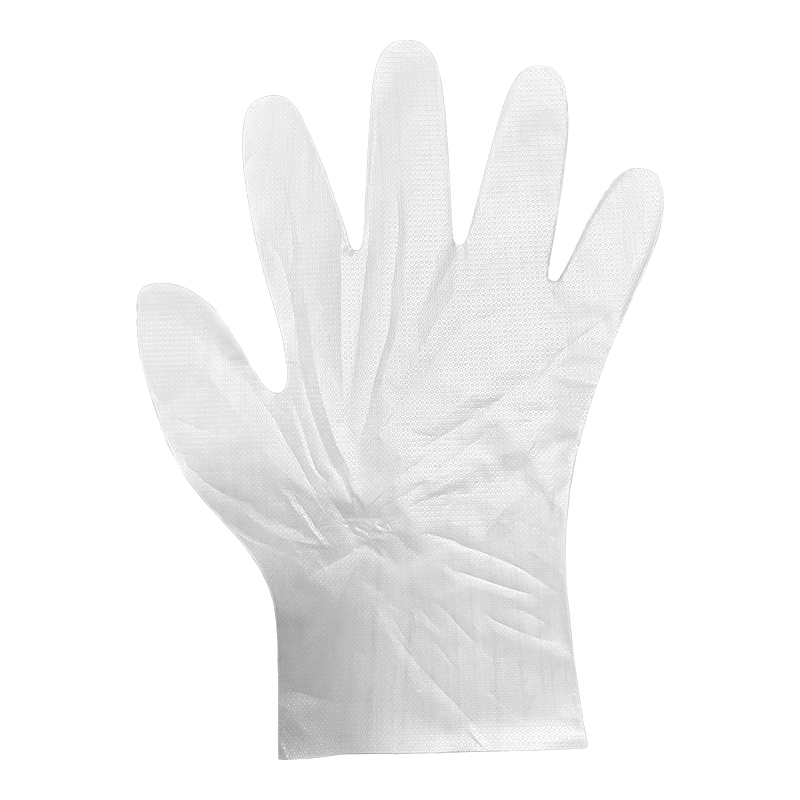 BIO/M-2206 Waterproof and Oil-Proof Fully Biodegradable Food-Contact MaterialA food-grade biodegradable material for lunch boxes, tableware and packaging bags; its barrier properties matter when the finished item also needs food-contact and compostability evidence.View Product →
Certification scope is where food service projects most often fail. A film that is certified at 20 microns is not automatically certified at 35 microns, and a compostable film with a heavy four-colour print is not automatically covered by a certificate issued for an unprinted film. When the artwork and the bag construction are fixed at the same time as the material, these two decisions can lock each other out.
This is the scenario where the word "biodegradable" does the most damage, because the buyer's instinct is that a bag going to landfill should at least degrade there. Anaerobic landfill tests do show measurable conversion for some treated materials over 30-90 days, and suppliers quote those figures heavily. But a landfill is not a controlled process, landfill gas capture rates vary enormously, and no compostability scheme will certify a landfill route. Most commercial composting facilities will reject bags that are not certified compostable, which means a "biodegradable" bin liner can end up with no disposal route in either direction. The commercially honest options are a certified compostable bag that goes into a food-waste collection, or a conventional bag with recycled content and an honest landfill statement.
Mulch film is the clearest case where compostability certification is usually the wrong target. The film is designed to fragment and biodegrade in situ in soil, so the relevant evidence is soil biodegradation data such as ISO 17556, combined with agronomic performance: does it maintain soil temperature and moisture through the growing season, does it break down before harvest or before the next planting, and does it leave residue that interferes with machinery? A supplier working on mulch film should be able to discuss the balance between service life and degradation onset, because those two requirements pull in opposite directions and the correct trade-off depends on the crop, the climate and the length of the season.
A bag that is legally labelled in one country may be illegal in another. Rules restricting unqualified biodegradability claims on plastic items now exist in several jurisdictions and continue to tighten, and some markets additionally require compostable bags to be a distinguishable colour so that sorting equipment and consumers can separate them from conventional film. For exporters, the practical implication is that the certificate and the artwork have to be reviewed market by market. A single global bag with a single global label is usually not achievable, and assuming otherwise is a common and expensive mistake.
The difference between the two claims becomes obvious once you follow the material into the waste stream, because each destination imposes a completely different set of conditions on the same polymer.
Two further interactions matter commercially. The first is conventional recycling. Compostable films are not compatible with the polyethylene and polypropylene recycling streams, and a compostable bag dropped into a plastic film collection point is contamination. That is precisely why some markets now require compostable carrier bags to be visually distinguishable, and why retailers with both streams need clear consumer-facing instructions rather than a single green logo. The second is mechanical sorting in composting plants: even a certified bag can be rejected at the gate if the operator cannot distinguish it from conventional film, which makes printing and colour a functional part of the specification rather than a branding decision.
The wider point is that compostability is a system property, not only a material property. It requires a certified product, a collection route, a processing facility and a market that accepts the output. Remove any of those four and the certified bag behaves like any other bag, with the added disadvantage that a consumer believes it will be handled correctly. For buyers, this is the strongest argument for starting every compostable packaging project with the question "who is going to collect this and where does it go", before the first sample is ordered.
Compostable materials cost more per kilogram than conventional polyolefins, and the gap is wider per finished bag than per kilogram, because compostable polyesters are denser. Polyethylene sits around 0.92 g/cm³, while PLA and PBAT are close to 1.25 g/cm³. A film of the same thickness therefore consumes more material mass, so the cost comparison has to be run on cost per bag or cost per square metre of film, not on the resin price alone.
Performance also differs in ways that affect design. Compostable films tend to have lower stiffness than polypropylene, higher moisture sensitivity than polyethylene, and a lower heat tolerance, particularly in PLA-rich blends where the glass transition sits around 55-60 °C. That has direct consequences for hot-fill applications, for warehouse storage in humid climates, and for the temperature the bag experiences in a delivery van in summer. Shelf life is typically quoted at around twelve months when stored cool and dry, and stock rotation matters more than it does for conventional film.
| Property | Conventional LDPE carrier film | PBAT-rich compostable film | PLA-rich compostable film |
|---|---|---|---|
| Density (g/cm³) | About 0.92 | About 1.25 | About 1.24 |
| Tensile strength | Moderate, 10-25 MPa | Moderate, 10-20 MPa | High, 50-70 MPa |
| Elongation at break | Very high, 300-800% | High, 500-700% | Low, often under 10% |
| Tear and puncture resistance | Excellent | Good, improves with gauge | Lower, brittle at thin gauges |
| Heat tolerance | Up to about 90-100 °C | Lower, softening well below PE | Limited by a glass transition near 55-60 °C |
| Moisture sensitivity | Effectively none | Moderate, needs dry storage | Higher, especially in starch-bearing blends |
| Typical shelf life | Two years or more | Around twelve months in cool, dry storage | Around twelve months with careful stock rotation |
| Cost index per bag | Reference | Roughly two to four times the PE reference | Roughly two to four times the PE reference |
| End-of-life options | Mechanical recycling where film collection exists | Industrial composting, some grades home compostable | Industrial composting, generally not home compostable |
There is a second cost that rarely appears in the quotation and appears later in the project: the cost of changing the specification after certification. Because the certificate covers the finished article, moving from a 20 micron unprinted film to a 25 micron printed film can invalidate the scope and require retesting. Building the artwork, gauge and print coverage into the material selection phase, rather than after it, is the cheapest risk control available on a compostable packaging programme.
The gap between a compostable material and a legally usable compostable bag is almost entirely a documentation exercise. Working through this list before artwork approval removes most of the risk.
Two items on that list are routinely skipped. The first is thickness scope, which is the most common cause of a claim that is technically true for the supplier's reference film and technically false for the bag you are actually buying. The second is print coverage. A compostable bag with a large solvent-based ink block is not the same product as the unprinted film that passed the tests, even when the film is identical.
Buyers who need a decision quickly can compress the process considerably by handing the destination and the intended disposal route to the supplier first and asking which grades carry evidence that matches it. Send us the market, the application and the thickness target and the material shortlist usually resolves to two or three grades rather than a catalogue.
Compostable film is harder to run than polyethylene, and the differences show up at the extrusion line rather than in the certificate. Polyester grades need drying to a low moisture content before processing, they have a narrower processing window, and their melt strength and bubble stability are different. A supplier that only trades finished bags will often be unable to explain why a gauge that works in summer fails in a humid winter, or why a switch of masterbatch changed the seal behaviour.
This is where an integrated material-to-product structure earns its place. When the same organisation develops the resin grade, the modified compound and the finished film, the performance conversation happens one step earlier, and specification changes are handled by adjusting the formulation rather than by re-sourcing. In practice this shows up in three places buyers can test for directly: whether the supplier can quote a melt flow range and a moisture specification for the grade they are proposing, whether they can state the maximum certified thickness for a given application, and whether they can explain what happens to the film if the customer's converting line runs at a different temperature profile. The material-level comparison between biodegradable films and conventional plastic films is a useful starting point for that conversation, because it frames the trade-offs in converting terms rather than in marketing terms.
It is also worth asking what happens to production scrap. Compostable film scrap can often be reprocessed internally, but only if it has been kept clean and dry and if the formulation tolerates a percentage of regrind without falling outside the certified composition. Suppliers who can answer that question have usually thought about the whole production route, and suppliers who cannot usually have not.
A final practical note on qualification. Compostable film converts differently from polyethylene, so running a small trial on the customer's own machine before committing to a full order is worth the time it costs. Seal temperature, seal pressure and dwell time all need to be re-established, and the optimum settings are usually lower and narrower than for a polyolefin film. Discovering that during a production run, rather than during a trial, is the difference between a compostable packaging launch and a compostable packaging write-off.
Compostable and biodegradable are not two words for the same bag. Compostable means a finished product has passed a timed, third-party protocol in a defined environment, broken down within a set number of days, and left residue that passes a toxicity test. Biodegradable means the material can, in principle, be broken down by microorganisms, at some speed, somewhere, with no deadline and usually no verification. Compostable is a subset of biodegradable with an outcome attached.
For anyone buying bags, the decision sequence that survives audits is simple. Start with the destination and confirm it exists in the market where the bag will be sold. Then select the certification that matches that destination, and check that the certificate scope covers the finished article at your gauge and print construction. Then select the grade that can meet that certification at the required load, thickness and cost. Only then approve the artwork, and only print the word that the certificate actually supports.




+86 18101032584
No. 60-1, Jichuan East Road, HailingIndustrial Park, Hailing District, Taizhou City.


Copyright© Taizhou Huangyan Zeyu New Material Technology Co., Ltd. All Rights Reserved.
 Custom Fully Degradable Raw Material Manufacturers


 English
 Français
 Español
 Deutsch
 italiano