
A packaging engineer in northern Italy opens a sample carton and finds two rolls that carry almost the same label: bio-based eco-friendly material, compostable, 25 microns. On the sealing jaw, one runs at 118 °C and holds 3.2 N/15 mm; the other needs 152 °C, curls at the edge and leaves a hazy seal that fails the dye penetration test. Same words on the label, two different materials, and a production plan that now has to be rebuilt.
That gap is the whole subject of this guide. Bio-based eco-friendly materials are not a single category with a single price. They are a set of polymer families, each defined by three things at once: where the carbon came from, what happens to the product after use, and how the material behaves on your existing line. A supplier who answers only one of those three questions has not answered the question you actually asked.
So here is the conclusion first, before the explanations. Specify your material on all three axes simultaneously, and put the numbers into the purchase contract with the test method named next to each number. Feedstock origin, end-of-life route and processing window are independent variables; treat them as a specification, not as a marketing position. Everything that follows explains why that discipline pays for itself, and what to check at each stage.
Most confusion in this category comes from treating two words as synonyms. They are not even measured in the same laboratory.
Bio-based refers to origin. It asks how much of the carbon in the polymer came from recently living plants rather than from fossil deposits. The standard method is radiocarbon analysis, described in ASTM D6866 and EN 16640, and it returns a percentage of bio-based carbon. Note the wording: bio-based carbon, not bio-based mass. A polymer with 40 percent bio-based carbon by mass might test at 60 percent bio-based carbon, because oxygen and hydrogen carry no carbon at all. When a data sheet quotes a bio-based figure, the first question is which of the two percentages it is.
Biodegradable refers to fate. It asks whether microorganisms convert the material into water, carbon dioxide, mineral salts and biomass within a defined time, at a defined temperature, under a defined set of conditions. That definition is worthless without the conditions attached. Paper is biodegradable in a garden; it is inert in a dry landfill. A polyester can pass an industrial composting test at 58 °C and still sit unchanged in a cold marine environment for years. Standards exist precisely to pin the conditions down, and they are discussed later.
Put the two axes together and four combinations appear, three of which are commercially common:
The practical consequence is blunt. A bio-based bottle is not compostable, and a compostable bag is not necessarily bio-based. If your customer promise is "made from plants", measure radiocarbon. If your promise is "certified compostable", measure disintegration and biodegradation. Buying one and claiming the other is the single most common compliance failure in this material category, and it is the kind of failure that surfaces publicly, in a tender document or a retailer audit, long after the shipment has left.
The word "eco-friendly" carries no legal definition anywhere. It is a useful shorthand in internal conversation and a liability on a printed bag. Keep it out of artwork.
Once you move past the label, quotations in this category almost always resolve into a handful of polymer families, blended or modified to reach a target property set. Knowing the family tells you what the material can and cannot do before you ever run a trial.
PLA is produced by fermenting plant sugars to lactic acid, then polymerising it. It is rigid, transparent and prints beautifully, with a density around 1.24 g/cm³ and a glass transition near 55 to 60 °C. That glass transition is the catch. A PLA cup holds cold drinks well and deforms in a hot car, and a PLA film becomes brittle at low temperatures unless it is blended. PLA also hydrolyses, which means the resin must be dried to a low moisture content before extrusion, and finished film has a finite shelf life under humid storage. Used well, it contributes stiffness, clarity and dimensional stability to a blend; used alone, it is a specialised material, not a general-purpose one.
PBAT is a flexible aliphatic-aromatic copolyester. It is soft, tough, tolerant of low temperatures, and it heat-seals readily, which is why it appears in most compostable film formulations as the component that supplies flexibility and tear resistance. It is also the reason many compostable films feel slightly "waxy" compared with polyethylene. PBST is a close relative with a different diol in the chain; it trades some flexibility for better heat resistance, which matters for anything that will be filled hot or stacked under load. Both are typically fossil-based today, though partly bio-based versions are commercial, and both are certified compostable in industrial conditions when formulated correctly.
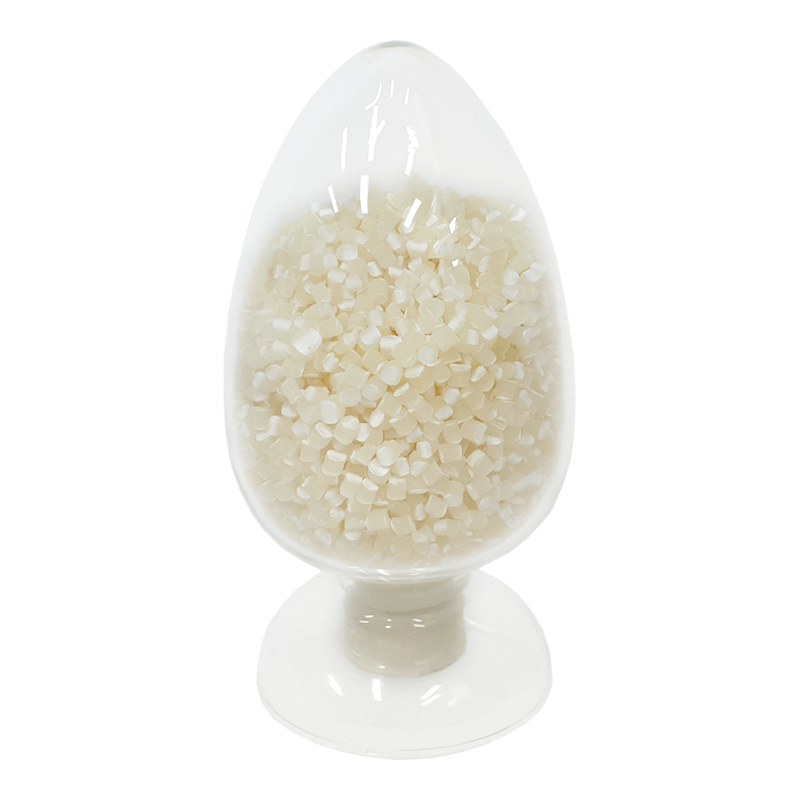
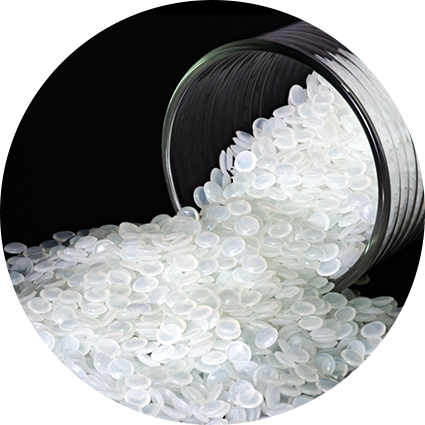
 PBAT Fully Biodegradable PolyesterView this PBAT grade for the flexible, tear-resistant component in compostable film formulations and packaging such as bags and food films.View Product →
Because PBAT and PLA are complementary — one soft, one stiff — most commercial compostable films are blends rather than single polymers. That is also why two suppliers can quote "the same" material with completely different sealing behaviour: the ratio, the compatibiliser and the slip package are all formulation decisions, not polymer facts.
Polyhydroxyalkanoates are produced directly by microbial fermentation rather than by polymerising a monomer afterwards. The family is broad, from stiff and brittle to rubbery, and some grades degrade in soil and in marine conditions where PLA and PBAT do not. The trade-offs are a narrower processing window, a stronger odour in some grades, and a price that still sits well above the mainstream polyesters. PHA is the right answer when the end-of-life scenario is genuinely open — a mulch film that may end up in soil, or a product with a realistic chance of leaking into the environment — and the wrong answer when the only requirement is a compostable retail bag at volume.
Thermoplastic starch from maize, potato or cassava is inexpensive and available at scale, and it is usually compounded with PBAT, PLA or a compatibiliser rather than used alone, because pure starch film is moisture-sensitive and mechanically weak. Well-formulated starch blends give good stiffness and opacity at a lower cost per kilogram. Poorly formulated ones give bags that block in the roll, absorb humidity in the warehouse and lose tensile strength within weeks. The formulation is the product here, and a data sheet that lists only "starch blend" without a composition breakdown tells you very little.
A different route to lower fossil carbon is to modify a conventional polyolefin with a bio-based component and keep the processing behaviour intact. These grades are marketed as bio-based resin, and they are not compostable: the polypropylene or polyethylene backbone behaves exactly as it always did. What changes is the fossil carbon content and, in some grades, the mechanical profile. Manufacturers in this space publish performance positioning such as soft and low-temperature resistance, wear resistance, electrical insulation and fatigue resistance for specific grades, which points at industrial applications — cable components, technical mouldings, durable goods — where the buyer wants a measurable bio-based content without retooling.
The company behind this site covers both sides of that divide. Its public product structure runs from fully biodegradable polyesters through bio-based PP+ST and PE+ST resins, into modified compounds for film, bags, food contact, mulch and straws, and then into finished film, bags and tableware, as set out in its company background. That vertical range matters for a buyer because it means a single conversation can cover the resin, the compound and the finished article, which is where most specification errors actually happen.
The same polymer family can be an excellent bag film and a poor lunch box. Application determines which properties dominate, and the dominant property determines which grade you should be testing. The table below maps the common cases to the measurement that settles the choice.
| Application | What dominates the decision | Test that settles it | Typical failure |
|---|---|---|---|
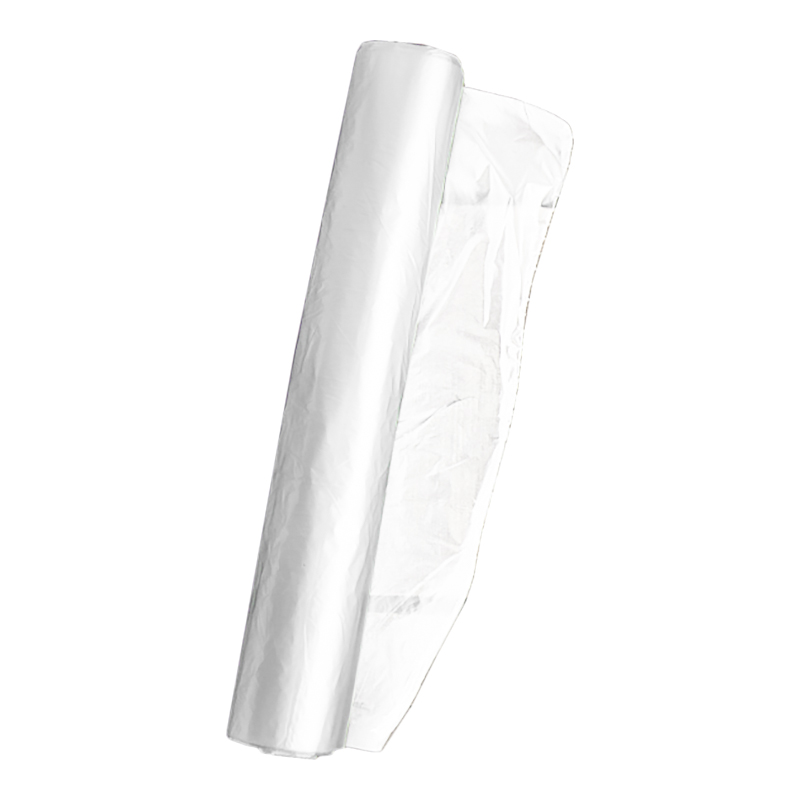
| Shopping and grocery bags | Load-bearing strength at low gauge, seal integrity, printability | Dart impact plus seal strength after 24 hours | Seal creep under a full bag at 35 °C |
| Household garbage bags | Tear resistance, puncture resistance, seal strength at the fold | Elmendorf tear and slow puncture | Seam splitting when the bag is lifted |
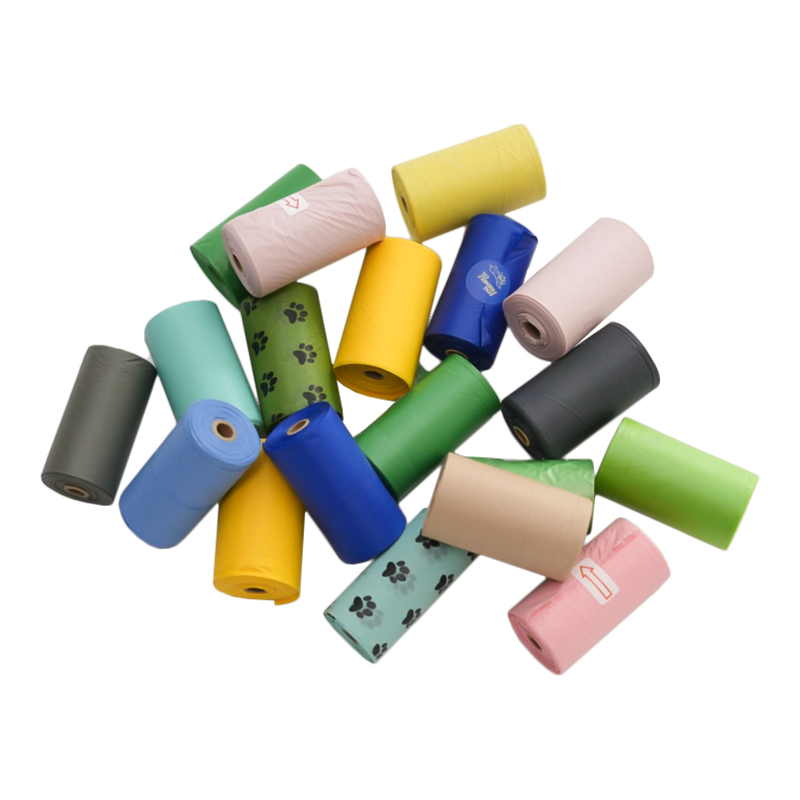
| Pet waste bags | Thinness, blocking resistance, dispenser compatibility | Blocking test at 40 °C plus gauge profile | Rolls that will not unwind in summer |
| Food-contact film and containers | Migration compliance, grease and water resistance, seal | Overall migration and food-simulant testing | Oil wicking through a "waterproof" film |
| Mulch film | Induction period matched to the crop cycle, tensile at low temperature | Soil burial plus field trial over a full season | Film breaking down before harvest, or not at all |
| Cutlery, cups, straws | Heat deflection, stiffness, mouth feel, food contact | Vicat softening and dimensional check after hot fill | Deformation in a 70 °C transport container |
| Industrial packaging film | Tensile, elongation, machine-direction orientation stability | Tensile at yield plus draw ratio trial | Neck-in variation and edge trim waste |
| Ultra-thin film | Gauge uniformity, haze, toughness at low thickness | Gauge CV profile and haze measurement | Holes and gauge bands below 8 microns |
Food contact is where general-purpose grades quietly fail. A compostable polyester can be perfectly safe and still be the wrong choice for a greasy takeaway container, because the requirement is not "safe" but "no migration above the limit into this specific food simulant at this specific temperature and time". Ask for the migration data on the finished article, not only on the resin, since additives, slip agents and printing inks all contribute.
Formulators solve this with dedicated grades rather than by over-engineering one product. A waterproof and oilproof food-contact compound, for instance, is designed so that the film resists both aqueous and fatty food without a separate coating step — the kind of target that only a purpose-built grade can hit consistently.
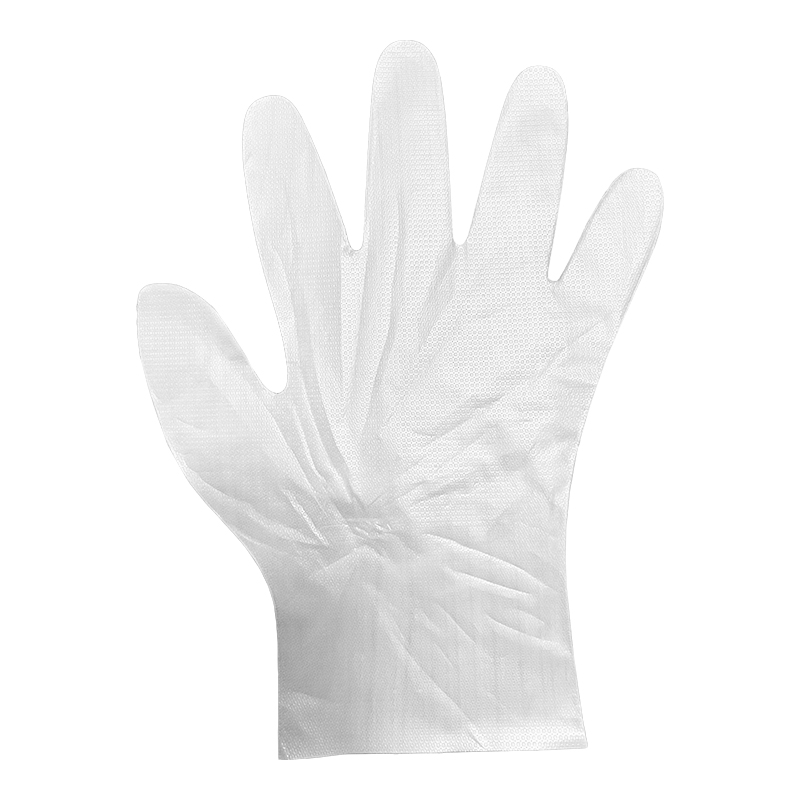 BIO/M-2206 Waterproof and Oil-Proof Food-Contact CompoundFully biodegradable food-contact compound for waterproof and oil-proof lunch boxes, tableware and packaging bags; a purpose-built grade for aqueous and fatty food contact.View Product →
Cutlery, lunch boxes and drinking cups fail on heat and stiffness far more often than on biodegradability. A fork needs a modulus that survives a steak; a cup needs a softening point above the temperature of the drink and the transport van. Blends for these products are usually stiffer and more highly filled than film grades, and they are often injection-moulded rather than extruded, which changes the drying and residence-time requirements entirely. If the same supplier makes both film and tableware, ask whether the tableware grade shares a base polymer with the film grade, because that tells you how much of the portfolio is genuinely developed rather than relabelled.
Bio-Friendly Knife & Fork Disposable CutleryBiodegradable knife-and-fork cutlery using PBAT, PLA and modified starch, with heat resistance above 70°C and custom printing for takeaway and catering.View Product →
Agricultural film is specified by induction period: how many days of useful cover before degradation begins, and how quickly the film then disappears after harvest. Get the induction period wrong in either direction and the farmer loses a crop or loses the field to fragments. This is one of the few applications where a field trial over a full season is not optional, and where the soil temperature and microbial load of the destination region matter as much as the resin.
Most specification disputes in this category start with a number that was technically true and practically irrelevant. A few habits prevent that.
Melt flow index is a processability indicator and nothing more. It is measured at a stated temperature and load, and the stated conditions differ between polymer families, so a 190 °C/2.16 kg figure for one resin cannot be compared with a 230 °C/2.16 kg figure for another. Use it to set your extruder's starting point, not to rank quality.
Mechanical data should be quoted with the test standard, the specimen orientation and the conditioning. Tensile strength in the machine direction of a blown film can be three times the transverse value, and a sheet that quotes one number without saying which direction is quoting half a result. For film, insist on dart impact and tear in both directions, not just tensile.
Thermal data decides the application envelope. Vicat softening and heat deflection temperature tell you whether a container survives a hot fill and a summer pallet. For film, add seal initiation temperature and hot tack, because the sealing window of a compostable blend is often 10 to 25 °C away from the polyethylene it replaces, in either direction. That single number determines whether your existing packing line runs at speed or at half speed.
Barrier data matters more than most buyers expect. Compostable polyester films are generally poorer moisture barriers than polyethylene, which is invisible in a dry application and decisive in a frozen-food or fresh-produce one. Ask for water vapour transmission rate at the actual gauge you will buy, not at a reference gauge.
Finally, ask for the tolerance, not just the target. Thickness tolerance expressed as a coefficient of variation across the web tells you more about the supplier's die and control system than any headline property. A film quoted at 20 microns with a 12 percent variation will have thin bands at 16 microns and will fail where you least expect it. Companies that publish a genuine research and development function usually have this data on file; companies that resell do not.
The most expensive surprise in a switch to bio-based materials is not the resin price. It is the afternoon the line stops because the film will not seal, or the morning the printed roll has lost its ink adhesion.
Drying comes first. PLA and starch-containing compounds hydrolyse, so resin moisture has to be driven down before the feed throat, and the dryer has to be sized for the throughput you actually run, not the throughput on the nameplate. Buyers who skip this step see viscosity drop, gels and unexplained strength loss within a shift.
Temperature profiles usually need to come down and become narrower. Bio-based polyesters have less thermal headroom than polyethylene; a profile that was safe for PE can degrade a PLA blend in the last two zones. Narrower also means less forgiving: the difference between unmelted and degraded is smaller, so the temperature control resolution of your barrels becomes a real constraint.
Sealing is the second shock. Compostable films often have a lower seal initiation temperature but a narrower hot-tack plateau, which means the jaw can close at the right temperature and still produce a weak seal at line speed. Rebuild the seal curve from scratch on the new material rather than adjusting one set point.
Surface energy behaves differently too. Corona treatment on bio-based film can decay faster between treatment and printing, so dyne level should be checked at the press, not at the treater. If the film is stored before printing, agree a shelf life for the treated surface in writing.
Then there is regrind. Most compostable blends tolerate a modest proportion of internal regrind, but the limit depends on the formulation and on the number of passes, and it must be established in a trial rather than assumed from a polyethylene habit. Storage is the last item on the list and the easiest to overlook: starch-containing films pick up moisture, block in the roll and change dimension, so warehouse humidity becomes a process variable.
Compostability claims are certified against standards, and the standards are specific enough to be checked.
EN 13432, the European reference for packaging, requires four things together: chemical characterisation with limits on heavy metals and other regulated substances, biodegradation of at least 90 percent within six months under controlled composting conditions, disintegration of at least 90 percent within twelve weeks so that the residue passes a 2 mm sieve, and an ecotoxicity test on the resulting compost using plant growth. ASTM D6400 in North America and ISO 17088 internationally follow a similar structure. Australia's AS 4736 adds a worm ecotoxicity element. Home composting schemes are separate and stricter in practice, because temperatures are lower and the timeframe is longer.
Three details decide whether a certificate is worth the paper it is printed on. First, scope: the certificate must name the specific product, the thickness range and the manufacturing site. A certificate for a 30-micron film does not cover a 12-micron film, and a certificate issued to a resin producer does not automatically cover the converter's finished bag. Second, validity: certificates expire, and a lapsed certificate is not a certificate. Third, the logo: use of the compostability mark is licensed and audited, so confirm that the supplier is entitled to print it on the article you are buying.
For bio-based content, the equivalent document is a radiocarbon test report to ASTM D6866 or EN 16640, stating the percentage and whether it refers to carbon or mass. For carbon footprint claims, ask for an assessment to ISO 14067 with the system boundary declared, because a cradle-to-gate figure and a cradle-to-grave figure differ by a factor that makes comparison meaningless otherwise.
One honest note on infrastructure. A certified compostable bag needs an industrial composting stream to reach. In markets where organics collection is established, the certificate translates into real end-of-life. In markets where it does not, the same bag is a durable, low-carbon article that will most likely be incinerated or landfilled — still defensible, but a different claim. Buyers who state that distinction openly win tenders that competitors lose on credibility.
Price per kilogram is the wrong unit for this comparison. Compostable polyesters have densities around 1.24 to 1.27 g/cm³ against roughly 0.92 to 0.94 for polyethylene, so at identical gauge a bag made from them weighs about a third more. A material quoted at a similar price per kilogram can therefore cost 30 percent more per thousand bags before any performance difference is counted. Convert to cost per square metre at the gauge you will actually run, or per thousand finished units, and the conversation changes.
| Item | Conventional polyethylene film | Compostable polyester blend film | What it means for the buyer |
|---|---|---|---|
| Density | About 0.92 to 0.94 g/cm³ | About 1.24 to 1.27 g/cm³ | Same gauge means roughly 30 percent more weight |
| Useful unit | Cost per kilogram | Cost per square metre or per 1,000 bags | Normalise before comparing quotations |
| Seal window | Wide, forgiving | Narrower, family dependent | Line speed and jaw pressure may need resetting |
| Moisture barrier | Strong | Weaker in most grades | Restrict use in frozen or high-humidity packs |
| Resin shelf life | Long, humidity tolerant | Finite; requires dry storage | Order against consumption, not against discount |
| End-of-life value | Recycling stream where available | Organics stream where available | Claims must match local infrastructure |
The procurement risks are equally specific. Feedstock volatility is higher than in polyolefins because capacity for these polyesters is concentrated and still expanding, so quarterly price movements are normal and annual fixed prices are rare. Minimum order quantities are often set at full production runs rather than by the pallet. Lead times lengthen when a new regulation deadline lands in a major market and everyone specifies at once. And dual sourcing is harder, because two suppliers' "same" grade will differ in seal behaviour and require separate trials.
The countermeasures are unglamorous and effective: qualify two sources before you need them, hold a documented trial report for each, keep a buffer of resin rather than of finished goods, and write acceptance criteria into the contract with the test method named. A clause that says "compostable to EN 13432 at 20 microns, certificate to name the finished article" is enforceable. A clause that says "eco-friendly material" is not.
The sequence below is the one that survives contact with a real project, in roughly the order that costs the least to get wrong.
Most teams that follow this sequence discover the same thing: the material was never the hard part. The hard part was deciding what the product should be at end of life, and then holding that decision through artwork, purchasing and the first three production runs.
Three shifts are worth planning around rather than reacting to.
The first is regulatory gravity moving from material names to application lists. Extended producer responsibility fees in several European markets are now modulated by recyclability and compostability, and packaging rules increasingly name which applications may carry a compostable claim. The effect is to make a certified grade in a named application more valuable than a bio-based grade in a general one.
The second is supply broadening at the top of the chain. Capacity for PBAT, PLA and especially PHA is expanding, and partly bio-based versions of the mainstream polyesters are becoming ordinary rather than novel. As price gaps narrow, the differentiator moves to formulation know-how — the compound that seals at the right temperature or holds a hot fill — which is where converters and material suppliers with real development capability separate from traders.
The third is honesty about end of life. The market has largely stopped asking whether a material is biodegradable in the abstract and started asking whether this specific product, at this thickness, in this municipality, has a route to treatment. That is a harder question and a better one, because it is answerable with documents.
Return to that Italian sealing jaw for a moment. The fix was not a new machine and not a new supplier. It was a specification that named the seal initiation temperature, the certificate scope at 25 microns, and the disposal route in the destination market before the trial began. The second roll was reformulated for the application, the jaw temperature was reset to 126 °C, and the dye test passed.
That is what disciplined buying looks like in this category. Choose the end-of-life claim first, convert it into a certificate with a matching scope, translate the certificate into measurable properties at a stated gauge, and prove those properties on your own line before you sign a volume commitment. Bio-based eco-friendly materials reward buyers who specify precisely and punish buyers who accept a label. The materials are ready; the specification is the work.




+86 18101032584
No. 60-1, Jichuan East Road, HailingIndustrial Park, Hailing District, Taizhou City.


Copyright© Taizhou Huangyan Zeyu New Material Technology Co., Ltd. All Rights Reserved.
 Custom Fully Degradable Raw Material Manufacturers


 English
 Français
 Español
 Deutsch
 italiano