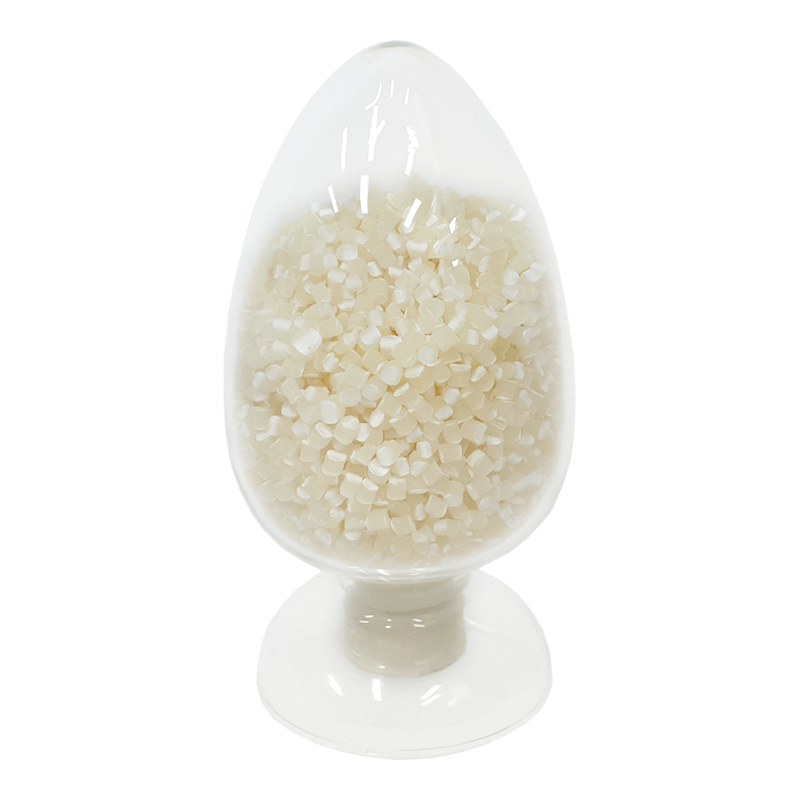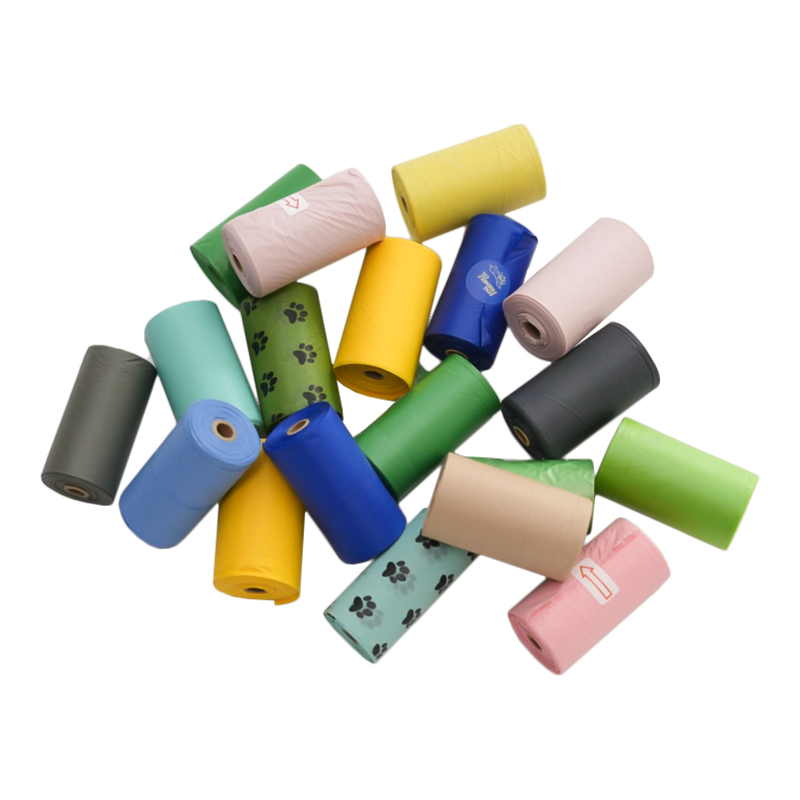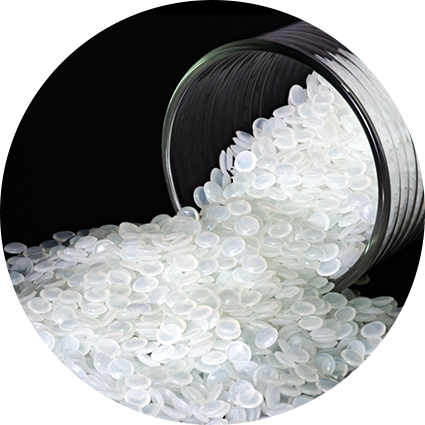

A granulation line stops for forty minutes because one bag of starch blend sat open over a humid weekend and pulled moisture into the feed throat. The screw slips, the melt pressure drifts, and the operator blames the resin. The real cause is more ordinary: starch-rich compounds behave like hygroscopic systems, and they punish loose handling long before they reach the die.
Starch-based compostable materials are entirely workable in commercial production, but they only behave well when you treat them as a formulated system rather than as a drop-in swap for polyethylene or straight PLA. The starch type, the plasticizer package, the co-polyester ratio, the drying protocol and the target composting environment all pull on the same rope. Pull one strand and the product changes.
This guide walks through what these materials actually are, which specifications decide success or failure, where processing goes wrong, and how to structure a purchase so that the film or the moulded part still performs in month three, not just on the day the sample was approved.
Starch is a polysaccharide stored in plants as an energy reserve. Commercially it comes from corn, cassava, potato, wheat and rice, with corn and cassava dominating packaging-grade supply because of volume and price stability. Native starch arrives as semi-crystalline granules, and that granular structure is precisely the problem: it does not melt and flow the way a thermoplastic must.
Two molecular components matter. Amylose is essentially linear and forms strong films but is harder to process. Amylopectin is highly branched, easier to plasticize, and dominates in waxy maize and most cassava grades. Typical commodity starch sits at roughly 20–30% amylose, but the ratio shifts by botanical source and by season, which is one reason two deliveries can behave differently on the same machine.
To become useful, starch is converted into thermoplastic starch, usually abbreviated TPS. Plasticizers such as glycerol, sorbitol or water are worked into the granules under heat and shear, which disrupts hydrogen bonding and lets the material flow. TPS on its own is brittle, moisture-sensitive and dimensionally unstable. In practice almost no commercial product is pure TPS. It is blended, and the blend partner determines the performance envelope.
The distinction between bio-based, biodegradable and compostable is not marketing hair-splitting. Bio-based means the carbon came from a plant. Biodegradable means microbial action breaks the material down. Compostable means it breaks down within a defined time window, at a defined temperature, leaving residues that pass a defined ecotoxicity threshold. A starch–polyethylene blend can be bio-based and still fail every compostable standard. Ask which claim the supplier is actually certifying.
Starch processing is a race against two opposing forces. You need enough heat and shear to gelatinize and disperse the granules, and you need to stop before you degrade the chains. The window is narrower than for polyolefins, and it moves with moisture content.
Gelatinization typically begins somewhere between 60 °C and 75 °C depending on botanical source and plasticizer level, and complete disruption of the granule usually needs 120–160 °C under shear. Push past roughly 180–200 °C with residual moisture present, and you start to see chain scission, discoloration and a drop in melt viscosity that shows up downstream as sagging bubbles or weak welds.
Retrogradation is the slower, quieter problem. After processing, amylose chains re-associate over days and weeks, which raises stiffness and can embrittle a film that felt perfectly supple at the time of approval. Good formulations suppress this with plasticizer balance and compatible co-polyesters, but the effect never disappears entirely. If your product needs to stay flexible for a year on a shelf, test it for a year, not for a week.
Moisture is the operational variable that decides whether the shift runs well. Starch compounds commonly need drying to below 0.05–0.10% moisture before extrusion, and they reabsorb quickly in open air. A hopper with dry-air blanketing is not a luxury on this material family; it is the difference between a stable process and one that drifts every afternoon.
Suppliers quote a wide range of properties, and many of them are irrelevant to whether your bag seals or your lunch box survives a hot car. The table below covers the parameters that actually correlate with field failures, along with the ranges you should expect to see discussed. Ranges vary by grade and by starch loading, so treat them as a negotiation framework rather than a catalog.
| Parameter | Typical range | Common test method | Why it matters |
|---|---|---|---|
| Starch content | 20–50% by weight | Supplier formulation data, TGA | Higher loading lowers cost and speeds composting, but reduces tear strength and moisture resistance. |
| Tensile strength | 10–25 MPa (film grades) | ISO 527 or ASTM D882 | Governs load-bearing capacity of bags and the stiffness of thermoformed trays. |
| Elongation at break | 150–600% | ISO 527 or ASTM D882 | Low elongation means brittle film and split seals, especially in cold conditions. |
| Dart impact | 80–250 g (25 µm film) | ASTM D1709 | Predicts puncture resistance in real filling and handling, not just laboratory tensile. |
| Water vapour transmission | 40–300 g/m²/24h | ASTM E96, ISO 15106 | Drives shelf life of fresh produce and the tendency of dry goods to cake. |
| Melt flow index | 1.5–8 g/10 min | ISO 1133, 190 °C/2.16 kg | Matches the compound to your extruder and to blown-film versus cast-film processing. |
| Vicat softening point | 55–95 °C | ISO 306 | Sets the upper service temperature for cups, lids and food containers. |
| Seal initiation temperature | 95–140 °C | Internal seal curve testing | Determines whether your existing bag machine can run the material without re-tooling. |
Two things deserve emphasis. First, tensile strength quoted at a single orientation tells you little about a blown film that is anisotropic. Ask for machine-direction and transverse-direction values separately. Second, seal initiation temperature is the number most often left out of a datasheet and most often responsible for a failed trial. A compound with excellent tensile data can still be unusable if it needs 150 °C to seal and your machine tops out at 130 °C.
Starch is rarely chosen in isolation. The realistic decision is between a starch blend and a competing compostable polymer, or between two starch blends with different co-polyester ratios. The table below sets out the practical trade-offs.
| Material | Stiffness | Toughness | Moisture barrier | Home compostability | Relative cost |
|---|---|---|---|---|---|
| Starch–PBAT | Low to medium | High | Moderate | Grade dependent | Low to medium |
| Starch–PLA | High | Low to medium | Moderate | Usually industrial only | Medium |
| PLA alone | High | Low | Moderate | Industrial only | Medium |
| PBAT alone | Low | Very high | Moderate | Grade dependent | Medium to high |
| PHA | Medium | Medium | High | Often yes | High |
| PBS / PBST | Medium | Medium to high | Moderate | Grade dependent | Medium to high |
The practical reading: if you need a soft, tough bag film with a competitive price and industrial composting certification, a starch–PBAT blend is usually the shortest path. If you need rigidity and a higher heat tolerance for a thermoformed tray, starch–PLA is more suitable. If home composting claims are non-negotiable, you are pushed toward a narrower set of certified grades and should expect to pay for the certification evidence rather than for the polymer alone.
One point worth stating plainly: starch content is not a quality score. A 45% starch film is not inherently better than a 25% starch film. Higher loading generally improves the composting rate and the bio-based content figure, and generally reduces tear strength, moisture resistance and weld integrity. The right number depends on the application, and a supplier who pushes maximum starch content without asking about your service conditions is selling a number rather than a material.
Most failed trials trace back to four causes, and none of them are exotic.
Starch compounds need consistent pre-drying, typically 2–4 hours at 70–90 °C in a desiccant dryer, followed by dry-air conveying. Skipping the dryer produces voids, surface defects and inconsistent melt pressure. Over-drying is also a risk: prolonged exposure above about 100 °C can drive off the bound plasticizer water and change the rheology. The rule of thumb is to dry to a measured target and verify it, rather than to dry for a fixed time and hope.
Starch blends generally want a gentler compression profile than polyolefins, with a gradual rise and a metering zone that avoids excessive shear heating. A barrel profile that runs 140/155/165/170/170 °C will behave very differently from one that jumps to 185 °C in zone three. Because starch is shear-thinning and thermally sensitive at the same time, the practical approach is to set the profile from the melt temperature backward rather than from the nameplate forward.
Barrier screws designed for polyolefins can over-shear starch compounds. A general-purpose screw with a moderate compression ratio, often in the 2.5:1 to 3:1 range, tends to run more predictably. In blown film, a die gap that is too narrow raises head pressure and can generate gel particles; a slightly wider gap with a lower draw-down ratio usually produces a more stable bubble.
Starch blends tolerate limited regrind, generally up to about 20–30% when kept clean and dry, but the regrind must be segregated from PLA, PBAT and polyolefin scrap. A single misplaced purging shot can introduce gels that appear at random intervals for the rest of the shift. Color-coded scrap containers are a low-cost control that prevents an expensive problem.
Seal behaviour is where starch-based films most often disappoint converters who expected a drop-in replacement. Because the material softens over a relatively narrow window and because starch fractions can migrate slightly to the surface, seal curves tend to be steeper than for polyethylene. That means the acceptable temperature band is narrower, and pressure and dwell time have to be tuned together rather than adjusted one at a time.
A practical starting point for a starch–PBAT bag film is a seal jaw temperature in the 110–130 °C range, dwell of 0.4–0.8 seconds and pressure around 0.2–0.4 MPa, then adjust from the peel test result. Cold seals and overlap seals behave differently again, and both should be tested on the actual filling line rather than on a laboratory sealer.
Barrier performance is moderate. Starch blends typically show water vapour transmission in the 40–300 g/m²/24h band for films in the 20–40 µm range, which is adequate for dry goods, bread and short-life produce but not for long-life moisture-sensitive products. Oxygen barrier is limited unless the structure includes an additional layer. For fresh produce, the moderate breathability is often an advantage because it reduces condensation inside the pack.
Shelf life testing should mirror the real distribution. A film that survives four weeks at 23 °C and 50% relative humidity may embrittle noticeably after twelve weeks, and may behave differently again at 30 °C and 80% relative humidity. If your market includes tropical or cold-chain conditions, test both ends.
This is the highest-volume application and the one where starch–PBAT blends are most established. The requirements are tear strength, load-bearing capacity at the handle, printability and a seal that survives a full bag being lifted repeatedly. High-load grades are formulated to hold 10–15 kg without handle elongation exceeding the design limit. Beverage takeaway bags add a condensation problem, so the film needs enough wet strength to hold up when the outer surface is damp.
For converters targeting this segment, a dedicated grade matters more than a general-purpose one. A material formulated specifically for shopping and beverage carrier bags will typically combine a higher molecular weight PBAT fraction with a starch loading tuned to keep tear propagation in check.
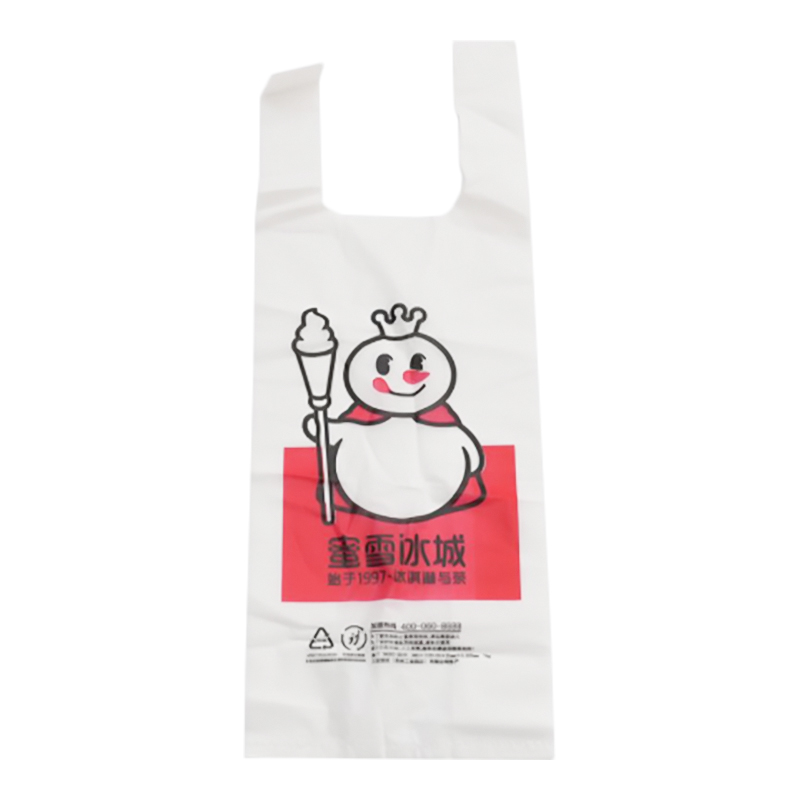 BIO/M-2501A Biodegradable Shopping and Milk Tea Bag MaterialDedicated biodegradable grade for shopping and milk tea carrier bags, combining food-contact suitability with tensile strength and cost-effective film performance.View Product →
Food contact raises two separate questions: regulatory compliance and functional performance. On compliance, the compound must meet the relevant food-contact framework for the target market, and the supplier should be able to provide migration test data rather than a general statement of compliance. On performance, the hard cases are greasy and aqueous foods, where a standard starch blend can soften, stain or lose seal integrity.
Waterproof and oil-resistant grades address this by adjusting the surface chemistry and the co-polyester ratio so that the film resists lipid migration and maintains seal strength in the presence of moisture. These are the grades to specify for takeaway containers, sandwich wraps and prepared-food lidding. For neutral dry foods, a standard food-contact grade is usually sufficient and costs less.
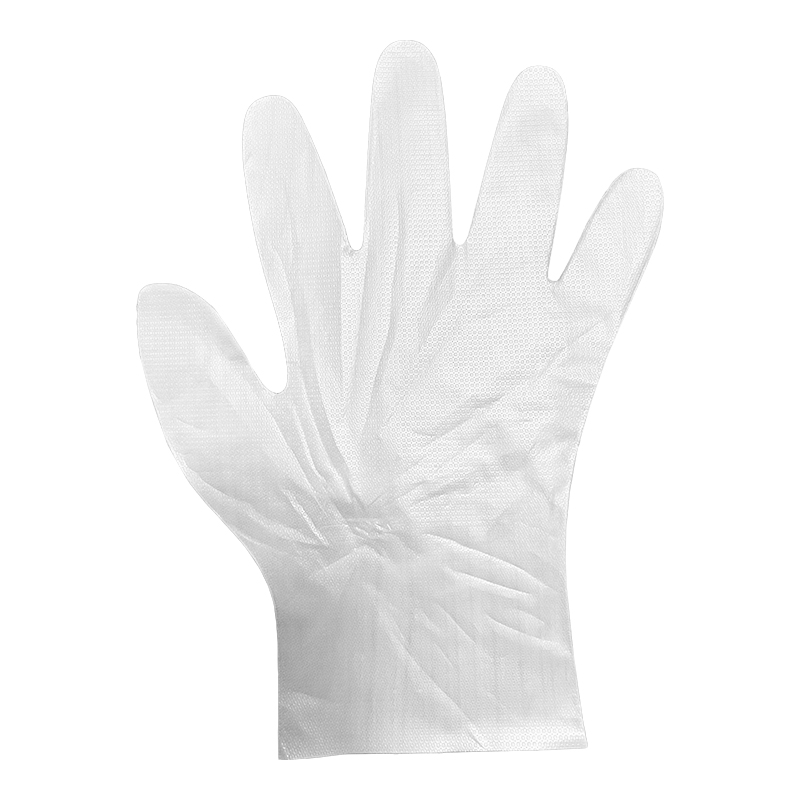 BIO/M-2206 Waterproof and Oil-Proof Food-Contact MaterialFood-contact biodegradable grade for takeaway containers, wraps and lidding, offering waterproof and oil-proof performance plus durability for liquid-containing foods.View Product →
Mulch film is one of the strongest technical cases for starch blends, because the alternative is polyethylene film that has to be retrieved from the field at the end of the season and is frequently contaminated with soil. A compostable mulch film can be ploughed back in, where soil microbes mineralize it over the following months.
The functional requirements are specific: the film must maintain soil temperature and moisture for the critical early growth period, typically 60–90 days, and then degrade without leaving a residue that interferes with the next crop. Degradation timing is the hard part, because it depends on soil temperature, moisture and microbial activity, all of which vary by region. A grade tuned for one climate may degrade too early or too late in another. Buyers should ask for field trial data from a comparable climate rather than laboratory compost data alone.
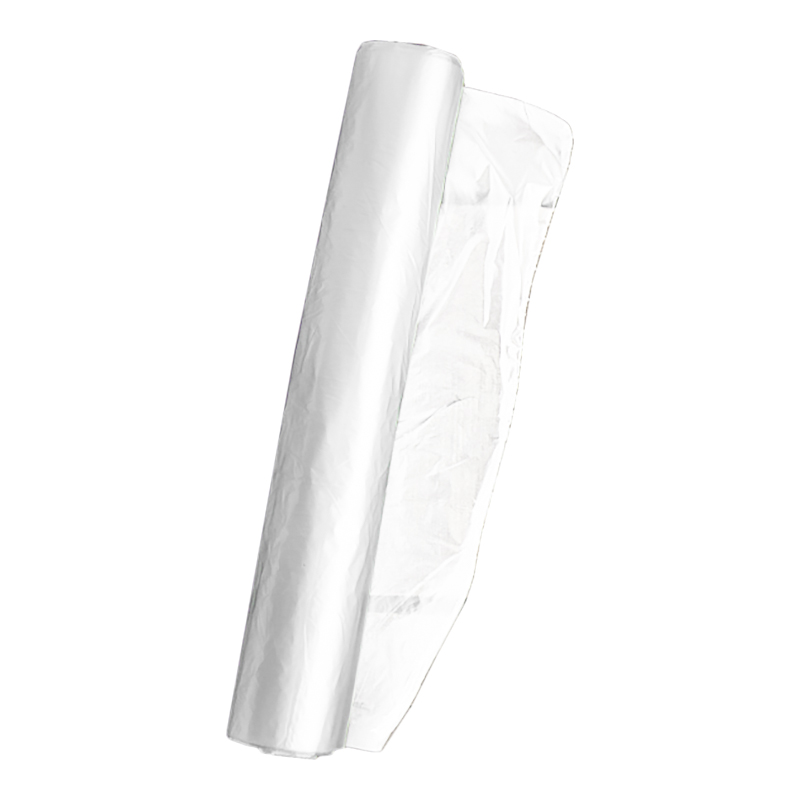 BIO/F-0051W Biodegradable Mulch Film for Heat and Moisture RetentionAgricultural mulch grade designed for thermal insulation and moisture retention, with customizable effective period and plough-in disposal to avoid recovery costs.View Product →
Moulded and thermoformed articles use starch–PLA blends more often than film grades, because rigidity and heat tolerance matter more than tear strength. The key specification is the Vicat softening point relative to the service temperature: a cup that holds hot liquid at 90 °C needs a materially different formulation from one that holds a cold drink.
Straws are a special case. They need dimensional stability in a drink, resistance to softening over a 30–60 minute period, and enough hoop strength not to collapse under suction. Starch–PLA straw grades have improved substantially, but the performance gap versus polypropylene is still visible to consumers in long drinks, and honest specification means acknowledging that rather than overpromising.
Waste bags are a volume application where starch blends compete directly on cost. The performance requirements are modest on tensile strength but real on puncture resistance and seal integrity, particularly for bags that will hold sharp or wet waste. Lightweight pet waste bags push toward thin gauges where dart impact becomes the limiting property, and grades are available that hold puncture resistance at 15–18 µm.
One caution here: a compostable waste bag only delivers its intended benefit if it goes into a composting stream. In a landfill or an incinerator, the material behaves much like any other organic-rich waste. Buyers marketing a compostable bag should be clear about the disposal route it is designed for.
Compostability is a defined technical claim, not a general environmental virtue, and the definitions differ by jurisdiction. In Europe, EN 13432 sets the framework for industrially compostable packaging, requiring disintegration within 12 weeks, biodegradation of at least 90% within 6 months, and ecotoxicity testing on the resulting compost. In the United States, ASTM D6400 plays the equivalent role. Home compostability is a separate and stricter claim, usually certified under schemes such as OK Compost HOME or TÜV HOME, and it requires degradation at ambient temperatures, typically within 12 months.
Practical implications for buyers:
There is also a straightforward honesty point. Industrial composting infrastructure is uneven. A certified compostable bag that ends up in a waste-to-energy plant delivers no composting benefit at all. Buyers building a sustainability story around these materials should describe the disposal route accurately, because regulators and customers are increasingly checking.
Most sourcing failures are preventable with a structured qualification process. The list below reflects the issues that appear repeatedly in trials and in field complaints.
Two items on this list deserve extra weight. Aged sample testing catches retrogradation and moisture-driven embrittlement that no incoming inspection will reveal. Batch consistency data catches the seasonal variation in starch feedstock that shows up as a sudden change in melt behaviour six months into a supply relationship.
The supplier relationship matters more for starch blends than for commodity polymers, because the formulation space is wide and the interactions between starch type, plasticizer and co-polyester are not transparent from a datasheet. A supplier who can explain why a particular grade was formulated the way it was, and who can adjust it when your service conditions change, is worth more than one who quotes the lowest price per kilogram.
Useful questions to ask during qualification include: what starch source is used and how is its variability controlled; what the plasticizer system is and how it behaves under long-term storage; whether the compound is produced in-house or toll-compounded; what the production tolerance on melt flow index is; and what technical support is available during the first production run.
The broader capability picture also matters. A supplier that covers both the polymer side and the finished article side can often shorten development, because the same team that formulates the compound also understands the film or moulding process downstream. That vertical coverage is worth confirming during the site visit, along with the actual drying, compounding and quality control equipment on the floor. A company that presents its research and development capability as a core activity should be able to show formulation records, incoming material testing and a batch release process.
It is also reasonable to ask how the supplier approaches the sustainability claims around its products, since the credibility of a compostable material depends on the whole chain from feedstock to disposal. Reviewing a supplier's sustainability position and the evidence behind it is a fair part of due diligence, not an intrusion.
Starch-based compostable materials are a mature, commercially viable family, but they are not interchangeable with conventional plastics at the level of processing detail. The starch source and amylose ratio set the baseline. The plasticizer and co-polyester package set the performance envelope. Moisture control and temperature discipline set whether the process runs stably. Certification scope sets whether the environmental claim survives scrutiny.
Buyers who get good results tend to do the same things: they define service conditions before specifications, they insist on directional mechanical data and seal curves, they test aged samples rather than fresh ones, and they verify certification against the actual finished article. Buyers who get poor results tend to approve a grade on a single laboratory sample and then discover, three months later, that the film has embrittled or the seal has drifted.
None of this is difficult, but it is sequential. Get the sequence right and starch blends will run on existing equipment, meet the certification requirements of your target market, and perform in the field for the life of the product. Get it wrong and the material will be blamed for what was really a specification and drying problem.




+86 18101032584
No. 60-1, Jichuan East Road, HailingIndustrial Park, Hailing District, Taizhou City.


Copyright© Taizhou Huangyan Zeyu New Material Technology Co., Ltd. All Rights Reserved.
 Custom Fully Degradable Raw Material Manufacturers


 English
 Français
 Español
 Deutsch
 italiano