
A procurement manager recently asked me a straightforward question: what do we actually switch to when we have to stop using conventional plastic bags? The question sounds simple, but the answer is not. Every alternative on the market carries a different environmental profile, a different set of physical limits, and a different real-world performance record. And the word "natural" does not always mean what people assume it means.
Conventional plastic bags are made from polyethylene, a petroleum-derived polymer that is cheap, lightweight, strong, and nearly indestructible in ordinary outdoor conditions. That last quality is precisely the problem. A single-use bag that remains intact for centuries is a design mismatch with a product that is meant to be used for minutes. The environmental consequences are visible everywhere: plastic bags turn up in oceans, in rivers, in agricultural soil, and in the stomachs of marine animals. Governments around the world have responded with bans, taxes, and mandatory replacement policies. Retailers are under pressure to offer alternatives. Consumers are asking for them.
But what is the right alternative? The answer depends on what the bag is used for, how it is disposed of, and what environmental metric matters most. This article breaks down the natural alternatives available today, explains the science behind the most practical option, and gives concrete guidance for choosing the right bag for each scenario.
When people ask for a natural alternative to a plastic bag, they usually mean one of three things: a bag made from renewable plant sources, a bag that breaks down naturally after use, or a bag that has a lower overall environmental impact than conventional plastic. These three definitions overlap but are not identical.
The term "biobased" refers to materials derived from biological sources. Paper, cotton, jute, hemp, and starch are biobased. So are bioplastics like PLA and PHA, which are produced by fermenting plant sugars. Biobased does not automatically mean biodegradable. A recycled cotton tote bag is biobased, but it will not break down quickly in a landfill.
The term "biodegradable" refers to materials that can be decomposed by microorganisms into water, carbon dioxide, and biomass. All organic materials are biodegradable in principle, but the timeframe and the conditions matter enormously. A paper bag degrades in weeks. A conventional plastic bag degrades in centuries, if at all. A PBAT-based biodegradable bag degrades within months in a composting environment but may persist far longer in cold, dry, anaerobic landfill conditions.
The term "compostable" is a subset of biodegradable. It means the material meets specific standards for decomposition in a composting environment. Industrial compostable materials like PLA and PBAT blends typically require temperatures of 58 degrees Celsius or higher, controlled humidity, and the presence of specific microbial communities. Home compostable materials are designed to break down in cooler, less controlled conditions.
When evaluating alternatives, it is critical to verify three things: the source of the material, the degradation pathway and timeline, and the certifications that back the manufacturer's claims. A bag can truthfully be labeled plant-based and still fail to degrade in a meaningful timeframe. It can be fully biodegradable and still have a production footprint higher than conventional plastic. The most useful question is not whether a bag is natural, but how it performs across the full life cycle.
The current market for plastic bag alternatives falls into three broad families: paper bags, reusable fabric bags, and biodegradable plastic bags. A fourth category, home-compostable bio-resins, overlaps with the third but deserves separate attention because of its stricter degradation requirements.
Paper bags are the most established alternative. They are made from renewable wood fiber, they recycle well, and they degrade quickly if they enter the environment. Fabric bags, including cotton, hemp, and jute totes, are durable and reusable, but their production carries significant resource demands. Biodegradable plastic bags, typically made from blends of PBAT and PLA with plant-based additives, offer the closest drop-in replacement for conventional plastic bags in terms of strength, flexibility, and processing compatibility.
Each option has a place. The trick is matching the material to the application. The rest of this article examines each family in detail and provides a comparison you can use to make informed decisions for your household or your business.
Paper bags have been used for over a century, and they remain the default alternative in many stores. The raw material is renewable. The recycling infrastructure is mature. And a paper bag that ends up in the environment degrades relatively quickly compared with polyethylene.
But the environmental story is more complex than it appears. Life cycle assessments consistently show that producing a paper bag requires more energy and more water than producing a conventional plastic bag. One frequently cited study found that a paper bag needs to be reused at least three times to emit less greenhouse gas than a single plastic bag across its life cycle. Another found that paper bags have a higher global warming potential than plastic bags if they are not recycled.
There are also practical limitations. Paper bags absorb moisture, which weakens them. They tear more easily under heavy loads. They do not stand up to repeated use as well as fabric or many plastic alternatives. And when they are contaminated with food waste, they often cannot be recycled.
That said, paper bags are an excellent choice in specific applications: dry goods retail packaging, bakery items, and takeaway food where short transport distances and quick disposal are expected. For those use cases, the rapid degradation of paper is a genuine environmental benefit. For heavy groceries, wet produce, or anything requiring a strong seal, a paper bag is usually not the best option.
Fabric bags occupy the other end of the spectrum. A well-made cotton tote can be used hundreds of times. It is washable, strong, and visually appealing. Hemp and jute bags are even more resource-efficient, because both plants grow quickly, require little water, and thrive without heavy pesticide use.
The key trade-off is production intensity. Organic cotton requires significant land, water, and processing energy. A widely cited Danish study estimated that an organic cotton tote must be used 20,000 times to match the climate impact of a conventional plastic bag, while conventional cotton needs about 52 uses. The number varies by study and methodology, but the conclusion is consistent: the impact of fabric bags is front-loaded in production, so they must be used many times to pay off their environmental debt.
This makes fabric bags ideal for long-term reusable applications: grocery shopping totes, produce bags, lunch bags, and travel bags. They are less practical for single-use scenarios like waste collection, pet waste, or packaging that moves through a supply chain and is disposed of by the end consumer.
For businesses, the shift to fabric bags raises a different set of considerations. Inventory costs are higher. Logistics are heavier. Sanitation requirements, especially for food contact, can be complicated. Fabric bags work best in closed-loop scenarios where the same user keeps and reuses the bag over a long period. Open-loop scenarios, where bags are given away or distributed to customers who may or may not reuse them, are harder to optimize.
This is the category that most people overlook when they ask about natural alternatives. Biodegradable plastic bags look and behave like conventional plastic bags, but they are formulated with biodegradable polyesters and plant-based components that allow the material to be broken down by microorganisms under the right conditions.
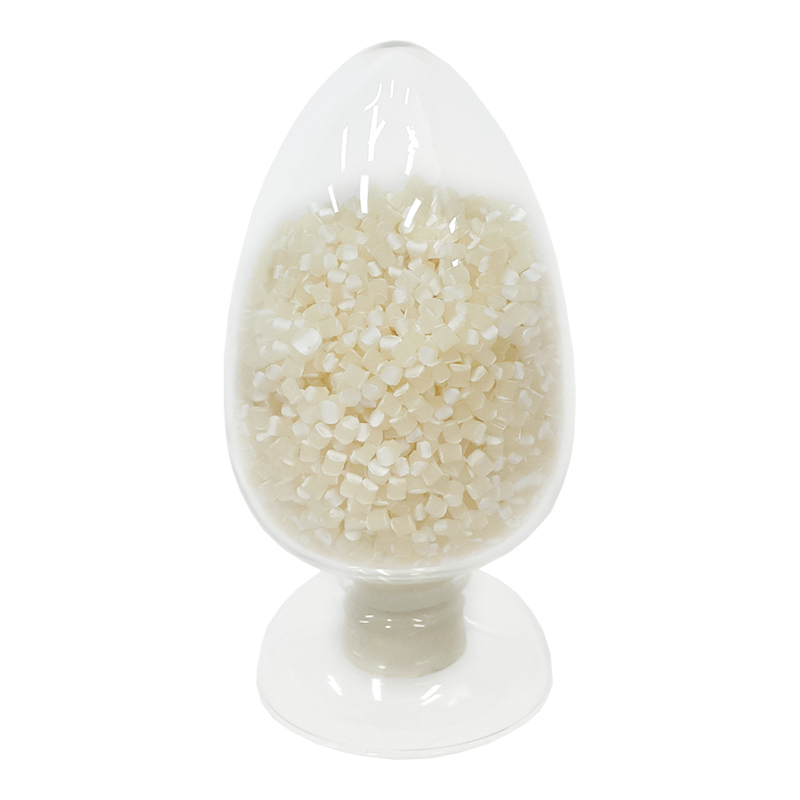
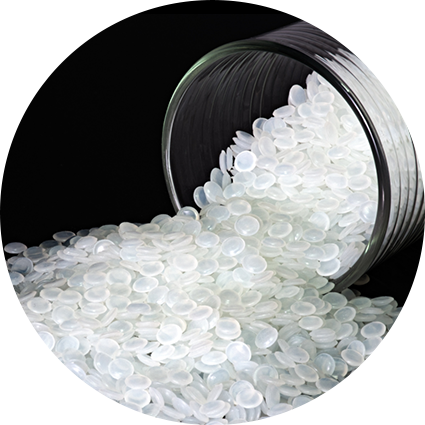
The most widely used biodegradable polymers are PBAT, PLA, and starch blends. PBAT, or polybutylene adipate terephthalate, is a biodegradable aliphatic-aromatic copolyester. It is flexible, tough, and has good elongation properties, making it an ideal base for bag films. PLA, or polylactic acid, is produced from fermented plant sugars, usually corn or sugarcane. It is transparent and rigid, which makes it useful for stiff films and coatings. Starch, derived from corn, potato, or cassava, is often blended with PBAT and PLA to increase the renewable content and accelerate biodegradation.
A typical biodegradable shopping bag contains about 50 percent PBAT, 30 percent PLA, and 20 percent starch, though ratios vary by manufacturer and by the performance requirements of the final product. The film is blown on conventional extruders with minor adjustments, which means converters can switch from polyethylene to biodegradable compounds without major capital investments.
The degradation mechanism is hydrolysis and microbial consumption. In a composting environment with adequate moisture, warmth, and oxygen, the polymer chains break into shorter fragments, and microorganisms convert those fragments into carbon dioxide, water, and biomass. The time it takes ranges from a few weeks in industrial composting to several months in home composting, depending on temperature and humidity.
There is an important distinction to make here. Not every biodegradable bag is compostable, and not every compostable bag is home compostable. Industrial compostable bags meet standards like EN 13432 or ASTM D6400. They are tested to degrade within 180 days in an industrial composting facility. Home compostable bags meet additional standards such as OK Compost Home or NF T51-800, which test degradation in lower-temperature conditions. Businesses should verify which certification applies to the product they are buying.
Biodegradable plastic bags are not a perfect environmental solution. If they end up in a landfill with no oxygen, they degrade slowly, just like conventional plastic. If they end up in the ocean, they degrade slowly too. But in the applications where they replace conventional plastic bags, they offer a significant reduction in environmental persistence. And in applications where the bag can be directed to a composting stream, the benefit is substantial.
To make the trade-offs visible, the table below compares the four most relevant bag categories across the criteria that matter most in procurement decisions.
| Criteria | Conventional Plastic Bag (PE) | Paper Bag | Cotton Tote Bag | Biodegradable Bag (PBAT/PLA blend) |
|---|---|---|---|---|
| Source material | Petroleum | Renewable wood fiber | Renewable cotton fiber | Renewable plant starch plus biodegradable polyesters |
| Degradation time | Hundreds of years | Weeks to months | Months to years in fabric form | Weeks to months in composting conditions |
| Strength | High | Low when wet | High | High for most loads |
| Water resistance | Excellent | Poor | Good | Good |
| Reusability | Low | Low | High | Low to medium |
| Recycling or disposal path | Mechanical recycling | Paper recycling stream | Limited textile recycling | Industrial composting preferred |
| Best use case | Single-use carryout (baseline) | Dry goods, bakery, quick takeaway | Long-term shopping and carrying | Shopping, garbage, pet waste, food service |
The comparison table shows why no single alternative wins across every scenario. The right choice depends on the use case. The following breakdown covers the most common applications and the material that fits each one best.
For grocery carryout, the bag needs to hold a meaningful load, survive a walk or a car ride, and then be disposed of properly. Biodegradable shopping bags made from PBAT and PLA blends deliver the same practical performance as polyethylene bags while offering a clear degradation advantage in composting and soil environments. They handle the typical 5 to 10 kilogram load of a supermarket bag, resist tearing at the handles, and can be printed with compostability certifications and brand messaging.
 Fully Biodegradable Supermarket Shopping Bags for Retail CarryoutThese PBAT-PLA blend shopping bags support typical supermarket loads and resist tearing, while breaking down in composting or soil environments. Their certified compostability suits grocery stores and retail use seeking greener alternatives.View Product →
Milk tea shops, juice bars, and fast-food outlets have a specific requirement: the bag or film must tolerate condensation, occasional spills, and the grease that comes with hot food. A dedicated biodegradable bag material formulated for this environment needs higher heat resistance and better moisture tolerance than a standard shopping bag. Materials like the BIO-M2501A grade, designed for shopping bags and milk tea carryout, combine the flexibility of PBAT with a formulation that holds up in humid, food-contact situations.
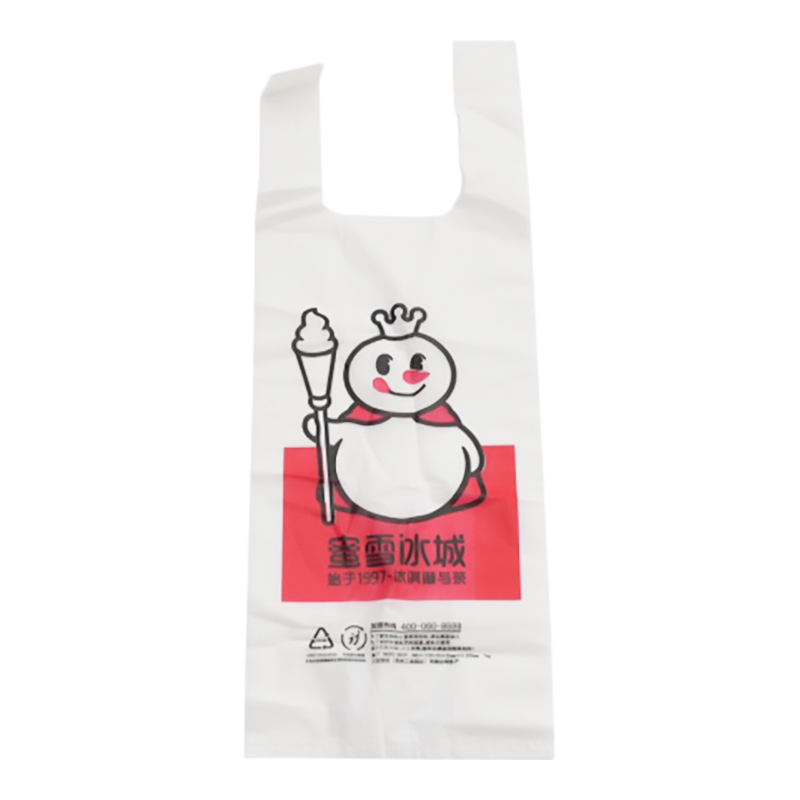 Biodegradable BIO-M2501A Material for Shopping and Milk Tea BagsBIO-M2501A is a food-safe, fully biodegradable film material with strong tensile strength and moisture resistance. It suits shopping bags and milk tea carryout, tolerating condensation and grease in humid food-contact settings.View Product →
Pet owners need a bag that is puncture-resistant, easy to tie, and discreet enough to carry. Biodegradable pet waste bags meet these criteria and add an environmental benefit: when the waste is composted in a suitable facility, the bag breaks down along with the contents. Thin-gauge formulations designed for pet waste are optimized for the tear resistance and elongation needed during pickup, and they are increasingly the standard in municipalities that run pet waste composting programs.
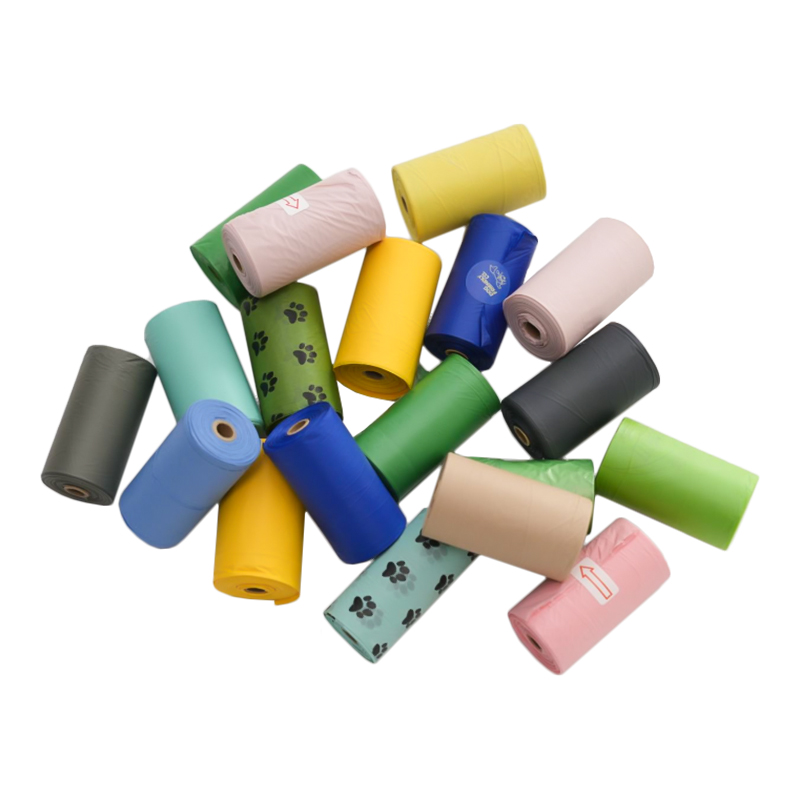 Fully Biodegradable Pet Waste Bags with Puncture-Resistant DesignThese pet waste bags offer durability and a convenient sealing design, breaking down quickly in composting facilities. They meet the needs of pet owners while supporting municipal composting programs and reducing plastic waste.View Product →
Kitchen and office garbage bags face heavy loads, sharp objects, and high moisture. Here, the material selection is more demanding. Higher-load formulations with increased puncture resistance and seal strength are required. A dedicated garbage bag material with a flat 20-fold design, for example, is engineered for the volume and weight of routine waste collection. Matching the material grade to the waste profile prevents the failure modes that give biodegradable bags a bad reputation.
Farms use plastic mulch to suppress weeds, retain soil moisture, and regulate soil temperature. The problem is that conventional mulch film must be removed at the end of the season, which is labor-intensive and leaves fragments in the soil. Biodegradable mulch films formulated from materials like BIO-F0051 are designed to break down in place after the growing season, reducing removal costs and eliminating the need for disposal. Farmers should verify the degradation timeline matches their crop cycle and local soil conditions.
When a business decides to switch from conventional plastic bags to a natural alternative, the decision should be guided by more than marketing claims. The following checks will help you avoid the most common sourcing mistakes.
Ask suppliers for the exact polymer ratios, the renewable content percentage, and the certifications behind each product. Look for recognized standards: EN 13432 and ASTM D6400 for industrial compostability, OK Compost Home for home compostability, and declarations about residual heavy metals and ecotoxicity. If a supplier cannot provide certificates, that is a red flag.
Tensile strength, elongation at break, puncture resistance, and seal strength are the numbers that determine whether a bag performs in the field. A thick bag with high tensile strength may be over-engineered for light retail use and too expensive. A thin bag with poor puncture resistance will fail on sharp-edged grocery items. Request a technical data sheet and compare the values against the requirements of your application.
The same bag will degrade differently in an industrial composter, a home compost pile, a landfill, and a marine environment. If your product is distributed in a region where industrial composting infrastructure is scarce, verify that the bag offers reasonable degradation in soil or home composting conditions. If your region has strict compostability labeling requirements, check that the packaging complies with local regulations.
For converters and bag manufacturers, the switch to biodegradable materials is not just a formulation change. Blown film extrusion parameters, die design, and cooling rates may need adjustment. Ask the resin supplier for processing guidance and sample films before committing to a full production run. While the industry is mature enough that these materials process well on standard equipment, the optimal parameters differ from polyethylene.
The legal environment for plastic bag alternatives is changing rapidly. The EU Single-Use Plastics Directive restricts certain products, while member states have their own bag taxes and bans. Several US states have enacted their own regulations. A material that is fully compliant in one jurisdiction may not meet the labeling or chemical requirements of another. Work with suppliers that understand the export documentation and can provide the necessary compliance paperwork. As the packaging industry moves toward sustainable materials, fully biodegradable bags are starting to make real inroads in retail and food service, and staying ahead of these regulatory shifts is a competitive advantage.
So what is the natural alternative to a plastic bag? The honest answer is that there is no single replacement, but there is a correct material for each role. Paper and other cellulose-based bags fit dry retail and quick takeaway. Fabric totes fit long-term reusable carrying. Biodegradable plastic bags made from PBAT, PLA, and plant-based fillers fit the single-use applications where conventional plastic bags still dominate: grocery carryout, food service, pet waste, garbage collection, and agricultural film.
The reason biodegradable plastic bags are the most important alternative for the single-use segment is that they solve the core problem of the conventional bag: environmental persistence. They behave the same way at the checkout counter, they carry the same loads, they seal the same way, and then they break down in a meaningful timeframe instead of lingering for centuries. They are not a cure-all for waste mismanagement, but they are the most practical bridge between the convenience that plastic bags provide and the environmental responsibility that consumers now demand.
For businesses and procurement professionals, the key is verification. Check the material composition. Check the certifications. Check the physical property data. And check the supplier's track record. A reliable partner can provide all of this documentation and can help you match the right material grade to each application. If you are evaluating biodegradable bags or materials for your operation, contact the Zeyu technical team for specification sheets, samples, and guidance on choosing the right grade for your product line.




+86 18101032584
No. 60-1, Jichuan East Road, HailingIndustrial Park, Hailing District, Taizhou City.


Copyright© Taizhou Huangyan Zeyu New Material Technology Co., Ltd. All Rights Reserved.
 Custom Fully Degradable Raw Material Manufacturers


 English
 Français
 Español
 Deutsch
 italiano