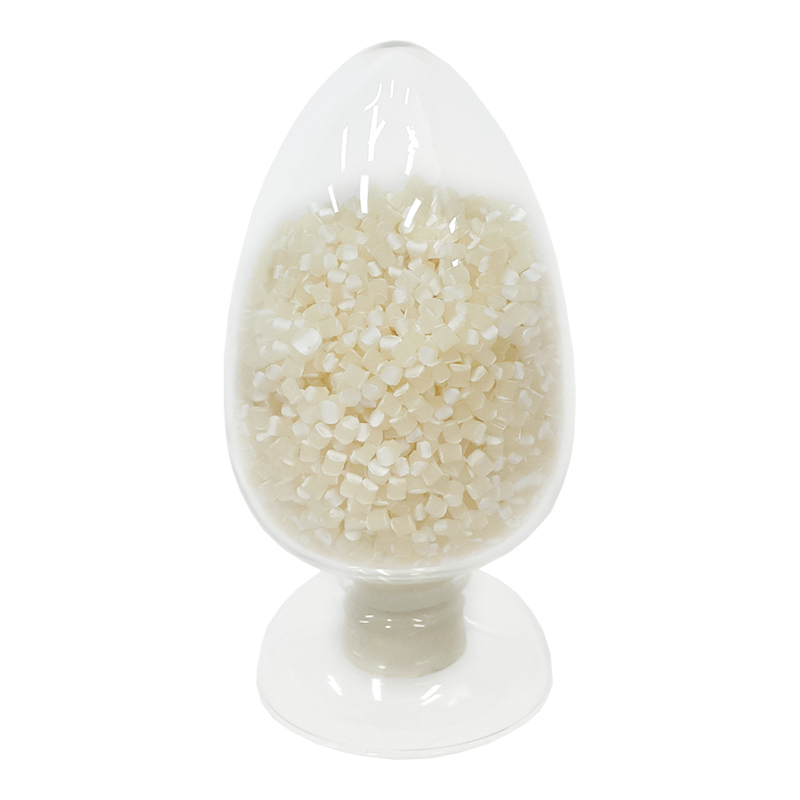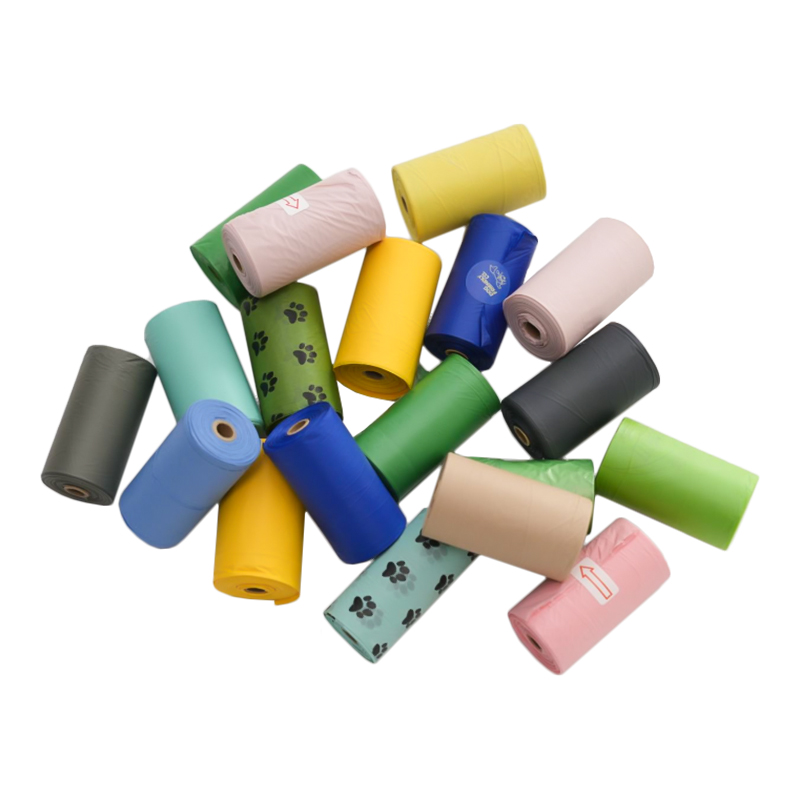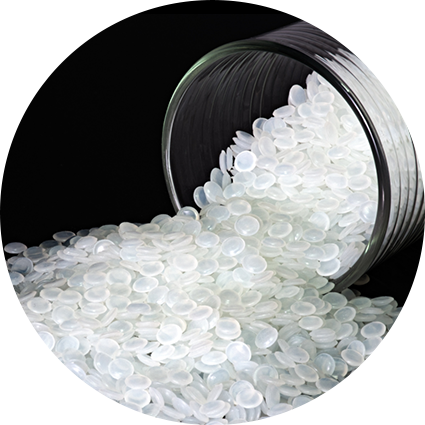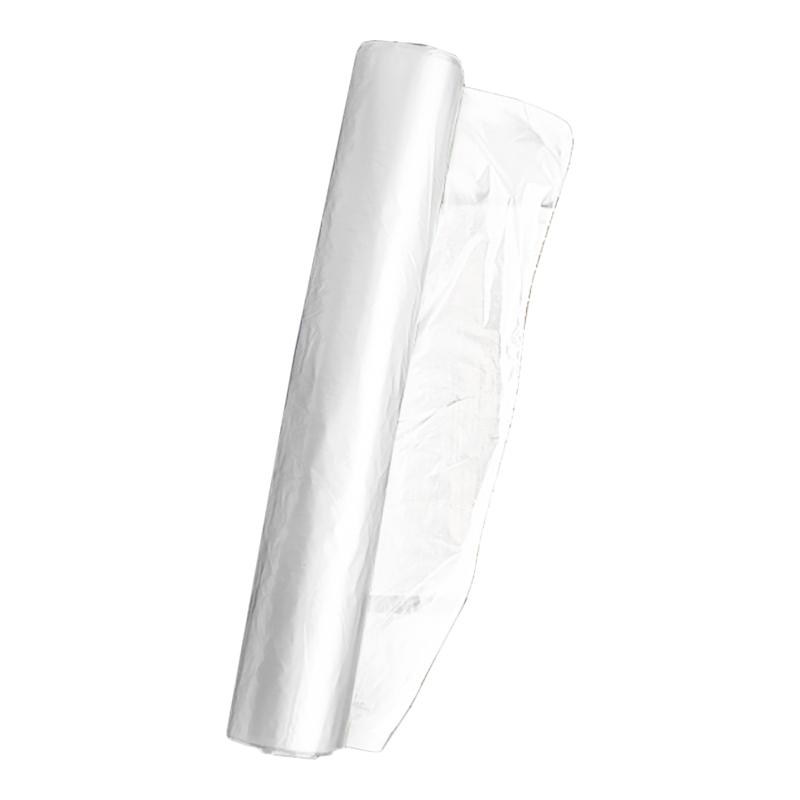

The global materials industry is currently navigating a pivotal transition away from traditional fossil-fuel derivatives toward sustainable alternatives. At the heart of this movement is the development of Bio-Based Environmentally Friendly Resin, a specialized category of polymers designed to harmonize high-performance industrial utility with ecological safety. As regulatory pressures like the European Union's Single-Use Plastics Directive and China's comprehensive plastic bans intensify, understanding the molecular science, processing requirements, and environmental impact of these resins has become essential for manufacturers and consumers alike. This guide explores how these advanced materials are redefining the concept of a circular economy by closing the carbon loop and eliminating long-term waste accumulation. This evolution is not merely a material swap but a fundamental shift in the global industrial paradigm.
To understand why Bio-Based Environmentally Friendly Resin is superior to conventional polyethylene or polypropylene, one must examine its chemical origins. Unlike traditional resins that rely on long-chain hydrocarbons extracted from crude oil, bio-based resins utilize Renewable Feedstock. These feedstocks are primarily derived from agricultural outputs such as corn starch, sugarcane bagasse, and cassava. Through biochemical fermentation, these natural sugars are converted into monomers like lactic acid, which are then polymerized into sophisticated materials such as Polylactic Acid or PLA. The carbon utilized in these resins is part of the current biological carbon cycle, meaning that when the material eventually degrades, it does not add new fossil carbon to the atmosphere, effectively reducing the net Carbon Footprint of the final product.
Modern material science has moved beyond simple bio-polymers to create Modified Raw Material blends. These proprietary formulations, such as the XH-918 and SH-133 series, combine multiple biodegradable components to achieve specific physical properties. By blending starch-based polymers with polyesters like PBAT, engineers can create a resin that offers the heat resistance of traditional plastic while maintaining the capability for Complete Mineralization. This technical versatility ensures that Bio-Based Environmentally Friendly Resin can be used in everything from thin-film packaging to rigid structural components without sacrificing environmental integrity. Furthermore, the molecular design of these resins now includes specific chain extenders that prevent thermal degradation during high-speed processing.
A significant portion of the Bio-Based Environmentally Friendly Resin market relies on the synergy between rigid and flexible molecules. Polylactic Acid (PLA), while strong and transparent, is inherently brittle. To solve this, manufacturers incorporate Polybutylene Adipate Terephthalate (PBAT), a petroleum-based but fully biodegradable polyester that provides exceptional flexibility and toughness. Additionally, Polyhydroxyalkanoates (PHA)—polyesters produced by microorganisms via sugar fermentation—are gaining traction. PHAs offer the unique advantage of high moisture resistance and the ability to degrade in ambient soil and marine environments without the need for industrial heat. This "molecular blending" strategy allows for the customization of the resin's mechanical properties to match the requirements of heavy-duty industrial applications.
The defining characteristic of an environmentally friendly resin is its ability to undergo Microbial Decomposition. This is a multi-stage process that begins with the physical and chemical breakdown of the polymer chains. When a product made from these resins enters a disposal environment—whether a backyard compost bin or a large-scale industrial facility—it becomes a source of nutrition for the local microbial population. This interaction is the cornerstone of the Microbial Food Chain in sustainable waste management, ensuring that plastic waste is transformed into valuable organic matter.
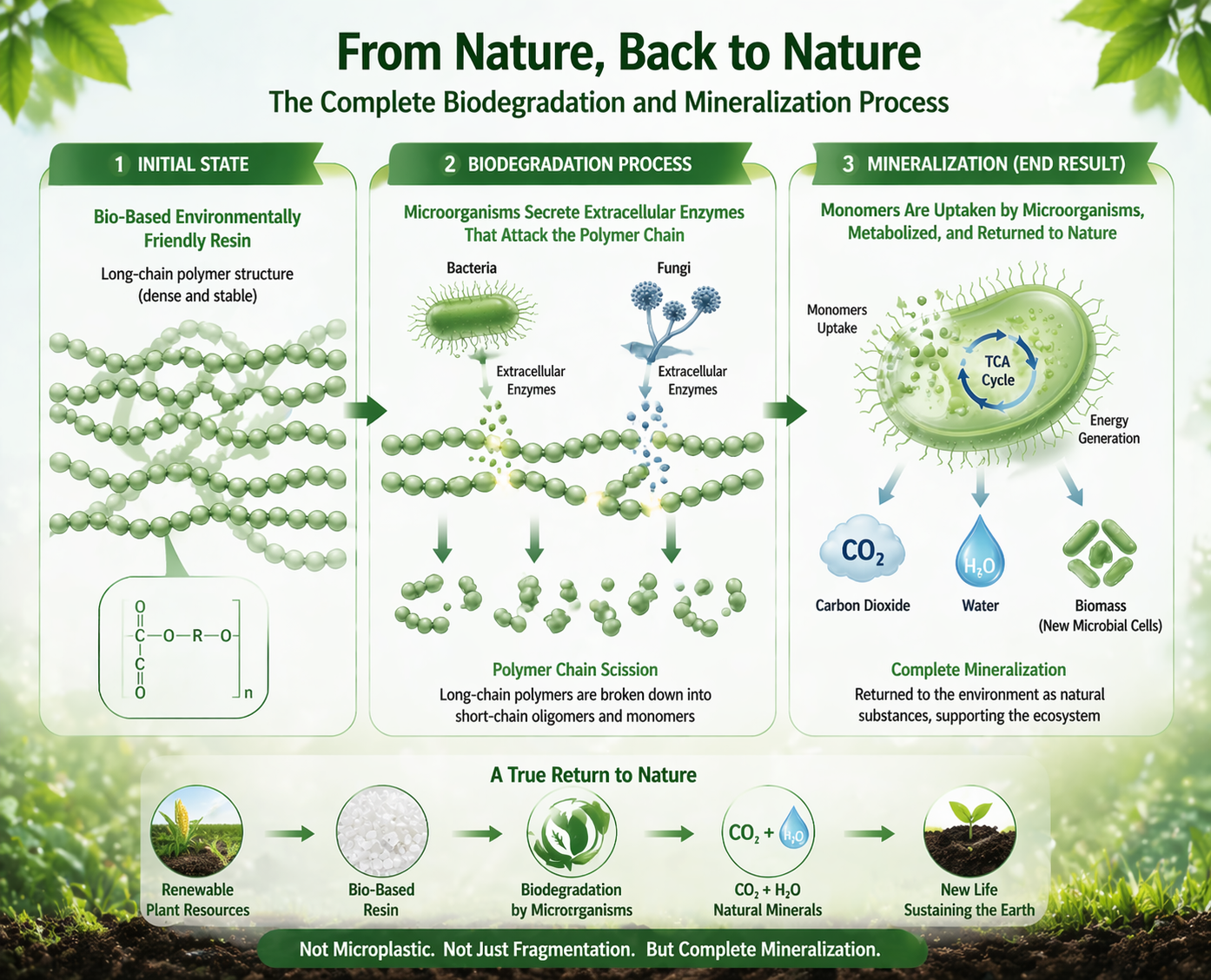
In oxygen-rich environments, Aerobic Biodegradation is the primary pathway. Microorganisms such as bacteria and fungi secrete extracellular enzymes that target the ester bonds in the resin. This depolymerization reduces the plastic into smaller oligomers and monomers that can be absorbed through microbial cell walls. The end products of this efficient process are water, biomass, and carbon dioxide. Industrial composting facilities optimize this by maintaining temperatures around 60 degrees Celsius and managing moisture levels, ensuring that even high-molecular-weight resins like PLA achieve mineralization within a few months. This process is governed by strict protocols such as ASTM D6400 and EN 13432, which verify that no non-toxic residue or harmful heavy metals remain in the soil, preventing any negative impact on future agricultural cycles.
In environments where oxygen is absent, such as anaerobic digesters or deep soil layers, Anaerobic Biodegradation occurs. While the initial breakdown steps are similar, the metabolic end products include methane. In modern circular economy models, this methane is captured as biogas to be used as a renewable energy source. Understanding the difference between these two pathways is vital for selecting the correct Bio-Based Environmentally Friendly Resin for specific geographic regions or waste infrastructures. For instance, resins designed for Home Compostable certification must be able to degrade at much lower, ambient temperatures than those destined for industrial facilities, often requiring a higher starch content to facilitate enzymatic attack.
| Property Category | Traditional Petroleum Resin | Bio-Based Environmentally Friendly Resin | Environmental Impact |
| Raw Material Source | Crude Oil and Natural Gas | Corn Starch, Sugarcane, Cellulose | Renewable vs Non-renewable |
| Carbon Cycle | Releases Fossil Carbon | Biological Carbon Neutrality | Lower Carbon Footprint |
| End-of-Life Path | Landfill or Incineration | Microbial Decomposition / Composting | Elimination of Plastic Pollution |
| Decomposition Period | Hundreds of Years | 3 to 12 Months | Rapid Resource Return |
| Marine Degradability | Extremely Persistent | Variable (Specific PHA/Starch blends) | Mitigation of Ocean Microplastics |
One of the historical barriers to the adoption of bioplastics was the difficulty in processing. Early versions of Bio-Based Environmentally Friendly Resin were prone to thermal degradation and offered poor melt strength. However, contemporary Bioplastic Pellets have been engineered to be compatible with existing thermoplastic machinery. This allows manufacturers to switch to sustainable materials without the need for massive capital investment in new equipment, accelerating the global transition to green manufacturing.
The production of shopping bags, garbage liners, and agricultural films relies on blown film extrusion. Advanced resins like SH-133 are specifically formulated to provide high Tensile Strength and Elongation, preventing the tearing that plagued early bio-based films. During the extrusion process, precise temperature control is critical. These resins typically have a narrower processing window than PE, requiring accurate calibration of the screw speed and cooling tower height. When handled correctly, the resulting film offers excellent Barrier Properties, protecting the contents from moisture and oxygen while maintaining a soft, premium feel that consumers prefer. Modern extrusion dies are now often coated with specialized materials to prevent the "die drool" often associated with starch-based resin processing.
For items like disposable cutlery, electronics housings, and medical devices, injection molding is the standard. Modified Raw Material formulations allow for high-speed production cycles with minimal warping. The incorporation of natural fillers can further enhance the Thermoplastic Processing characteristics, allowing for complex geometries and thin-walled designs. Because these resins are inherently bio-compatible, they are increasingly used in pharmaceutical packaging where chemical migration must be strictly avoided. The Heat Sealing Performance of these materials also makes them ideal for multi-layer lamination in the food industry, providing a secure seal that maintains product freshness throughout the distribution chain.
As the market for Bio-Based Environmentally Friendly Resin grows, so does the need for transparent verification. Buyers must distinguish between a resin that is 100 percent bio-based and one that is only partially derived from plants. The industry standard for this verification is ASTM D6866. This test uses radiocarbon analysis (Carbon-14 dating) to determine the exact percentage of modern carbon versus fossil carbon in the polymer. Since fossil fuels are millions of years old, they contain zero Carbon-14. In contrast, agricultural feedstocks possess a known level of this isotope. This scientific accuracy prevents "greenwashing" and ensures that environmental claims are backed by empirical evidence, allowing brands to build genuine trust with eco-conscious consumers.
Because Bio-Based Environmentally Friendly Resin is designed to be sensitive to environmental triggers, its storage and handling differ from traditional plastics. These resins are often hydrophilic, meaning they can absorb moisture from the air. If the pellets become damp, the moisture can cause hydrolysis during the melting process, leading to bubbles, streaks, and a loss of mechanical properties in the final product. Therefore, Bioplastic Pellets must be stored in vacuum-sealed, moisture-proof bags. Pre-drying the resin in a specialized desiccant dryer is often required before the resin enters the processing hopper.
Furthermore, protection from ultraviolet radiation is essential. Prolonged exposure to sunlight can trigger the initial stages of Photo-degradation, making the resin brittle before it is even processed. Manufacturers recommend a cool, dry warehouse environment with strict temperature controls—ideally below 30 degrees Celsius—to prevent premature softening or hardening. Following these storage protocols ensures that the resin maintains its specified physical properties throughout its intended shelf life, minimizing material waste and ensuring production efficiency.
The application of Bio-Based Environmentally Friendly Resin is no longer limited to niche eco-friendly products. Its physical versatility has allowed it to penetrate a wide array of heavy industries, providing a functional advantage alongside its environmental benefits. From automotive interiors to medical implants, the scope of biopolymers is expanding exponentially.
Agriculture has historically been a major consumer of non-degradable polyethylene mulch films, which are used to suppress weeds and retain soil moisture. However, these films are nearly impossible to remove completely, leading to the accumulation of microplastics that damage soil health. Bio-based resins have revolutionized this sector. Farmers can now use biodegradable mulch films that provide identical performance during the growing season but are plowed back into the earth after harvest. Soil bacteria then consume the film, converting it into biomass and water, thus preserving the long-term fertility of the land and supporting a truly sustainable food system. This elimination of disposal costs provides a direct economic incentive for modern agricultural operations.
The explosion of e-commerce has led to a massive increase in packaging waste. Bio-Based Environmentally Friendly Resin is now used to create self-adhesive clothing bags, padded mailers, and protective bubble wrap. These products offer the same durability and puncture resistance as traditional plastics but can be disposed of in organic waste streams. This is particularly important for bags that may be contaminated with food or liquids, as these impurities do not interfere with the composting process, unlike the traditional mechanical recycling of PE. The high printability of these resins also allows brands to use water-based inks, further reducing the chemical footprint of the packaging.
In the hygiene sector, bio-based resins are used to produce biodegradable aprons, gloves, and components for baby diapers. Because these materials are non-irritating and free from endocrine-disrupting chemicals like BPA, they are safer for direct skin contact. In medical settings, resorbable polymers used in surgical staples and drug delivery systems utilize the same principles of chemical susceptibility to biological breakdown, ensuring that the material is safely absorbed by the body without requiring secondary removal procedures. New research into Bio-Based Environmentally Friendly Resin is also paving the way for 3D-printed bone scaffolds that degrade at the same rate as natural bone regeneration.
For a resin to be marketed as truly environmentally friendly, it must pass rigorous independent testing. Certification bodies act as the gatekeepers of the Eco-friendly Circular Economy, ensuring that manufacturers' claims are backed by empirical science. This transparency is vital for building consumer trust and preventing deceptive marketing practices in an increasingly competitive global market.
In North America, the Biodegradable Products Institute or BPI provides the most recognized certification. To earn this seal, a Bio-Based Environmentally Friendly Resin must prove that it disintegrates within a specific timeframe and biodegrades at a rate comparable to natural materials like paper or grass clippings. It must also pass a phytotoxicity test, proving that the resulting compost is healthy for plant growth. The ASTM D6400 protocol is the scientific foundation for these tests, focusing on aerobic composting in municipal facilities.
Europe utilizes the EN 13432 standard, often verified by agencies like TÜV Austria through their OK Compost labels. These certifications are divided into "Industrial" and "Home" categories, reflecting the different conditions found in specialized waste plants versus backyard heaps. In Asia, certifications such as the Japanese JBPA and various Chinese national standards like GB/T 41010 are aligning with these global norms, creating a unified language for international trade. These labels often include a unique license number, allowing businesses to verify the authenticity of their resin suppliers and ensuring adherence to strict toxicity thresholds.
Transitioning an entire global industry to 100 percent bio-based materials cannot happen overnight. This is where the Mass Balance Approach becomes critical. This accounting method allows manufacturers to mix renewable feedstocks with fossil-based materials during the transition phase. While the specific molecules in a final product might be a mix, the manufacturer ensures that the total volume of Bio-based Feedstock entering the system matches the volume of products sold with a bio-attributed claim. This provides a scalable pathway for large chemical companies to invest in renewable technology without abandoning their existing infrastructure, ensuring a steady supply of Eco-friendly Circular Economy materials.
To evaluate the true success of these materials, scientists use a Life Cycle Assessment or LCA. This quantitative tool measures every impact of the Bio-Based Environmentally Friendly Resin from the extraction of corn starch to the final mineralization of the product. An accurate LCA considers land use, water consumption, and the energy used in transportation. By comparing the LCA of a bio-based bag to a traditional plastic bag, it becomes clear that while no material is without impact, the bio-based option significantly reduces long-term environmental toxicity and atmospheric carbon accumulation. Advanced LCA models now include "end-of-life benefits" such as carbon sequestration in agricultural soils through compost application.
While composting is the traditional disposal method, the industry is moving toward Chemical Recycling to maximize resource value. Through a process called depolymerization, Bio-Based Environmentally Friendly Resin (especially PLA) can be broken down into its original lactic acid monomers. These monomers are then purified and re-polymerized into "virgin-quality" resin. This closed-loop system is superior to mechanical recycling because it avoids the degradation of mechanical properties, allowing the same carbon to be used indefinitely. Developing the global infrastructure for the chemical recovery of biopolymers is a high-priority goal for the next decade of sustainable polymer engineering.
Despite its rapid growth, the bio-based resin industry faces several technical and economic hurdles. Cost remains a primary factor, as the scale of production for renewable feedstocks has not yet reached the massive levels of the global petroleum industry. However, as fossil fuel prices fluctuate and carbon taxes are implemented, the price gap is narrowing. Researchers are also working on second-generation feedstocks—utilizing agricultural waste like corn husks, straw, or even wood pulp—so that plastic production does not compete with global food security. These non-food feedstocks are essential for the long-term scalability of Bio-Based Environmentally Friendly Resin.
The future of polymer engineering lies in the creation of intelligent resins. We are seeing the development of resins with "triggerable" degradation, where the material remains stable for years but begins to break down only when exposed to a specific enzyme or a particular pH level found in a composting environment. Furthermore, the integration of Carbon Footprint Reduction goals into corporate social responsibility mandates is driving massive investment in these technologies. The ultimate objective is a world where plastic is no longer a pollutant but a temporary vessel for carbon that is destined to return to the soil, creating a truly regenerative material economy.
The rise of Bio-Based Environmentally Friendly Resin marks the end of the era of disposable, persistent plastic. By leveraging the power of microbial metabolism and renewable agricultural resources, we can create materials that serve our needs without compromising the health of the planet. These resins offer the physical performance required for modern life—strength, clarity, and barrier protection—while ensuring that the end-of-life process is a contribution to the earth rather than a burden. This transition represents a fundamental shift in how human society interacts with the biosphere, moving from a model of extraction to one of regeneration.
As we move toward a more sustainable future, the responsibility lies with both producers and consumers to choose products that are certified, understood, and properly disposed of. By supporting the transition to bio-based materials and advocating for better composting and chemical recycling infrastructure, we can ensure that the next generation of polymers supports a truly regenerative circular economy. The science of biodegradation is not just about making plastic disappear; it is about respecting the biological cycles that sustain all life on this planet, ensuring that our industrial output aligns with the natural limits of our environment.
This comprehensive guide is designed to provide technical clarity on the complex world of biodegradable resins and Bio-Based Environmentally Friendly Resin. For manufacturers looking to transition their production lines or consumers wanting to make informed purchases, understanding these standards and mechanisms is the first step toward a plastic-free environment. Always look for recognized certification marks and verify the technical specifications of any resin to ensure it meets the highest environmental and performance standards across all relevant ecosystems.




+86 18101032584
No. 60-1, Jichuan East Road, HailingIndustrial Park, Hailing District, Taizhou City.


Copyright© Taizhou Huangyan Zeyu New Material Technology Co., Ltd. All Rights Reserved.
 Custom Fully Degradable Raw Material Manufacturers


 English
 Français
 Español
 Deutsch
 italiano