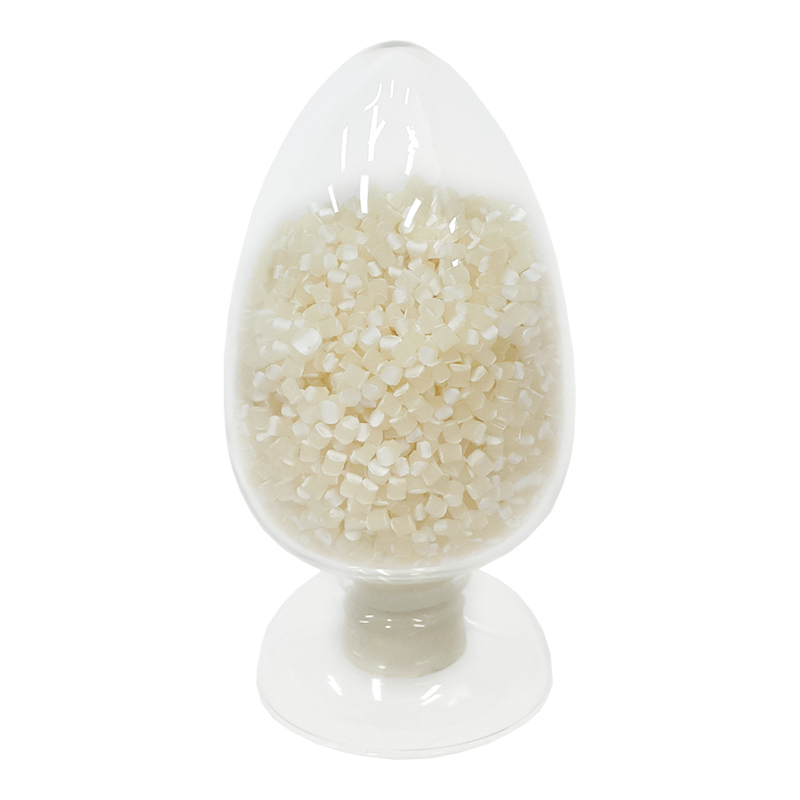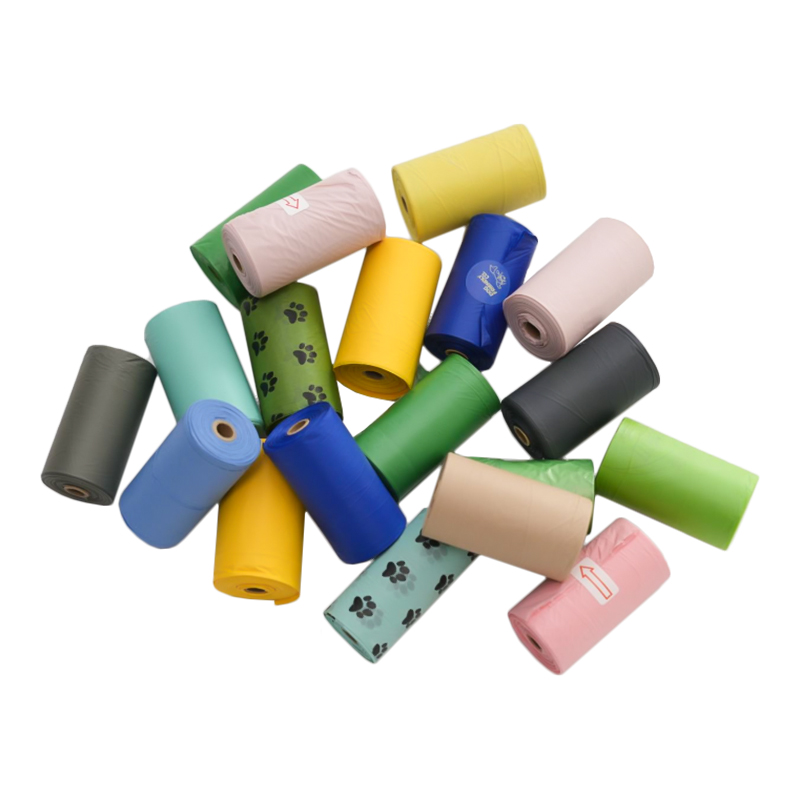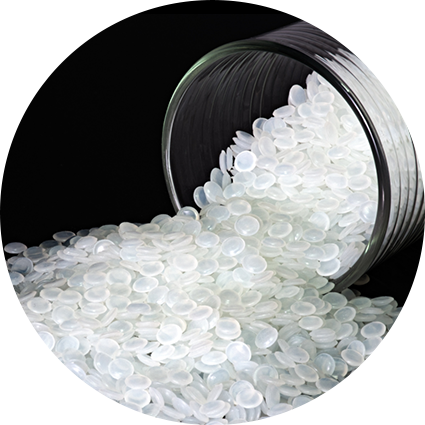

The modern industrial landscape is undergoing a significant transformation as the environmental consequences of traditional synthetic polymers become increasingly evident. Traditional plastics, derived primarily from fossil fuels, are engineered for durability, but this very strength leads to their persistence in the environment for centuries. In contrast, Fully Degradable Plastic Products represent a paradigm shift in material science. These materials are designed to provide the necessary functional properties during their use phase while ensuring a predictable and complete return to nature at the end of their lifecycle.
The journey of biodegradable polymers began in the early 20th century, specifically in 1926, when researchers identified specialized bacteria capable of producing natural polyesters. However, it was not until the late 20th century that the commercial urgency for these materials peaked. Today, the focus is not just on biodegradability but on achieving Complete Biodegradation, a process where the plastic is entirely consumed by microorganisms, leaving behind no synthetic residue. This article provides an in-depth analysis of the scientific principles, material chemistry, and regulatory frameworks that define this essential sector of the green economy.
As urbanization intensifies and the global population grows, the volume of plastic waste generated daily has reached critical levels. Conventional waste management systems, such as incineration and traditional recycling, often struggle to keep pace with the sheer diversity of plastic resins. Fully degradable materials offer a complementary solution, particularly for products that are easily contaminated by organic matter, making them difficult to process through mechanical means. By integrating these polymers into our daily lives, we can close the loop on carbon usage and minimize the long-term ecological footprint of human consumption. This shift is not merely a technical upgrade but a philosophical realignment with the Earth's biological carrying capacity.
The term biodegradability is often misunderstood in public discourse. Scientifically, it describes the ability of a material to undergo a chemical change where the primary carbon backbone of the polymer is broken down by the metabolic activity of biological agents. This process is distinct from fragmentation, where a plastic merely breaks into smaller pieces, often resulting in the formation of Microplastics. True degradation requires the assimilation of the carbon into the microbial cellular structure.
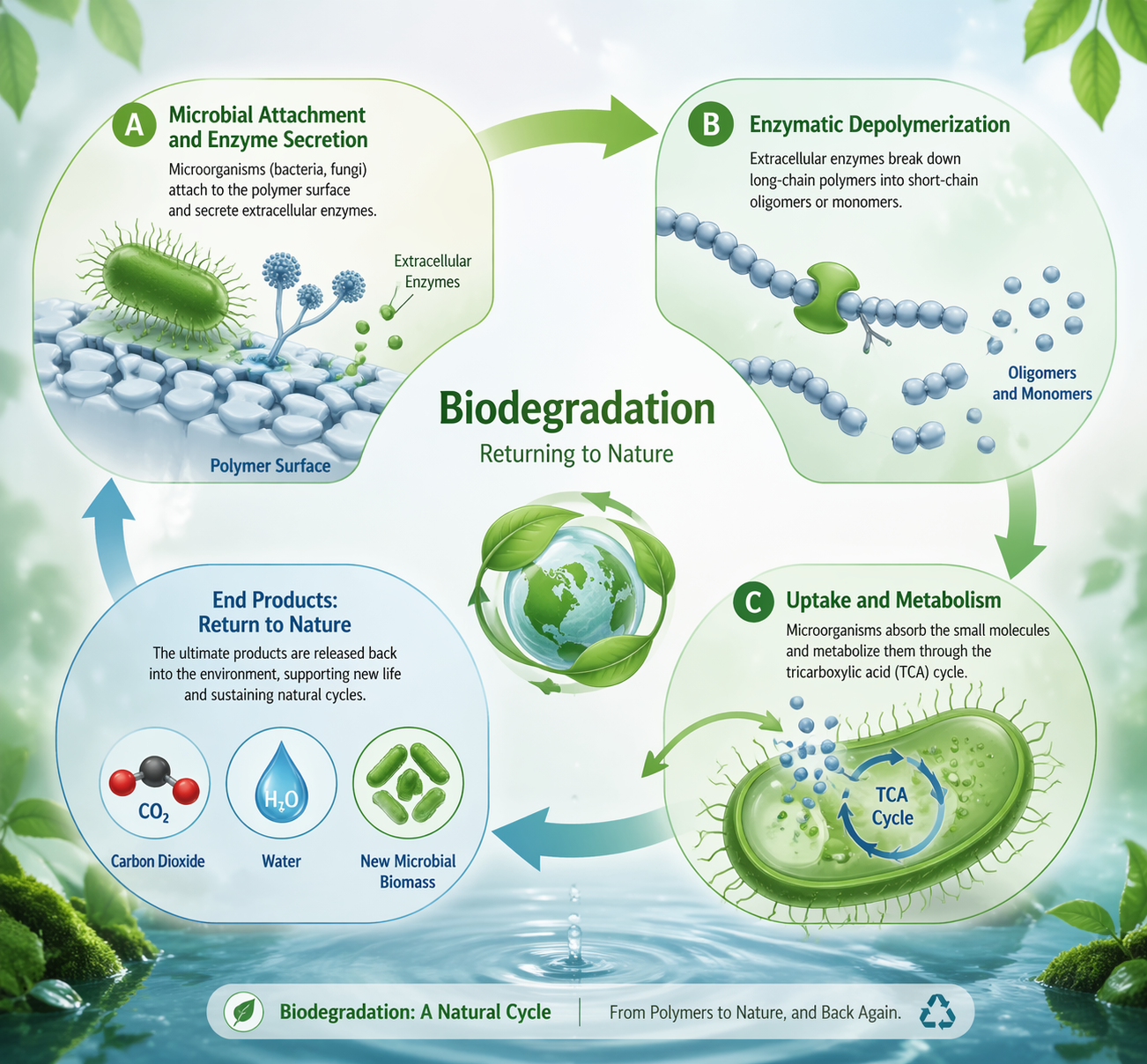
The environment in which a plastic is disposed of dictates the pathway of its decomposition. In oxygen-rich environments, such as industrial composting facilities, Aerobic Biodegradation occurs. Here, microorganisms utilize oxygen to break down the polymer chains, resulting in the production of carbon dioxide, water, and Biomass. This is the most efficient pathway for materials like PLA and PHB. In these facilities, temperatures often reach 60 degrees Celsius, significantly accelerating the kinetic energy of the hydrolysis reaction.
Conversely, in environments lacking oxygen, such as deep landfills or anaerobic digesters, Anaerobic Biodegradation takes place. In this scenario, the decomposition produces methane in addition to carbon dioxide and biomass. Understanding these pathways is critical for waste management professionals, as methane is a potent greenhouse gas that must be captured to ensure the process remains environmentally beneficial. The speed of these processes is heavily influenced by external factors including moisture levels, pH balance, and the specific microbial colonies present in the soil or compost pile. The biological diversity of a site—ranging from thermophilic bacteria to specialized fungi—is a major determinant of degradation efficacy.
| Degradation Type | Environment | Primary Agents | End Products |
| Aerobic | Industrial Compost, Soil, Surface Water | Bacteria, Fungi, Actinomycetes | CO2, H2O, Biomass |
| Anaerobic | Landfills, Digesters, Marine Sediments | Methanogens, Specialized Bacteria | CH4, CO2, Biomass |
| Hydrolysis | High Humidity, Aqueous Solutions | Water molecules (Chemical start) | Oligomers, Monomers |
The process of degradation begins with the secretion of extracellular enzymes by microorganisms. Because polymer molecules are typically too large to pass through microbial cell walls, they must first be depolymerized into smaller fragments—oligomers and monomers. Enzymes like lipases and proteinases target specific chemical bonds, such as ester or amide linkages, breaking them down into smaller, soluble components. Once these units reach a sufficiently low molecular weight, they are transported into the cell, where they enter metabolic pathways, such as the Citric Acid Cycle, ultimately being converted into energy and building blocks for new cells.
The ultimate goal of any biodegradable polymer is Mineralization. This is the final stage of the biodegradation process, where the organic carbon of the polymer is converted into inorganic carbon, primarily CO2. A material can only be classified as a Fully Degradable Plastic Product if it reaches high levels of mineralization within a specified timeframe, typically defined by international standards as 90 percent conversion within six months in a controlled composting environment. This ensures that the material does not simply disappear from sight but is fundamentally reabsorbed into the earth's natural carbon cycle. The absence of persistent metabolic intermediates is the hallmark of a truly "fully" degradable product.
Not all degradable plastics are created equal. The industry categorizes these materials based on their chemical structure and the origin of their feedstocks. Broadly, we distinguish between Agro-polymers derived from biomass and biopolyesters that may be synthesized from either renewable or petroleum-based monomers. The choice of polymer depends on the required shelf life and the target disposal environment.
PLA is perhaps the most recognized biodegradable plastic in the consumer market. Derived from fermented plant starch, usually corn or sugarcane, it is a versatile thermoplastic. While PLA is technically a Hydro-biodegradable material that initiates its breakdown through Hydrolysis, it requires the high-temperature conditions of an industrial compost site to complete its degradation. Its clarity and mechanical strength make it an ideal candidate for food packaging, cold drink cups, and 3D printing. To overcome its inherent brittleness, researchers often employ plasticization or nanocellulose reinforcement to broaden its structural utility.
In the search for materials that can degrade in more varied environments, PHB and the wider family of PHAs have emerged as frontrunners. These are produced naturally by bacteria as a form of energy storage, much like fat in animals. Because they are a natural part of the Microbial Food Chain, they exhibit excellent biodegradability in soil and marine environments. Unlike PLA, PHB does not strictly require industrial heat to initiate its return to nature, making it a promising candidate for marine-safe applications and agricultural mulch films that can be plowed directly back into the field. PHA technology is currently scaling, with a focus on reducing production costs via waste-stream fermentation.
PBAT is a flexible, petroleum-based polyester that is fully biodegradable. It is often blended with PLA to provide the elasticity and impact resistance required for plastic bags and films. Other critical materials include Polycaprolactone (PCL), which has a low melting point and is highly susceptible to fungal attack, and Polyglycolic Acid (PGA), which offers exceptional gas barrier properties. These materials allow engineers to "tune" the degradation rate and mechanical performance to fit specific consumer needs.
A common misconception is that all bio-based plastics are biodegradable. In reality, many green plastics like Bio-PE or certain Bio-TPUs are chemically identical to their fossil-fuel counterparts. They are made from plants, but they do not degrade. Conversely, some petroleum-based plastics like PCL and PGA are fully biodegradable. The focus for Fully Degradable Plastic Products must remain on the chemical susceptibility to microbial attack rather than just the source of the carbon. This distinction is vital for accurate life cycle assessments and environmental labeling, helping to guide consumer expectations.
The versatility of modern degradable polymers allows them to penetrate various industrial sectors, each with unique performance requirements. These applications are driven by both environmental necessity and functional superiority in specific niches.
In the medical field, biodegradable polymers like PGA and PCL are used for internal sutures, bone scaffolds, and drug-delivery systems. The material is engineered to safely dissolve into the body over a precise period—weeks or months—matching the healing rate of the tissue. This eliminates the need for follow-up surgeries to remove medical implants, reducing patient trauma and healthcare costs. Advanced 3D-bioprinting uses these materials as temporary lattices for tissue engineering.
In agriculture, the use of biodegradable mulch films addresses the "white pollution" caused by traditional polyethylene films. These traditional films are difficult to remove completely from the soil, leading to fragmented microplastics that impede crop root growth and water infiltration. Fully degradable films, however, can be integrated into the soil at the end of the growing season, where they are converted into CO2 and water by native soil bacteria. This supports sustainable farming practices by preventing plastic accumulation and enhancing soil structure over the long term.
Packaging remains the largest market for degradable plastics. From compostable coffee pods and tea bags to shipping mailers and fresh produce containers, these materials provide a pathway for food-contaminated waste to be diverted from landfills. Because organic contamination makes mechanical recycling of plastics like PE or PP almost impossible, compostable packaging allows the entire waste stream—food and container—to be processed together into high-quality fertilizer.
To prevent greenwashing and ensure that biodegradable claims are scientifically valid, the international community has established rigorous testing protocols. These standards define the timeframe, the environment, and the required percentage of Mineralization, protecting both the consumer and the environment.
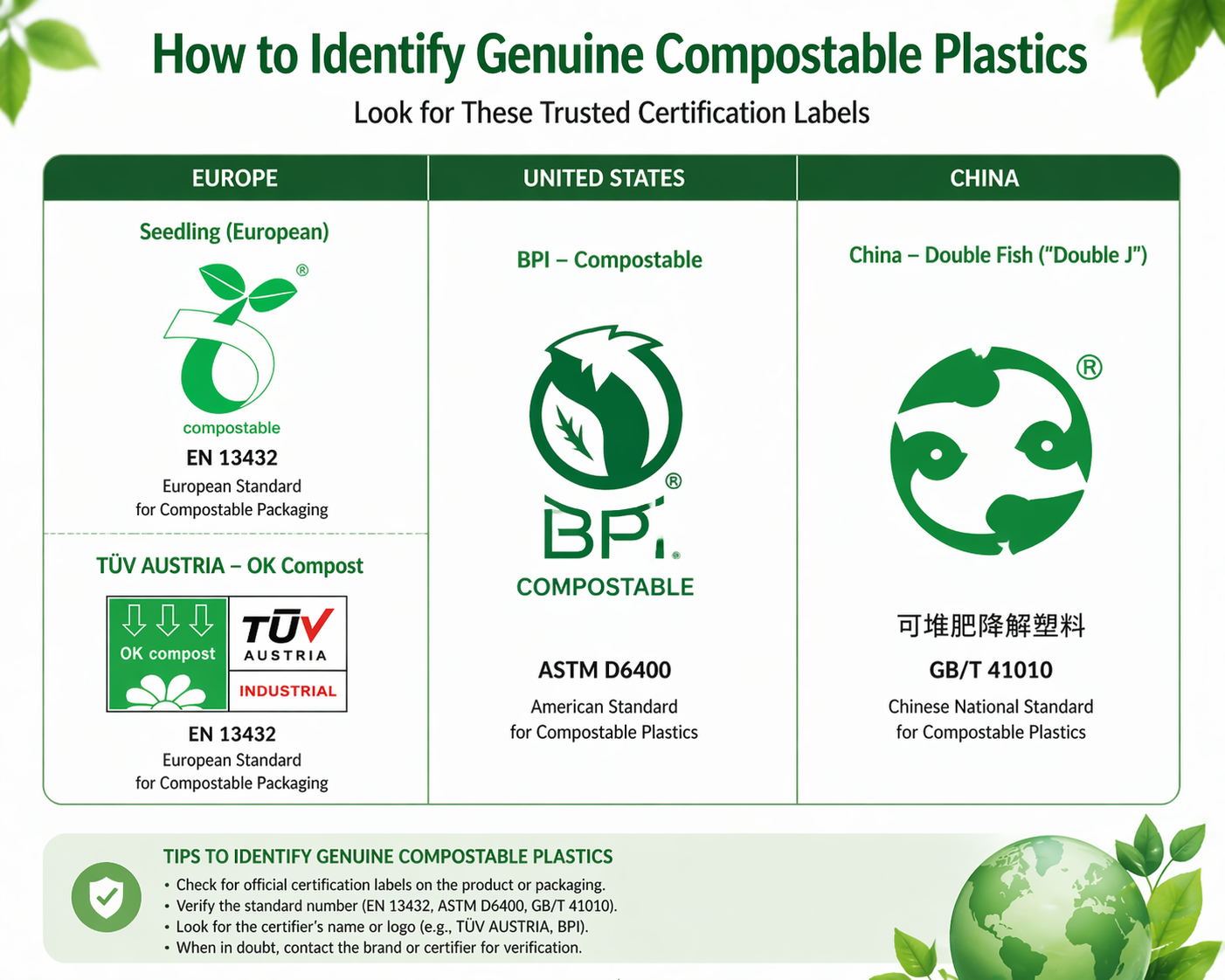
The ASTM D6400 standard is the primary benchmark in the United States for labeling plastics as compostable in municipal and industrial facilities. Similarly, the European EN 13432 provides the requirements for packaging recoverable through composting. These certifications ensure that the plastic, including any dyes or additives used, will break down without leaving toxic residues in the resulting compost. Products bearing these marks have undergone extensive ecotoxicity testing to prove they do not harm plant growth, earthworm populations, or soil microbial balance.
The ISO 17088 standard provides a global framework for identifying and labeling compostable plastics. Compliance is often verified by third-party organizations like DIN CERTCO or the Biodegradable Products Institute (BPI), which provide recognized marks that help consumers and waste managers distinguish truly sustainable products from deceptive alternatives. These certifications are essential for maintaining the integrity of the Circular Economy and ensuring that organic waste streams remain free from non-compostable contaminants. National policies, such as China's "GB/T 41010" standard, are also aligning with these global benchmarks to unify trade requirements.
Integrating biodegradable plastics into a Circular Economy requires more than just making the materials; it requires a systemic approach to waste management. The Mass Balance Approach is one such strategy used by manufacturers to transition from fossil-fuel feedstocks to bio-based feedstocks. By mixing renewable and traditional raw materials in the production process, companies can gradually increase the sustainability of their product lines while maintaining existing manufacturing infrastructure. This method allows for a scalable transition without requiring an immediate, complete overhaul of supply chains, effectively "greening" the industry from within.
A significant challenge remains in the realm of recycling. While traditional plastics like PET have well-established recycling streams, biodegradable polymers can act as contaminants. For example, even a small amount of PLA in a PET recycling batch can ruin the mechanical properties of the recycled material by lowering its processing temperature and causing haziness. Therefore, the focus for Fully Degradable Plastic Products should be on Organic Recycling through composting. Education for consumers on proper sorting is paramount, and the development of digital watermarking or NIR-sorting technologies is helping sorting facilities manage these mixed streams.
Evaluating the true impact of a material requires a Life Cycle Assessment (LCA). This analysis tracks the environmental cost from raw material extraction to final disposal. Studies suggest that while bio-based plastics generally have a lower carbon footprint, their production can involve higher water use and fertilizer runoff (eutrophication). Consequently, "fully degradable" must also mean "sustainably sourced."
Global policy is a primary driver of adoption. The UN's ongoing negotiations for a Global Plastic Treaty emphasize the need for materials that are safe for the environment. Many regions have already banned specific single-use plastics, creating an immediate demand for compostable alternatives. Countries like Italy and France have been pioneers in requiring compostable bags for organic waste collection, demonstrating that policy-led shifts can rapidly transform the market and waste infrastructure.
The adoption of fully degradable materials offers a substantial reduction in the Carbon Footprint of plastic production. By utilizing plants that absorb CO2 during their growth, the net emission of greenhouse gases is significantly lowered. Furthermore, these materials offer a solution for hard to recycle items like agricultural mulch films, tea bags, or food-contaminated packaging, which are often rejected by mechanical recycling centers due to their high impurity levels. This functionality expands the boundaries of what is "recoverable" in our current economy.
Despite these benefits, the industry must address the risk of Oxidative Chain Scission in oxo-biodegradable plastics. These materials use metal salts to accelerate fragmentation, but there is ongoing scientific debate regarding whether the resulting fragments truly biodegrade or simply become invisible microplastics. For a product to be truly sustainable, it must be proven to enter the Microbial Food Chain completely, leaving no trace of its synthetic existence. True sustainability also requires considering the land use and water consumption needed to produce the bio-based raw materials, ensuring that plastic production does not compete with global food security or lead to deforestation.
The future of the plastics industry lies in the development of smart polymers that are stable during use but highly sensitive to specific environmental triggers. Advances in enzyme-mediated degradation—where specialized proteins are embedded within the plastic matrix to "activate" only upon exposure to certain humidity or temperature levels—are opening new doors for high-performance Fully Degradable Plastic Products. Researchers are also exploring the use of natural fibers, such as cellulose, hemp, and lignin, as reinforcements to enhance the thermal and mechanical stability of biopolymers without compromising their degradability.
As consumer demand for transparency grows and regulatory pressure on single-use plastics intensifies, the transition to biodegradable alternatives is no longer optional. By adhering to international standards and focusing on the science of complete mineralization, we can move toward a future where our materials are as resilient as our needs require, but as ephemeral as nature intended. The ultimate goal is a harmonious relationship between industrial output and biological cycles, where every plastic product has a clear and safe path back to the earth, contributing to a truly regenerative world.
This guide is intended for educational purposes and provides a synthesis of current industry knowledge regarding polymer biodegradability. For specific compliance and technical data, always refer to the latest ISO and ASTM documentation. Continuous research and development remain essential to optimize these materials for a wider range of applications while ensuring their environmental safety across all ecosystems.




+86 18101032584
No. 60-1, Jichuan East Road, HailingIndustrial Park, Hailing District, Taizhou City.


Copyright© Taizhou Huangyan Zeyu New Material Technology Co., Ltd. All Rights Reserved.
 Custom Fully Degradable Raw Material Manufacturers


 English
 Français
 Español
 Deutsch
 italiano