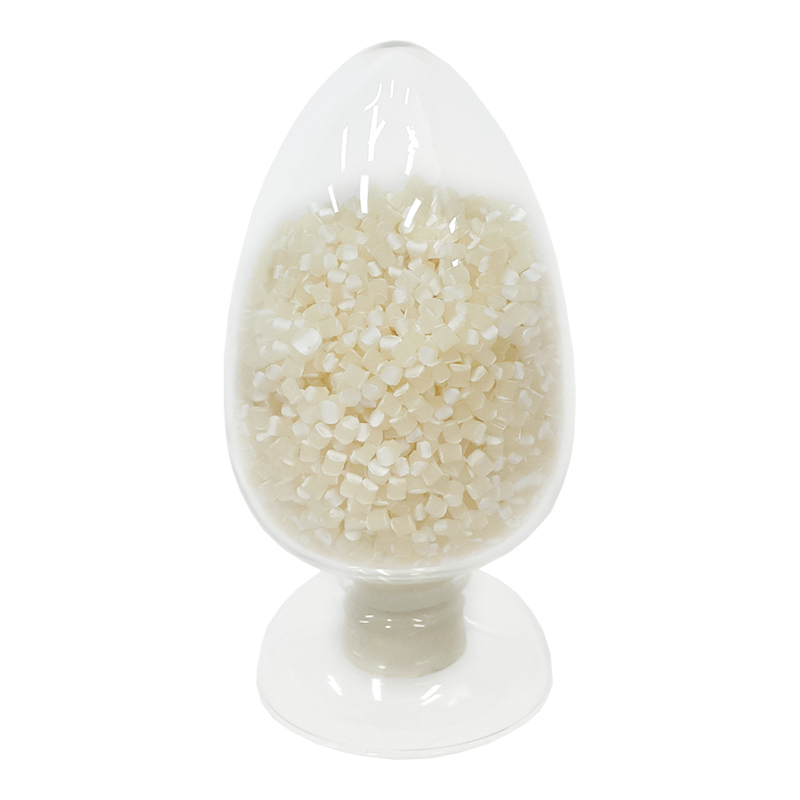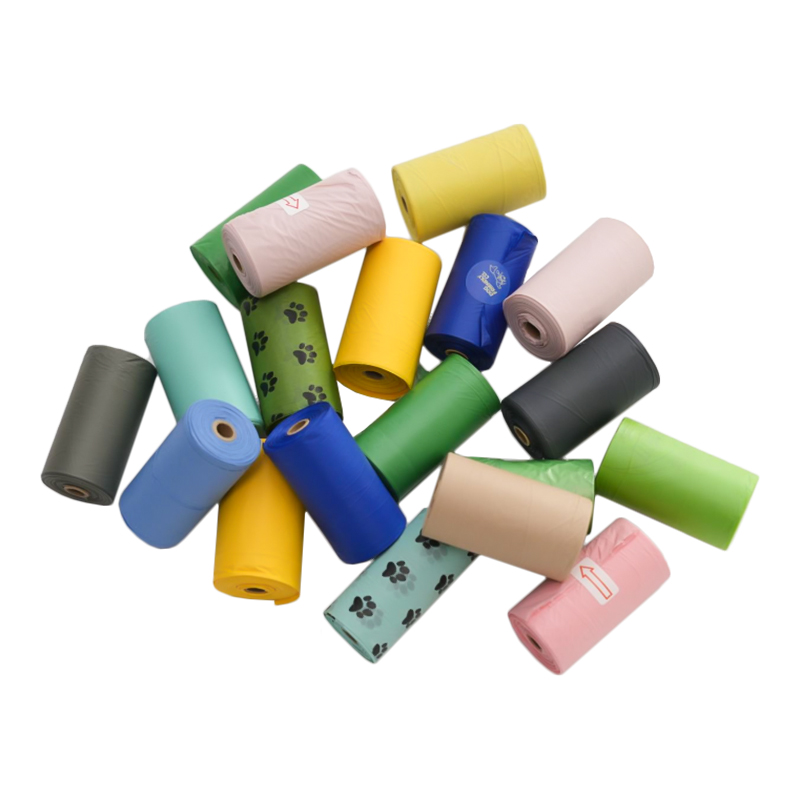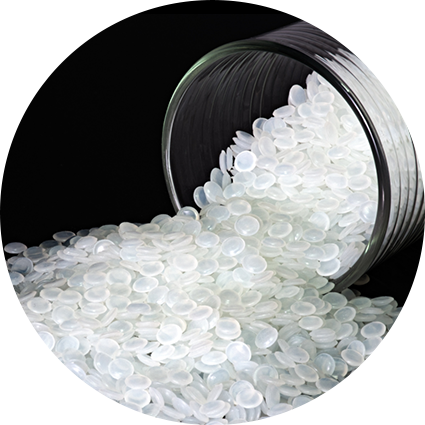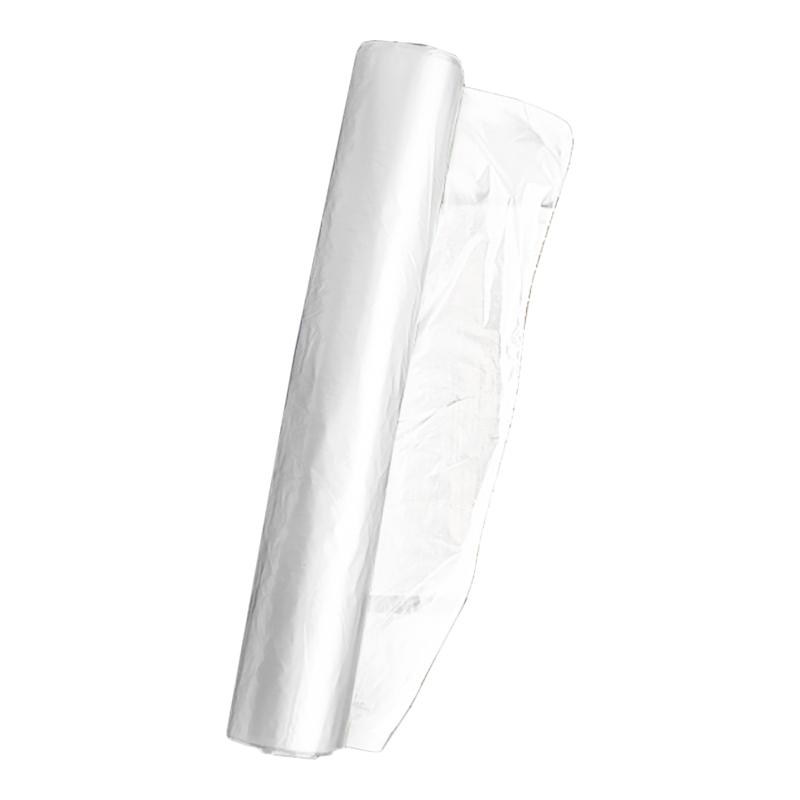

A fully biodegradable polyester modified material is a polymer formulation based on biodegradable polyester resins that have been physically or chemically modified to enhance specific properties for targeted applications. The term "fully biodegradable" means that the material, under appropriate environmental conditions (such as composting, soil, or marine environments), can be completely broken down by microorganisms into natural substances like carbon dioxide, water, and biomass, leaving no persistent residues or toxic byproducts.
The base materials for these formulations are typically biodegradable polyesters such as:
PBAT (Polybutylene Adipate Terephthalate): A flexible, tough biodegradable polyester synthesized from terephthalic acid, adipic acid, and 1,4-butanediol. PBAT exhibits excellent elongation at break and impact resistance, making it ideal for film applications.
PLA (Polylactic Acid): A rigid, bio-based polyester derived from renewable resources such as corn or sugarcane. PLA offers high strength and stiffness but is inherently brittle.
PBS (Polybutylene Succinate): An aliphatic polyester with good thermal stability and mechanical properties, suitable for various applications.
PCL (Polycaprolactone): A biodegradable polyester with a long degradation period of 2–4 years, often used in biomedical applications.
PHBV (Polyhydroxybutyrate-co-hydroxyvalerate): A microbial polyester with excellent biodegradability and tunable mechanical properties.
The modification process involves blending these base polyesters with other polymers, fillers, or additives to achieve desired characteristics such as improved flexibility, strength, heat resistance, barrier properties, or degradation rate.
While biodegradable polyesters offer environmental benefits, they often have limitations that restrict their use in certain applications. Fully biodegradable polyester modified materials address these challenges through various modification strategies.
Blending is one of the most common and cost-effective modification methods. By combining different biodegradable polyesters, manufacturers can achieve a balance of properties that no single polymer can provide.
PLA/PBAT Blends: PLA provides stiffness and strength, while PBAT contributes flexibility and toughness. The PLA/PBAT ratio can be tailored to achieve the desired stiffness-toughness balance for specific applications. Compatibilizers such as dicumyl peroxide (DCP) or lignin are often added to improve the interfacial adhesion between the two polymers.
BioPBS/PBAT/PHBV Ternary Blends: Recent research has demonstrated that ternary blends of BioPBS, PBAT, and PHBV can produce fully degradable materials with tunable mechanical and thermal properties suitable for sustainable packaging applications.
Starch-Based Blends: Thermoplastic starch (TPS) is frequently blended with biodegradable polyesters such as PBAT and PLA to reduce cost and enhance biodegradability. These blends are used in compostable bags, packaging films, and agricultural mulch films.
Chemical modification involves altering the molecular structure of the polyester to introduce new functional groups or change the polymer architecture.
End-Group Modification: The introduction of functional groups at the chain ends can modulate properties such as degradation rate, hydrophilicity, and interactions with other materials. For example, acid-terminal functional groups in PLGA can be tuned to achieve specific drug release profiles.
CO2-Based Polyester Modification: An innovative approach involves synthesizing CO2-based polyesters and using them to modify PLA. This results in composite materials with outstanding mechanical properties, enhanced UV resistance, and rapid degradation rates. Importantly, the composite can be completely degraded under mild conditions to recover lactic acid, achieving closed-loop recycling.
Chain Extension and Crosslinking: Incorporating polyol or polycarboxylic acid as branching units or introducing monomers with C=C bonds for crosslinking can significantly improve the mechanical properties and thermal stability of biodegradable polyesters.
Adding natural fibers or fillers can enhance mechanical properties, reduce cost, and improve biodegradability.
Straw Fiber Composites: Biodegradable polyester/straw fiber composites combine agricultural waste with biodegradable polymers to create fully biodegradable materials for various applications.
Jute Fiber Composites: Jute fibers have been studied as reinforcements for TPS/PLA/PBAT blends, improving mechanical properties while maintaining biodegradability.
Cellulose Nanocrystal Composites: Cellulose nanocrystals can be incorporated into biodegradable polyester matrices to enhance strength, stiffness, and barrier properties.
Fully biodegradable polyester modified materials offer numerous advantages over both traditional plastics and unmodified biodegradable polymers.
Complete Biodegradability: These materials achieve biodegradation rates of ≥90% within 180 days in soil under standard conditions. This ensures that products made from these materials do not persist in the environment for centuries.
Tunable Mechanical Properties: Through blending and modification, manufacturers can achieve a wide range of mechanical properties—from flexible films to rigid molded parts—suitable for diverse applications.
Excellent Processability: Modified materials can be processed using conventional plastic manufacturing techniques, including blow molding, injection molding, foaming, thermoforming, and biaxial stretching.
Reduced Carbon Footprint: Many fully biodegradable polyester modified materials incorporate bio-based content, reducing dependence on fossil fuels and lowering greenhouse gas emissions.
Compostability: Many formulations are certified compostable under industrial composting conditions, providing a clear end-of-life pathway.
Recyclability: Some fully biodegradable polyester modified materials are also recyclable, offering multiple end-of-life options.
Low Toxicity: Studies have shown that biodegradable plastics cause no significant toxicity at low doses, and faster-degrading materials exhibit weaker physiological toxicity.
The versatility of fully biodegradable polyester modified materials enables their use across a wide range of industries and applications.
Packaging is the largest and fastest-growing application segment for biodegradable polyesters.
Shopping Bags and Garbage Bags: PBAT-based modified materials are widely used for compostable shopping bags and garbage bags.
Food Packaging: PLA/PBAT blends are used for food packaging films,保鲜膜, and containers. Novel bio-based polyester blends based on FDCA are being developed for food packaging coatings.
Flexible Packaging: BioPBS/PBAT/PHBV ternary blends have demonstrated excellent potential for flexible packaging applications with tailored mechanical and barrier properties.
Agricultural applications are a rapidly growing segment for biodegradable polyesters.
Mulch Films: Biodegradable mulch films made from PBAT/PLA blends help suppress weeds, retain soil moisture, and regulate soil temperature. At the end of the growing season, these films can be tilled directly into the soil, eliminating the need for removal and disposal.
Crop Protection Membranes: Bio-based and biodegradable polyester formulations are being developed for crop protection applications, addressing key sectors in need of sustainable alternatives.
The hygiene and medical sectors are increasingly adopting biodegradable polyester modified materials.
Nonwoven Fabrics: PBST (PBSA) modified spinning products are used for nonwoven fabrics and woven bags.
Masks, Wet Wipes, and Diapers: Melt-blown modified materials based on PBAT are recommended as raw materials for masks, wet wipes, and diapers, offering biodegradability and skin-friendliness.
Medical Devices: PCL and PLGA are extensively used in biomedical devices and tissue engineering scaffolds due to their biocompatibility and tunable degradation rates. PLLA is being investigated for biodegradable stents.
Drug Delivery: Biodegradable polyester-based nanocarriers are being developed for targeted drug delivery to cancer cells.
The textile industry is exploring biodegradable polyester modified materials as sustainable alternatives to conventional synthetic fibers.
Biodegradable Synthetic Textiles: The global biodegradable synthetic textile materials market was valued at USD 294 million in 2024 and is projected to reach USD 439 million by 2032.
Fully biodegradable polyester modified materials are increasingly used in consumer goods and single-use products.
Disposable Tableware and Foam Products: PBS modified products are used for disposable injection-molded items.
Foam Packaging: PBAT/starch modified film products are used for compostable foam packaging.
Despite their significant potential, fully biodegradable polyester modified materials face several challenges that must be addressed for broader adoption.
Cost: The high cost of raw materials and processing remains one of the primary barriers. While prices are expected to decrease as production scales up, biodegradable polyesters are currently more expensive than conventional plastics.
Performance Limitations: Some biodegradable polyesters have inherent drawbacks, such as PLA's brittleness, low thermal stability, and poor melt strength.
Limited Biodegradability in Certain Environments: While these materials are biodegradable under composting conditions, they may exhibit limited degradation in marine or landfill environments.
Awareness and Infrastructure: Limited awareness among end-users about the benefits of biodegradable polyesters and inadequate composting and recycling infrastructure hinder market growth.
Price Volatility: Fluctuations in raw material prices can affect the cost competitiveness of biodegradable polyesters.
Mechanical Property Trade-offs: Achieving the optimal balance of stiffness, toughness, and degradation rate often requires complex formulation and processing.
The market for fully biodegradable polyester modified materials is poised for significant growth, driven by increasing environmental awareness, supportive regulations, and technological advancements.
The global PBAT market was valued at USD 2.4 billion in 2024 and is expected to reach USD 3.8 billion by 2031, growing at a CAGR of 5.20%. The broader bio-based polyester market is projected to grow at a CAGR of 9.2% from 2025 to 2031.
Key trends shaping the market include:
Diversification of Feedstock: There is a significant shift toward utilizing diverse and sustainable non-food biomass feedstocks, such as agricultural waste, lignocellulosic biomass, and even CO2.
Enhanced Functionality and Performance: Innovation is focused on developing modified materials with improved heat resistance, durability, barrier properties, and biodegradability.
Integration with Circular Economy: Designing products for easier recycling or composting, developing advanced chemical recycling technologies, and creating closed-loop systems are key trends.
Strategic Partnerships: Companies are increasingly forming partnerships across the value chain to accelerate R&D, scale up production, and create robust supply chains.
Expansion into High-Value Applications: Biodegradable polyester modified materials are penetrating niche markets such as 3D printing, electronics, medical devices, and automotive components.
The Asia-Pacific region is expected to dominate the market, driven by rapid industrialization, favorable government initiatives, and shifting consumer preferences toward sustainable products.
A fully biodegradable polyester modified material is a polymer formulation based on biodegradable polyester resins (such as PBAT, PLA, PBS, or PCL) that have been physically or chemically modified to enhance specific properties. These materials are designed to completely biodegrade under appropriate environmental conditions, leaving no persistent residues.
The main types include PBAT (Polybutylene Adipate Terephthalate), PLA (Polylactic Acid), PBS (Polybutylene Succinate), PCL (Polycaprolactone), and PHBV (Polyhydroxybutyrate-co-hydroxyvalerate). Each has distinct properties: PBAT is flexible and tough, PLA is rigid and strong, PBS offers good thermal stability, PCL has a long degradation period, and PHBV provides excellent biodegradability.
Modification strategies include blending with other biodegradable polymers (e.g., PLA/PBAT blends), chemical modification (end-group modification, copolymerization, chain extension), and composite formation with natural fillers (starch, cellulose, natural fibers). These approaches improve mechanical properties, processability, and degradation rates.
Fully biodegradable polyester modified materials can achieve biodegradation rates of ≥90% within 180 days in soil under standard conditions. However, degradation rates vary depending on the material composition, environmental conditions (temperature, humidity, microbial activity), and the specific environment (composting, soil, or marine).
Key applications include packaging (shopping bags, food packaging, flexible films), agriculture (mulch films, crop protection membranes), hygiene and medical products (nonwoven fabrics, masks, wet wipes, medical devices, drug delivery systems), textiles, and consumer goods (disposable tableware, foam products).
Many formulations are certified compostable under industrial composting conditions. However, biodegradability depends on the specific material composition and environmental conditions. Some materials may not fully degrade in home composting systems or marine environments.
Some fully biodegradable polyester modified materials are also recyclable. However, recycling infrastructure for biodegradable plastics is still developing. Closed-loop recycling approaches, such as recovering lactic acid from PLA through chemical recycling, are being explored.
Advantages include complete biodegradability, tunable mechanical properties, excellent processability, reduced carbon footprint, compostability, recyclability, and low toxicity.
Limitations include higher cost compared to conventional plastics, performance trade-offs (e.g., PLA's brittleness and low thermal stability), limited biodegradability in some environments, lack of awareness among end-users, and inadequate composting and recycling infrastructure.
The market is experiencing significant growth. The global PBAT market is projected to reach USD 3.8 billion by 2031, and the bio-based polyester market is expected to grow at a CAGR of 9.2%. Growth is driven by increasing environmental regulations, consumer demand for sustainable products, and technological advancements.
Compared to traditional petroleum-based plastics, these materials offer the advantage of complete biodegradability, reducing environmental persistence and microplastic pollution. However, they currently have higher costs and may have different mechanical or thermal properties. Ongoing research and development are closing the performance gap.
Studies have shown that biodegradable plastics cause no significant toxicity at low doses. Notably, faster-degrading materials exhibit weaker physiological toxicity compared to non-biodegradable PET. However, as with any material, proper handling and disposal are important.
Modification is essential for overcoming the inherent limitations of biodegradable polyesters. Through blending, chemical modification, and composite formation, manufacturers can achieve the desired balance of properties—flexibility, strength, heat resistance, barrier properties, and degradation rate—for specific applications.
Key industries driving demand include packaging (food and consumer goods), agriculture (mulch films), hygiene and medical products, textiles, and consumer goods. The automotive and electronics sectors are also increasingly exploring these materials for specialized applications.
Future trends include diversification of feedstocks (using agricultural waste, CO2, etc.), enhanced functionality and performance, integration with circular economy models, strategic partnerships across the value chain, and expansion into high-value applications such as 3D printing, electronics, and medical devices.




+86 18101032584
No. 60-1, Jichuan East Road, HailingIndustrial Park, Hailing District, Taizhou City.


Copyright© Taizhou Huangyan Zeyu New Material Technology Co., Ltd. All Rights Reserved.
 Custom Fully Degradable Raw Material Manufacturers


 English
 Français
 Español
 Deutsch
 italiano